PS3 Frankenstein PHAT PS3: CECHA with 40nm RSX

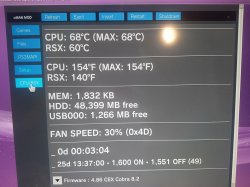
thats definetly interesting. a cecha supose to be more compatible that cechc and ceche. so what might be the issue region protection? the way cecha upscales the game break the code of the game? at least now theres no question about the mod on the cecha and thats a good news.
 
A little update. Yeah, Broken Sword will not start even on an untouched working japanese CECHA (Which I managed to receive from Japan earlier than anticipated). Must be something about the game... Works only on a CECHC/E. Maybe has something to do with pal region. Ironic, you would think there is nothing CECHA can't handle, but apparently there is at least one :D
You will find games that have various levels of incompatibility, even on official revisions of the console they released for. Even some SNES games have small glitches on 1-chip consoles, whereas 2-chips don't. Of course, 1-chip consoles are more desirable because they have better video (especially RGB). That's soon to change BTW.

Regardless, yeah HW BC doesn't mean full compatibility. It's high, but not 100%. If your really must play that game you can always use the emulator (or so I think. I'm not really sure. I haven't tried that yet with Custom firmware. I think I read awhile back there was some trick to get the software emulator working on BC models, since it defaults to the onboard PS2 HW/Hybrid system. I started a noob help thread because I'm new to CFW, so I'll ask there. It's been a journey already, not the good type).
 
Little did I realize there are several types of COK-001 boards. So Important question, @RIP-Felix , does your board have the chips with exposed die next to EE/GS ? Because I have now tested the revision that has black encased chips. So it could be that your model of the board is a different beast and its compatibility with a modchip is still unclear.

View attachment 34857
I don't think that matters, the components can change slightly in model, but the core function should be the same. Even within motherboard revisions they source different/cheaper parts. It doesn't matter as long as they meet the specification for the part that's supposed to be there. On the otherhand, it does affet reliability, console to console functions. No 2 consoles operate with the same exact level of performance. Some CPU's run hotter than others. For example, PS3#7 that I'm testing now has a hot CPU that forces the fan to run louder the rest of my PS3's. I'm assuming it was due to the fact it seems to have started life as a number cruncher...
Code:
Bringup Count: 1755, Shutdown Count: 714
Runtime: 11 Days, 15 Hours, 20 Minutes, 26 Seconds
...but I know it has great thermal contact. Some cpu's just run hotter.

Speaking of which, I have noticed that because the CPU runs hot, that's what the SYSCON or webMAN try's to keep cool. I've been testing out GTA V and went to a part of the city where there was water and distant buildings. Then I spun the camera around to max out the graphics render. Supposedly, this is the hardest you can hit the PS3. webMAN had to bump the fan to 35% to maintain 67 CPU and 65 RSX. SYSCON had 30% to maintain 74 CPU and 72 RSX. I've been told that the RSX runs hotter during intense games, but that doesn't seem to be the case here. It could just be because this CPU runs hot. It could be that my application of TIM was inefficient, this is the one I used Indium foil to weld the IHS to the HS. It's hard to know exactly how well the Indium spread out when it melted. I did see a bead of it squeeze out on one side, but not on others. So I know it's not contacting everywhere uniformly (but it shouldn't matter because it's so much better that thermal paste. Die/IHS just has MX-4, so I could improve it with liquid metal. However, I sincerely doubt it's an issue with thermal contact. I think it's just the CPU has been worn in.
 
Code:
Bringup Count: 1755, Shutdown Count: 714
Runtime: 11 Days, 15 Hours, 20 Minutes, 26 Seconds

I have 2 PS3, one with 8 days of used with 40nm RSX (opend by me), and one with 25 days (not opened) sealed by Sony. Is it possible PS3 "Frankenstein" refurbished board by an official service center, Sony does reset the runtime counter? Maybe a method to recognize without opened?

my webman report for the unopend unit:


any chance it's a 40nm RSX? Does exist with 65 nm?
 

Attachments

  • 20210918.jpg
    20210918.jpg
    278.6 KB · Views: 79
Speaking of which, I have noticed that because the CPU runs hot, that's what the SYSCON or webMAN try's to keep cool. I've been testing out GTA V and went to a part of the city where there was water and distant buildings. Then I spun the camera around to max out the graphics render. Supposedly, this is the hardest you can hit the PS3. webMAN had to bump the fan to 35% to maintain 67 CPU and 65 RSX. SYSCON had 30% to maintain 74 CPU and 72 RSX. I've been told that the RSX runs hotter during intense games, but that doesn't seem to be the case here. It could just be because this CPU runs hot. It could be that my application of TIM was inefficient, this is the one I used Indium foil to weld the IHS to the HS. It's hard to know exactly how well the Indium spread out when it melted. I did see a bead of it squeeze out on one side, but not on others. So I know it's not contacting everywhere uniformly (but it shouldn't matter because it's so much better that thermal paste. Die/IHS just has MX-4, so I could improve it with liquid metal. However, I sincerely doubt it's an issue with thermal contact. I think it's just the CPU has been worn in.

Update to this. I just didn't like how high the fan had to ramp to keep temps okay, so I decided tor try liquid metal. That's when something unexpected happened. The Indium foil did not "weld" the IHS to the HS! It was on, but while cleaning the old thermal paste the force of wiping was enough to shear it off!

I could see that the spread "looked" bad. Some places were good and had nice contact, but there were alot of bubble areas. I decided to clean it off and just go with MX-5 instead. While cleaning the Indium came off in VERY thin flakes. These were the areas where it has to fill in the gaps to make good contact. After a THOROUGH cleaning I applied the MX-5 and used lots of pressure to mount the IHS' to the HS. Then I used liquid metal between the IHS/Die (used finger nail polish to to coat the SMD's on the RSX first). I made sure to spread it evenly over both mating surfaces first to ensure good wetting (that sounded dirty).

Here are the results using the same test (note, the console is horizontal in this test and was vertical in the previous. I want the thermal paste to burn in before I stand it upright, just to prevent it from squeezing out of position):

webMAN (Max 68C) = CPU: 63C | RSX: 67C | Fan: 32%
SYSCON (default) = CPU: 71C | RSX: 75C | Fan: 28%

Here's what it was with the Indium foil/MX-4 for comparison..

webMAN (Max 68C) = CPU: 67C | RSX: 65C | Fan: 35%
SYSCON (default) = CPU: 74C | RSX: 72C | Fan: 30%

Discussion:
I am noticing the temperatures respond to changes in fan speed faster than they did before. I think because the Indium foil has such a better conductivity than MX-5 the difference in the RSX temperature is marginal. But the CPU must not have had as good of contact because it was the bottleneck before and now it well controlled. Because of this I think that indium foil can't mold to imperfections on the heatsink surface, it's better used on the IHS/DIE interface. You would have to lap the HS to get it smooth and flat first. Clearly the potential for better results is there. I just need to come up with a strategy to achieve it.

Lapping sucks, but I wonder if I can combine Indium foil with a graphite thermal pad. Graphite thermal pads are great at moving heat horizontally along it's length. So heat in the center is moved to the outer edge extremely quickly. But it's not great at moving it from bottom to top across it's thickness (what we want). So it usually performs about as good as the average paste. But I wonder if that can be improved using LM and/or the Indium foil. I'm curious if it'll act like a sponge to the LM (and Indium, once it melts). If so the LM/Indium should wet against the surface and graphite taking the place of air and improve the overall performance. And the graphite pad will prevent the LM/Indium from squeezing out the sides and creating pockets of air trapped inside. It might just work better than either one would alone.

But that's just a Hypothesis. I can't find anyone who has tried it. It might repel the LM/Indium and force it all away from the surface.
 
I have 2 PS3, one with 8 days of used with 40nm RSX (opend by me), and one with 25 days (not opened) sealed by Sony. Is it possible PS3 "Frankenstein" refurbished board by an official service center, Sony does reset the runtime counter? Maybe a method to recognize without opened?

my webman report for the unopend unit:


any chance it's a 40nm RSX? Does exist with 65 nm?
The console I'm talking about here is PS3#7 (90nm RSX/CPU, reballed, tantalum). I was talking about it here because I was trying to make the point that some components run different. In this case I thought my CPU ran hotter than others. But that now seems it was probably the Indium foil I was using didn't fill in the imperfection on the Heatsink very well.

To answer your question, I doubt you have a 40nm RSX. Mine doesn't get that hot. 65nm is possible, yes.

To find out, install @M4j0r's pre-compiled build of PS3 Advanced Tools. It should give SYSCON information that can be used to find out.
  • DL the PKG to USB and plug into PS3 as normal. Since your console is jailbroken already I assume you know how to instal packages.
  • After installing, launch PS3 Advanced tools. Go left (end of the list) to "Get SYSCON Info."
  • It'll generate a TXT file on the root of your USB.
  • Post the log here.
Sony's method replaces the SYSCON chip so it's SYSCON FW version should be different. If it's not, your console is stock.
 
my console its on the way back. and @DeadEnd is a nice to make bussiness guy. now about this mod for perfection and easiness of installation i think a way to write the gpu id to syscon so it doesnt require modchip is something that needs a research.
 
my console its on the way back. and @DeadEnd is a nice to make bussiness guy. now about this mod for perfection and easiness of installation i think a way to write the gpu id to syscon so it doesnt require modchip is something that needs a research.
It requires a SYSCON chip that can be written to. The one in BC models won't work. So you have to replace it. We have tried replicating it and making the necessary programming changes, but couldn't figure it out. There's something we're missing.

The mod chip is much easier, even if we do figure out how to replicate sony's method.
 
Update to this. I just didn't like how high the fan had to ramp to keep temps okay, so I decided tor try liquid metal. That's when something unexpected happened. The Indium foil did not "weld" the IHS to the HS! It was on, but while cleaning the old thermal paste the force of wiping was enough to shear it off!

I could see that the spread "looked" bad. Some places were good and had nice contact, but there were alot of bubble areas. I decided to clean it off and just go with MX-5 instead. While cleaning the Indium came off in VERY thin flakes. These were the areas where it has to fill in the gaps to make good contact. After a THOROUGH cleaning I applied the MX-5 and used lots of pressure to mount the IHS' to the HS. Then I used liquid metal between the IHS/Die (used finger nail polish to to coat the SMD's on the RSX first). I made sure to spread it evenly over both mating surfaces first to ensure good wetting (that sounded dirty).

Here are the results using the same test (note, the console is horizontal in this test and was vertical in the previous. I want the thermal paste to burn in before I stand it upright, just to prevent it from squeezing out of position):

webMAN (Max 68C) = CPU: 63C | RSX: 67C | Fan: 32%
SYSCON (default) = CPU: 71C | RSX: 75C | Fan: 28%

Here's what it was with the Indium foil/MX-4 for comparison..

webMAN (Max 68C) = CPU: 67C | RSX: 65C | Fan: 35%
SYSCON (default) = CPU: 74C | RSX: 72C | Fan: 30%

Discussion:
I am noticing the temperatures respond to changes in fan speed faster than they did before. I think because the Indium foil has such a better conductivity than MX-5 the difference in the RSX temperature is marginal. But the CPU must not have had as good of contact because it was the bottleneck before and now it well controlled. Because of this I think that indium foil can't mold to imperfections on the heatsink surface, it's better used on the IHS/DIE interface. You would have to lap the HS to get it smooth and flat first. Clearly the potential for better results is there. I just need to come up with a strategy to achieve it.

Lapping sucks, but I wonder if I can combine Indium foil with a graphite thermal pad. Graphite thermal pads are great at moving heat horizontally along it's length. So heat in the center is moved to the outer edge extremely quickly. But it's not great at moving it from bottom to top across it's thickness (what we want). So it usually performs about as good as the average paste. But I wonder if that can be improved using LM and/or the Indium foil. I'm curious if it'll act like a sponge to the LM (and Indium, once it melts). If so the LM/Indium should wet against the surface and graphite taking the place of air and improve the overall performance. And the graphite pad will prevent the LM/Indium from squeezing out the sides and creating pockets of air trapped inside. It might just work better than either one would alone.

But that's just a Hypothesis. I can't find anyone who has tried it. It might repel the LM/Indium and force it all away from the surface.
Thanks for your detailed explanations, very interesting :encouragement:
When i was reading your previous post with the GTAV test, resulting in the CPU a bit higher than RSX you made me doubt, but i was thinking your RSX was doing a very good thermal transfer, and your CELL... well, not so good
In general i would bet with that setup your PS3 was working better than 90% of the PS3's of this forum, for sure better than mine because i have not changed the MX-4 thermal paste i used since few years ago, my temperatures and noise levels are aceptable though... lets say... i know i could improve them but im not caring much

But your tests are not about achieving something aceptable, you want to find the best :D
Yeah, it seems the iridium foil probably is the best solution, but you need to masterize the application, im not sure if is just a matter of using more heat... but lapping the surfaces is going to help a lot
Actually, remember that additionally to the lapping you could "polish" the surfaces with cotton and some abrasive substance (for the ghetto way the toothpaste uses to work fine because it have fluor minerals),

Personally i would not join together the graphite pad with the liquid metal... i guess the graphite pad have "microscopical pores" (where the fluids could enter) and maybe thats not so good
Also, it could happen that one of them degrades the other along time because there is some kind of chemical reaction in between them
 
Actually, remember that additionally to the lapping you could "polish" the surfaces with cotton and some abrasive substance (for the ghetto way the toothpaste uses to work fine because it have fluor minerals),

Personally i would not join together the graphite pad with the liquid metal... i guess the graphite pad have "microscopical pores" (where the fluids could enter) and maybe thats not so good
Also, it could happen that one of them degrades the other along time because there is some kind of chemical reaction in between them

I think the trick with the indium is the same with LM. You have to spread it out with rubbing to get it to adhere (wet) to the surface. If you notice when you apply LM you can't just pt a bead in the center and put the HS back on. It won't spread out evenly. I think that's because there is a microscopic film of left over greese unless you cleaned THOROUGHLY. And if you did, then there defintely is a microscopic film of oxides that form on metal surfaces. So when you spread out the LM and rub it along the surface, your scratching through the oxidation and bringing the LM into contact with the metal surface. It needs to be a liquid for that to work. Which is why the Indium foil didn't work well on the IHS/HS interface. The die is silicon, which has a high affinity for oxygen and will form a film too.

I think I have a solution to this problem. If I place the HS on my IR preheater set to 80C, it should get hot enough to melt indium (57C). I'm not worried about the heat pipes bursting because they just contain Deionized water under partial vacuum. 80C is surely enough to volitilize it, but the pressure won't be enough to break the seal and It's not hot enough to weaken the copper/brazing. Then I should be able to get the indium to melt and spread it with a cotton swab. Of course lapping the aluminum first would be better.

About the graphite/LM combo. I minored in chemistry so I know that graphite is just carbon-carbon bonds. It's very hard to form new bonds with carbon. So I'm not worried about LM/Indium reacting with it at all. But it does have microscopic pores filled with air (terrible heat conductor). These pores "might" allow the LM to seep in and displace some of the air, greatly improving the thermal pads performance. On the other hand they could be so small that they act like a barrier to the LM. LM has high cohesison to other LM molecules and if there is no cohesion to the carbon, then it will not wick into the pores (capillary action), but instead be repelled (surface tension). So it's pretty iffy. Again, an untested hypothesis.

I'm curious to try it, but these are expensive materials (graphite thermal pads, LM, Indium foil). 1 failed test could be $50 in the garbage! I think the the idea of melting it on and spreading makes more sense than adding a layer of graphite to the mix. So I want to try and get the Indium foil to work. It's the better solution overall. It's just a matter of getting it to adhere properly to the entire mating surface.
 
Last edited:
I think the trick with the indium is the same with LM. You have to spread it out with rubbing to get it to adhere (wet) to the surface. If you notice when you apply LM you can't just pt a bead in the center and put the HS back on. It won't spread out evenly. I think that's because there is a microscopic film of left over greese unless you cleaned THOROUGHLY. And if you did, then there defintely is a microscopic film of oxides that form on metal surfaces. So when you spread out the LM and rub it along the surface, your scratching through the oxidation and bringing the LM into contact with the metal surface. It needs to be a liquid for that to work. Which is why the Indium foil didn't work well on the IHS/HS interface. The die is silicon, which has a high affinity for oxygen and will form a film too.
Under a powerful electronic microscope the metal surfaces are like mountain rifts, so there is always a bit of air trapped in between the rifts. The silicon of the DIE doesnt have that rifts, his internal structure is like "glass" (or diamond) where the atoms are very well aligned to each other in crystaline structures, so the flatness of the DIE surface is near perfect
The "wetting" term you used fits very well btw, the liquid metal needs to be "rubbed" on top of the surfaces to either push some atoms inside the rifts or/and top remove the air (and break that "surface tension" property of the atoms of the fluid)


Btw, for the lapping there are a couple of tips worthy to be mentioned, first thing is to "scratch" the original heatsink surface with your finger nail... if you feel like several "tac" "tac" "tac" is very bad, ive seen some PS3 heatsinks that had horrible "scratches", in the PS3 slims that scratches are paralell (because the surface was flattened with low quality machines), in some of the PS3 fat heatsinks that scratches are concentrical circles (this is a different machine, bit better, but not so perfect), if your heatsink is one of those yeah... a lapping is going to help a lot with your experiments

Btw another trick to identify the bending on surfaces, is to use a razor blade placed vertically on top of the surface, in front of the bulblight of a lamp... and try to see if there is some light rays that passes the "gap" in between the edge of the razor blade and the surface
Im mentioning this because the IHS uses to have some bending... is the consequence of that metal piece to be "forged" individually... there is a bigger amount of metal in some areas and the atoms have different "tensions" so this results in a small bending when it gets cold, this could be easylly fixed by "mechanizing" the surface but it seems they was not doing it with the IHS's
If your IHS's have an small bending (and you remove it by lapping them) yeah, this is another thing that is going to help too with your experiments

Are minor details, but everything counts, for every small thing maybe the improvement is just -1ºC but is the sum of everything that makes the total... -2ºC here, -1ºC there, another -2ºC... etc...

Btw, have you tryed to melt by heat the old/used indium "flakes" you removed from your previous test ?
Im wondering if it could be used to "wet" the surfaces before applying a new indium foil... you know like when we do a "pre-tin" with a solder iron in a standard solder job
Maybe this could help to achieve that "wet" adhesion to remove the microscopical air bubbles

I think I have a solution to this problem. If I place the HS on my IR preheater set to 80C, it should get hot enough to melt indium (57C). I'm not worried about the heat pipes bursting because they just contain Deionized water under partial vacuum. 80C is surely enough to volitilize it, but the pressure won't be enough to break the seal and It's not hot enough to weaken the copper/brazing. Then I should be able to get the indium to melt and spread it with a cotton swab. Of course lapping the aluminum first would be better.
I was about to mention something about the copper pipees in my previous post, as far i understood (from some schematics, never seen with my own eyes) inside the pippes there is also some kind of "porous" material intended to create a circuit where the gas/fluid moves in 2 different directions
The theory is... are like 2 ducts, concentrical... the extternal duct is used to move the liquid toward the hot spot... in the hot spot the liquid becomes gas... then it moves away (to the extreme of the pipe) in the internal duct

The reason why im mentionin this is because that porous material (i guess is some syntethic plastic, dunno) could be sensitive to the overheats
You know... the gas/fluid doesnt have much problem with the overheats because the pipes are sealed so is not going to escape or degrade (unless the pipe explodes, lol), but that material with the pores could melt or crack (ruining that concept of the 2 ducts)

Btw, another detail that worths to be mentioned from that pipes of the PS3 heatsinks is the glue used to attach them to the heatsink sometimes is bad quality or have "gaps" where it was not applyed enought glue
Check that too, in the PS3 fat heatsinks that glue (or better said, thermal glue) is like candy and can be "cracked" with your finger nail... it have the consistency (and the color) like melted sugar, personally i dont like it at all, lets say... is too much "industrial" (a.k.a. cheap)
If i was you, i would try to see how many of that crappy thermal glue can be removed... and i would use a decent thermal glue to replace it and to fill all the "gaps" in between the pipes and the heatsink... you know, the goal is to maximize the area of contact in between the copper pipe and the alluminun of the heatsink

About the graphite/LM combo. I minored in chemistry so I know that graphite is just carbon-carbon bonds. It's very hard to form new bonds with carbon. So I'm not worried about LM/Indium reacting with it at all. But it does have microscopic pores filled with air (terrible heat conductor). These pores "might" allow the LM to seep in and displace some of the air, greatly improving the thermal pads performance. On the other hand they could be so small that they act like a barrier to the LM. LM has high cohesison to other LM molecules and if there is no cohesion to the carbon, then it will not wick into the pores (capillary action), but instead be repelled (surface tension). So it's pretty iffy. Again, an untested hypothesis.

I'm curious to try it, but these are expensive materials (graphite thermal pads, LM, Indium foil). 1 failed test could be $50 in the garbage! I think the the idea of melting it on and spreading makes more sense than adding a layer of graphite to the mix. So I want to try and get the Indium foil to work. It's the better solution overall. It's just a matter of getting it to adhere properly to the entire mating surface.
Im not sure, but i use to think in this considering how it would look under a very powerful microscope and also the posible chemical reactions that could happen (somethig that usually nobody knows, because we dont have a laboratory to do tenths of weird tests)
The graphite pads are a nice idea, the performance is not impressive but are failproof for long term, mixing them together with liquid metal doesnt makes me much confident, maybe there is some way to "force" the liquid metal to enter in the pores (under pressure ?) to "wet" it properly but dunno... i guess someone else tryed this kind of experiments before... maybe google have some answers for this combo

I would use the graphite pad for the EE/GS, maybe is not needed but is located near CELL/RSX so there is some heat generated by CELL/RSX that is transfered to the EE/GS ---> to the metal shield with the graphite pad

 
Last edited:
I was about to mention something about the copper pipees in my previous post, as far i understood (from some schematics, never seen with my own eyes) inside the pippes there is also some kind of "porous" material intended to create a circuit where the gas/fluid moves in 2 different directions
The theory is... are like 2 ducts, concentrical... the extternal duct is used to move the liquid toward the hot spot... in the hot spot the liquid becomes gas... then it moves away (to the extreme of the pipe) in the internal duct

The reason why im mentionin this is because that porous material (i guess is some syntethic plastic, dunno) could be sensitive to the overheats
It's a sintered copper coating. It just increases surface area and capillary action. Under the partial vacuum, water turns to steam at a low temperature and travels down the heatpip to the cool end where it condenses and spread out on the sintered coating (dumping all it's heat there). This is extremely efficient. WAY better than copper alone.

Im not sure, but i use to think in this considering how it would look under a very powerful microscope and also the posible chemical reactions that could happen (somethig that usually nobody knows, because we dont have a laboratory to do tenths of weird tests)
The graphite pads are a nice idea, the performance is not impressive but are failproof for long term, mixing them together with liquid metal doesnt makes me much confident, maybe there is some way to "force" the liquid metal to enter in the pores (under pressure ?) to "wet" it properly but dunno... i guess someone else tryed this kind of experiments before... maybe google have some answers for this combo
Actually, I do have a lab where I can test things like this (at work). Your thinking on my wavelength about frcing the LM inside. I don't think pressure would help much. You gotta get the air out first t create the void. I was thinking about pulling a vaccum and releasing it several times to suck it in. I have a vaccum pump at work, but not a vessel that would work. I'd have to buy a vaccum chamber. This would be a nice video for Linus Tech Tips. And a cool product if it works. AFAIK, it doesn't exist (probably because it doesn't work, not because I'm the first who thought it up...unless I was).

I did have a stupid idea I won't try. Graphite is soluble in warm chlorosulfuric acid (tear gas). I could make a Graphite paste using it. Then spread it thinly on the inteface and boil off the teargas leaving only a thin film that's much better formed to the grove in the surface. But making tear gas at work is not the type of thing that's conducive to continued employment. So I abandoned the idea. It could be done safely in a fume hood, I'm sure. But I'm not that interested. Besides have another idea that actuall might work...

A pencil is graphite. Why not simply draw over both mating surfaces before using the thermal pad? That's simple enough! All we need to do is fill in those microscopic valleys with some extra graphite to displace more air. There is only 3 degrees difference between graphite thermal pads and MX-4, so this might improve that. The real benifit to graphite thermal pads is it's ability to spread the heat laterally. So it should prevent DIE hotspots. +3C is not a bad tradoff.
 
PS3#7 - Update
(Thermal tests lead to disaster!)
I finally decided to turn my console vertical (it had been horizontal to let the MX-5 cure). When I turned it on, intant YLOD! Errorlog...
Code:
Microsoft Windows [Version 10.0.19042.1165]
(c) Microsoft Corporation. All rights reserved.

C:\Users\HTPC\Desktop\PS3\SYSCON>python ps3_syscon_uart_script.py COM4 CXRF
>$ auth
Auth successful
>$ errlog
errlog
ofst[ 40]:err_code:0xffffffff, clock:0xffffffff
ofst[ 44]:err_code:0xffffffff, clock:0xffffffff
ofst[ 48]:err_code:0xffffffff, clock:0xffffffff
ofst[ 52]:err_code:0xffffffff, clock:0xffffffff
ofst[ 56]:err_code:0xffffffff, clock:0xffffffff
ofst[ 60]:err_code:0xffffffff, clock:0xffffffff
ofst[ 64]:err_code:0xffffffff, clock:0xffffffff
ofst[ 68]:err_code:0xffffffff, clock:0xffffffff
ofst[ 72]:err_code:0xffffffff, clock:0xffffffff
ofst[ 76]:err_code:0xffffffff, clock:0xffffffff
ofst[ 80]:err_code:0xffffffff, clock:0xffffffff
ofst[ 84]:err_code:0xffffffff, clock:0xffffffff
ofst[ 88]:err_code:0xffffffff, clock:0xffffffff
ofst[ 92]:err_code:0xffffffff, clock:0xffffffff
ofst[ 96]:err_code:0xffffffff, clock:0xffffffff
ofst[100]:err_code:0xffffffff, clock:0xffffffff
ofst[104]:err_code:0xffffffff, clock:0xffffffff
ofst[108]:err_code:0xffffffff, clock:0xffffffff
ofst[112]:err_code:0xffffffff, clock:0xffffffff
ofst[116]:err_code:0xffffffff, clock:0xffffffff
ofst[120]:err_code:0xffffffff, clock:0xffffffff
ofst[124]:err_code:0xffffffff, clock:0xffffffff
ofst[  0]:err_code:0xa0801001, clock:0x0be47303  2006/04/28 06:30:27
ofst[  4]:err_code:0xa0801001, clock:0x0be47416  2006/04/28 06:35:02
ofst[  8]:err_code:0xa0801001, clock:0x0be47bc1  2006/04/28 07:07:45
ofst[ 12]:err_code:0xa0801001, clock:0x0be47cc3  2006/04/28 07:12:03
ofst[ 16]:err_code:0xa0801001, clock:0x0be4a0af  2006/04/28 09:45:19
ofst[ 20]:err_code:0xa0802022, clock:0x0be81124  2006/05/01 00:21:56
ofst[ 24]:err_code:0xa0802022, clock:0x0be8119e  2006/05/01 00:23:58
ofst[ 28]:err_code:0xa0403034, clock:0x0b4b3f9d  2006/01/02 01:34:21
ofst[ 32]:err_code:0xa0902120, clock:0x0b4b3f9d  2006/01/02 01:34:21
ofst[ 36]:err_code:0xa0403034, clock:0x0b4b3fb2  2006/01/02 01:34:42
[mullion]$
>$ bringup
bringup
[SSM] state: 0000 -> 0101
Bringup Mode #0 (0xFF)
[SSM] ssmCb_OnStartingBePowOn() called.
[SSM] First Boot.
[SSM] Bringup mode : syspm_stat=00000000/00000000
[POWSEQ] PowerSeq_Setup called.
[SSM] state: 0101 -> 0201
[POWSEQ] AV Backend Setup
[SSM] state: 0201 -> 0102
[SSM] state: 0102 -> 0202
[SSM] state: 0202 -> 0103
[SSM] state: 0103 -> 0203
[SSM] ssmCb_BeforeBeOn(
>$
) called.
[SSM] state: 0203 -> 0104
Psbd_SbTransMode_Half:0x20e2
[POWERSEQ] Error : BitTraining RSX:RRAC:BX0:BX:FLEXIO_ID
[SSM] state: 0104 -> 0304
[SSM] ssmCb_AfterBeOn2() called.
[SSM] PowSeq Fail : Detected !
[SSM] state: 0304 -> 0700
[POWSEQ] AV Backend Letup
[SSM] Shutdown mode : syspm_stat=00000000/00000000
[ERROR]: 0xa0403034
[ERROR]: 0xa0902120
[POWSEQ] PowerSeq_Letup called.
[SSM] state: 0700 -> 0600
(PowerOff State) (Fatal)

[mullion]$
>$

I will tear it down soon and see if my LM ran onto something it shouldn't have. This is why I hate LM! Or I suppose the YLOD might have returned. This console was reballed, but you never know. Untill I know more...

EDIT:
Okay, I got my answer. The LM application was fine, it didn't run at all. I tested resistance on all the voltage and there is pleanty of separation. So no shorts. Looks like the reball failed! I have been testing this console alot over the last week, installing custom firmware and different thermal tests. So I think I put it through more stress lately.

Now, this was reballed by @squeept in late January. It was damaged in shipping and I replaced the tokins on. This is the console I did all those tantalum array tests on. At some point a BGA popped again and I reflowed in early febuary. It had been working until this morning. To confirm a BGA defect I was able to get the console to boot with the pressure test. So the reflow finally failed. This is one reason I have kept this console instead of selling it. I wanted to test how long a reflow might last. It should have lasted longer, since it has fresh leaded solder balls, but it looks like 6-7 months is it. That's in line with other reports of reflows failing after 6 months to 1 year. Yay, disappointing results! DATA is DATA.

I do not want to put this board through any more useless thermal cycles. So this one will be Frankenstin monster #2, instead of the E model. This one has working PS2 HW I know for a fact. That and I went through all the work of installing Custom firmware and installing games. That and the E model has IO port damage I have to repair. This one's just easier to fix and more desirable to put a 40nm RSX in.

I guess that'll solve my RSX heat issues! Not to mention bring this thread back on topic...lol!
 
Last edited:
@RIP-Felix be warry reball same chip can fail because solder joints inside chip are bad or main chip is dying and reflow temps give it a little life back. 90 nm chips can fail for lot of reasons. not only cracked solderbals between chip and motherboard
 
I'm pretty sure that LM is your issue, as I said it may work but not very well with ps3, think surface of ic die isn't right for ps3, not sure if for ps4, I seen something similar as Felix on one 65nm dyn001 and exchange LM back to AS5. So hopefully that LM didn't kill cpu.
 
It's a sintered copper coating. It just increases surface area and capillary action. Under the partial vacuum, water turns to steam at a low temperature and travels down the heatpip to the cool end where it condenses and spread out on the sintered coating (dumping all it's heat there). This is extremely efficient. WAY better than copper alone.
My english is a bit bad but i understood the principle of how heatpipes work, what i could not understand is how are manufactured, i been googling a bit and found this article, is fine for an introuction but (as usually) they are not explaining how is made internally
https://celsiainc.com/heat-sink-blog/how-do-heat-pipes-work/

In most of the schematics it seems there are 2 "chambers", like the 2 directions of a road, the way i imagined before how this could be achieved was either by inserting a pipe inside other pipe (and the internal pipe being porous)... or a solid bar inside the pipe (again made with some porous material)
But considering there are some pipes that are flattened and/or curved it was not making much sense because the internal pipe/bar was going to break
I mean... from a mechanical point of view... if we put a pipe inside other pipe and then we bend them the result is going to be a disaster

But then i found this image https://www.coolermastercorp.com/technology/design/heatpipe/
This makes lot more sense, in that image can be seen 3 different methods to create the internal structure of the pipe, as far i see are:
1) copper powder attached to the internal surface of the pipe (maybe by some electro-thermal process)
2) a copper mesh (i guess it stays in his position naturally)
3) engraved internal surface (like the cannon of a gun)

We dont know how are made the pipes of the PS3 heatsinks, but i guess is one of those... and in that case it seems there is no need to worry about overheats
I was mentioning all this because im picky and i was not sure how sensibles are that PS3 pipes but now i feel more confident :)

*I would like to see good photos of one of those PS3 heatsink pipes "opened" just for curiosity sake... im just throwing the stone incase someone reading me have a broken PS3 heatsink that could be used "for science" experiments :D

Actually, I do have a lab where I can test things like this (at work). Your thinking on my wavelength about frcing the LM inside. I don't think pressure would help much. You gotta get the air out first t create the void. I was thinking about pulling a vaccum and releasing it several times to suck it in. I have a vaccum pump at work, but not a vessel that would work. I'd have to buy a vaccum chamber. This would be a nice video for Linus Tech Tips. And a cool product if it works. AFAIK, it doesn't exist (probably because it doesn't work, not because I'm the first who thought it up...unless I was).

I did have a stupid idea I won't try. Graphite is soluble in warm chlorosulfuric acid (tear gas). I could make a Graphite paste using it. Then spread it thinly on the inteface and boil off the teargas leaving only a thin film that's much better formed to the grove in the surface. But making tear gas at work is not the type of thing that's conducive to continued employment. So I abandoned the idea. It could be done safely in a fume hood, I'm sure. But I'm not that interested. Besides have another idea that actuall might work...

A pencil is graphite. Why not simply draw over both mating surfaces before using the thermal pad? That's simple enough! All we need to do is fill in those microscopic valleys with some extra graphite to displace more air. There is only 3 degrees difference between graphite thermal pads and MX-4, so this might improve that. The real benifit to graphite thermal pads is it's ability to spread the heat laterally. So it should prevent DIE hotspots. +3C is not a bad tradoff.
When i mentioned "by pressure" i was also thinking in "by depressure" (or vaccum), yeah... it needs to be made with something like that, not sure if could work though
It depends of how many atmospheres (not sure if this is the correct unit to measure it, and not sure how is written in english)... lets say... for a ghetto way you could try to connect some glass "bottle" to a pump used to inflate bikes tyres... but maybe it results in 3 atmospheres of de/pressure only and the liquid metal requires 10 atmospheres to enter in the pores of the graphite pad needs... in that case is not going to work :/
You know... maybe the theory we are discussing works "on paper"... but in the practise it could be very hard to achieve it, dunno

The pencil trick is nice to combine with the graphite pad, i agree that "drawing" in the metal surfaces with the pencil is going to fill all that valleys with graphite (and as a consequence, pushing the air away)
After that i would try to "flat" the surface again... just incase there is some big particles from the pencil
Dunno how to do it... first idea that comes to mind is to place a cloth on top of a glass (the same method used for lapping) and then make one pass of the heatsink on top of the cloth. Probably this is going to remove a lot of the graphite from the pencil (lets say 50%) but the other 50% that stays is the worthy that is filling the "valleys"

Btw, there is "graphite powder" on sale (and is cheap), are small bottles, this assures you the graphite particles have a constant size and is very fine

Another idea that came to mind while writing this... you can do an small lapping to the graphite pad surface (very small, we dont want to remove much material) just to create an small layer of powder in the side that is going to be in contact with the other powder, dunno maybe this helps in the bounding

And last btw... yeah, you could use water to create some kind of "graphite powder paste"... keeping in mind that the water is going to evaporate completly in the first day/s when the PS3 is turned on
The result could be a solid layer of graphite, not so bad :)
 
Just în rush stupid idea, a AC system pompe with radiator car addled to ps3 will cool down for sure those. That side of cold air from a car with freon inside that is smaller in design, not that side of engine cool down. Cars use 12v system? Just a spark. Not even impossible. It is working with 2 radiators in a closed loop, pump is just moving inside gas.
 
My english is a bit bad but i understood the principle of how heatpipes work, what i could not understand is how are manufactured, i been googling a bit and found this article, is fine for an introuction but (as usually) they are not explaining how is made internally
https://celsiainc.com/heat-sink-blog/how-do-heat-pipes-work/

In most of the schematics it seems there are 2 "chambers", like the 2 directions of a road, the way i imagined before how this could be achieved was either by inserting a pipe inside other pipe (and the internal pipe being porous)... or a solid bar inside the pipe (again made with some porous material)
But considering there are some pipes that are flattened and/or curved it was not making much sense because the internal pipe/bar was going to break
I mean... from a mechanical point of view... if we put a pipe inside other pipe and then we bend them the result is going to be a disaster

But then i found this image https://www.coolermastercorp.com/technology/design/heatpipe/
This makes lot more sense, in that image can be seen 3 different methods to create the internal structure of the pipe, as far i see are:
1) copper powder attached to the internal surface of the pipe (maybe by some electro-thermal process)
2) a copper mesh (i guess it stays in his position naturally)
3) engraved internal surface (like the cannon of a gun)

We dont know how are made the pipes of the PS3 heatsinks, but i guess is one of those... and in that case it seems there is no need to worry about overheats
I was mentioning all this because im picky and i was not sure how sensibles are that PS3 pipes but now i feel more confident :)

*I would like to see good photos of one of those PS3 heatsink pipes "opened" just for curiosity sake... im just throwing the stone incase someone reading me have a broken PS3 heatsink that could be used "for science" experiments :D
Sintered copper is copper powder baked on. No plastics or internal pipes. All copper. There are other designs that have groves or copper wick inside.

I could replace the IHS with a vapor chamber, but it'd have to be custom ordered. I don't see anyone making them for common IHS thicknesses. I just searched and there are research papers on the subject, and companies who you can contract to make them (were talking a lot of money for that), and not much else.
 
Update to this. I just didn't like how high the fan had to ramp to keep temps okay, so I decided tor try liquid metal. That's when something unexpected happened. The Indium foil did not "weld" the IHS to the HS! It was on, but while cleaning the old thermal paste the force of wiping was enough to shear it off!

I have what's probably a dumb question. I know you can't use liquid metal with the aluminium heatsink but would it be possible to nickel plate the contact area of the heatsink to make liquid metal okay to use? Cheers for all your work!
 
Back
Top