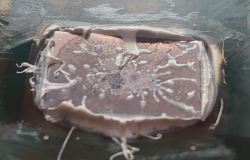
PS3 Frankenstein PHAT PS3: CECHA with 40nm RSX

No Sorry I regret myself ive see only professionals will do Reballing so Swap the Cell is cool, I was just looking at the Ps3 Slim 25 XX motherboard and the Cech L motherboard and I Just saw that they have the same Format and exactly Size Syscon and also Both Use Nors So Could We just Simple Swap the Entire Kit and have an PS3 CechL, P, M and beyond with an 45nm Cell and 40nm Rsx with the Entire Syscon, Nor......... from Cech 25xx
 
In some way the syscon is ike the BIOS of a PC motherboard, the "base" syscon firmware contains software support for a specific list of component revisions.. and thats the part of the syscon EEPROM that is not upgradeable
The 45nm CELL was introduced after the sherwood syscons (with pins), i dont remember if there is some page in wiki where could be seen this, but i guess mullion syscons (with BGA) doesnt supports the 45nm CELL because is newer
Maybe m4j0r could cook one of that black magical patches to achieve it, but there are other 2 problems

As mentioned above, the flash contains a couple of regions (bootldr and metldr) that are tied to CELL, because are encrypted with a key unque for each CELL unit... we cant rebuild that files, so to do a CELL "transplant" is needed to take that files with it to the new flash

And the last and biggest problem is the BGA pad layout for CELL is different as far i remember... it seems with RSX they was doing an effort to keep the same BGA pad layout as most time as posible (and they almost completed the whole PS3 familly with the same RSX layout, the only exception is when the RSX was reduced to 28nm), so there are only 2 RSX pad layouts in total
But with CELL there are several pad layouts (3 or 4, dont remember right now, i wrote an accurate list some weeks ago in this same thread as far i remember)
please what about that: i was just looking at the Ps3 Slim 25 XX motherboard and the Cech L motherboard and I Just saw that they have the same Format and exactly Size Syscon and also Both Use Nors So Could We just Simple Swap the Entire Kit and have an PS3 CechL, P, M and beyond with an 45nm Cell and 40nm Rsx with the Entire Syscon, Nor......... from Cech 25xx
 
The sizes of the motherboards (and the metal RF shields that should be considered a part of the motherboard too because it matches perfectly with them) doesnt have the same sizes, there are only a few motherboards that can be swapped in between another few of PS3 plastic shells

In general... most of the people that loves the PS3 fats is because they have components dedicated to the PS2 backward compatibility, so installing a PS3 slim or superslim motherboards inside a PS3 fat shell doesnt makes much sense for that people, i get your point though... the heatsink/fan of the fats are massive, and combined with a superslim motherboard should result in very low temperatures and noise levels

Personally... i dont understand that obsession with the PS2 backward compatibility components... the fact is the official ps2 netemu (emulating everything 100% by software) have a great compatibility, and is improved constantly because there is a few people releasing configs to fix the remaining games very frequently

...the best way to see how different they are just with text is if i tell the number of pads missing at the hole at center this way, the hole are the numbers inside the brackets... im substracting them to calculate the total number of pads

-CELL 90nm 41x41 - (19x19) = 1681 - 361 = 1320 pads
-CELL 65nm 41x41 - (15x17) = 1681 - 255 = 1426 pads
-CELL 45nm 41x41 - (17x17) = 1681 - 289 = 1392 pads
-CELL 45nm 42x42 - (22x18) = 1764 - 396 = 1368 pads

The motherboards that was designed for a 90nm CELL (like the COK-001) only have 1320 pads
I dont know if the pinouts of the pads at the surrounding matches in between the ones using a 41x41 array, but are physically incompatibles because the "hole" at the center
About the CELL pad layouts... as you can see the number of pads in the peripherial of the 90nm, 65nm, and 45nm CELL models is the same (41x41).. and for curiosity sake, the pitch (distance in between BGA balls) and the ball diameter is the same too
The difference in the pads is in the squared "hole" at the center

We only have the pinout of the CELL 90nm because appears in the leaked service manual of the COK-001, but we dont have the others, so is imposible to know what does each pad in the others

That said... if you take a look at the pinout of the 90nm CELL you are going to realize most/all the pads located at the "inner ring" of the CELL (the pad lines surrounding the squared hole at the center) are dedicated to power lines and ground... and a lot of them are duplicated
Lets say... there are tenths of ground pads and all them are connected with each others
The same happens with any other power lines, instead a single pad carrying 1.2v we have 20 or 30 together, all them are 1.2v and are connected with each others

If the mistmatching pads in between CELL 90nm, 65nm, 45nm are used for this purpose then yeah... is technically posible to "join together" some pads. So instead of having some pads "floating" at the center could be connected with wires or some kind of "adaptor" made with pieces or copper
 
The sizes of the motherboards (and the metal RF shields that should be considered a part of the motherboard too because it matches perfectly with them) doesnt have the same sizes, there are only a few motherboards that can be swapped in between another few of PS3 plastic shells

In general... most of the people that loves the PS3 fats is because they have components dedicated to the PS2 backward compatibility, so installing a PS3 slim or superslim motherboards inside a PS3 fat shell doesnt makes much sense for that people, i get your point though... the heatsink/fan of the fats are massive, and combined with a superslim motherboard should result in very low temperatures and noise levels

Personally... i dont understand that obsession with the PS2 backward compatibility components... the fact is the official ps2 netemu (emulating everything 100% by software) have a great compatibility, and is improved constantly because there is a few people releasing configs to fix the remaining games very frequently


About the CELL pad layouts... as you can see the number of pads in the peripherial of the 90nm, 65nm, and 45nm CELL models is the same (41x41).. and for curiosity sake, the pitch (distance in between BGA balls) and the ball diameter is the same too
The difference in the pads is in the squared "hole" at the center

We only have the pinout of the CELL 90nm because appears in the leaked service manual of the COK-001, but we dont have the others, so is imposible to know what does each pad in the others

That said... if you take a look at the pinout of the 90nm CELL you are going to realize most/all the pads located at the "inner ring" of the CELL (the pad lines surrounding the squared hole at the center) are dedicated to power lines and ground... and a lot of them are duplicated
Lets say... there are tenths of ground pads and all them are connected with each others
The same happens with any other power lines, instead a single pad carrying 1.2v we have 20 or 30 together, all them are 1.2v and are connected with each others

If the mistmatching pads in between CELL 90nm, 65nm, 45nm are used for this purpose then yeah... is technically posible to "join together" some pads. So instead of having some pads "floating" at the center could be connected with wires or some kind of "adaptor" made with pieces or copper
OK I understand Master Thank You Very much!!! ☺
 
The idea i mentioned about joining pads together with wires or copper sheets is a bit crazy to be honest :D
The problem is that it would be very tricky to do it, but think in it this way... the squared hole of every CELL revision have a different size... so the squared hole of the motherboards where that CELL revisions was installed should have a different size too, right ? (im not completly sure about this)
OK... so if we take a CELL and place it on top of the hole of a different motherboard is like if we are overlapping 2 squares of different sizes... and then we take a look at the bottom of the motherboard "through" the squared hole and we are going to see there are some pads "floating" (not touching the motherboard)

Thats the pads that would be needed to join together... or at least some of them, because im not so sure if there would be others not visibles externally
If all them are visibles, well, maybe is not so hard because maybe there is room to use a solder iron to join a lot of them together
The good argument for this theory is the fact that the power lines are "feeding" the the CELL at his center is a strict design concept, is like a fountain, and is made like that in all the CELL revisions... so in theory... it "should" work

But thats assuming the signals (any logic or data, not power) of all the other pads matches, im sure in general every tiny subcircuit inside the CELL DIE is located pretty much in the same place... mostly because the engineers are not going to throw away the design of the previous revision to redesign the new one from scratch
But if there are too much mistmatchs (lets say more than 5 or 10 pads) it would be extremelly tricky or imposible to do it

 
Last edited:
The idea i mentioned about joining pads together with wires or copper sheets is a bit crazy to be honest :D
The problem is that it would be very tricky to do it, but think in it this way... the squared hole of every CELL revision have a different size... so the squared hole of the motherboards where that CELL revisions was installed should have a different size too, right ? (im not completly sure about this)
OK... so if we take a CELL and place it on top of the hole of a different motherboard is like if we are overlapping 2 squares of different sizes... and then we take a look at the bottom of the motherboard "through" the squared hole and we are going to see there are some pads "floating" (not touching the motherboard)

Thats the pads that would be needed to join together... or at least some of them, because im not so sure if there would be others not visibles externally
If all them are visibles, well, maybe is not so hard because maybe there is room to use a solder iron to join a lot of them together
The good argument for this theory is the fact that the power lines are "feeding" the the CELL at his center is a strict design concept, is like a fountain, and is made like that in all the CELL revisions... so in theory... it "should" work

But thats assuming the signals (any logic or data, not power) of all the other pads matches, im sure in general every tiny subcircuit inside the CELL DIE is located pretty much in the same place... mostly because the engineers are not going to throw away the design of the previous revision to redesign the new one from scratch
But if there are too much mistmatchs (lets say more than 5 or 10 pads) it would be extremelly tricky or imposible to do it
Your ideias are excellent
 
...we can just Install an Motherboard of an super Slim inside an Cecha00 Case só we Will have an Fat PS3 with 45nm Cell and even 28Nm rsx...

...PS3s can play PS2 and via Emulation...

This sounds like a fun mod. You should do it and make a tread, I'd love to see that.

Does anyone have a PS2 Emulation Compatibility list for non-BC PS3? I'm curious how the list compares to the BC models.
 
This sounds like a fun mod. You should do it and make a tread, I'd love to see that.

Does anyone have a PS2 Emulation Compatibility list for non-BC PS3? I'm curious how the list compares to the BC models.

Putting a SS motherboard into a fat ps3 case? Now that's some ruthless trolling... And then sell it as a frankenstein, except not the kind we're making here. The non-BC's framerates and compatibility are quite bad. I remember testing one of the Burnout games and it was running twice slower than on A/C models. One of the biggest reasons for reviving BC-models is to have a system that can emulate ps2 games correctly. This idea completely defeats the purpose.

Call me elitist but I think new users shouldn't be posting in this thread at all. Also no bad English.
 
Last edited:
Yes, that list is for ps2_netemu which includes "non-BC" models.

And no need to doubt, you are not dreaming haha. There is a lot of green in that list because netemu is actually not that bad at all. The compatibility quite high and it gets higher thanks to some efforts of the community.
It is indeed impressive what the full-software emulator can achieve.
Yes some titles have some issues, but a good portion of those got special treatment and were released as new versions.

The biggest problem netemu has, in my opinion, was not necessarily technical. It has some important features that are deliberately missing, most notably support for network, other peripherals and physical discs, which both the original models had. (ps2_emu/ps2_gxemu)

Otherwise it is a very good software emulator for what it is. Shame that they seemingly changed their mind before finishing it.
 
The sizes of the motherboards (and the metal RF shields that should be considered a part of the motherboard too because it matches perfectly with them) doesnt have the same sizes, there are only a few motherboards that can be swapped in between another few of PS3 plastic shells

In general... most of the people that loves the PS3 fats is because they have components dedicated to the PS2 backward compatibility, so installing a PS3 slim or superslim motherboards inside a PS3 fat shell doesnt makes much sense for that people, i get your point though... the heatsink/fan of the fats are massive, and combined with a superslim motherboard should result in very low temperatures and noise levels

Personally... i dont understand that obsession with the PS2 backward compatibility components... the fact is the official ps2 netemu (emulating everything 100% by software) have a great compatibility, and is improved constantly because there is a few people releasing configs to fix the remaining games very frequently


About the CELL pad layouts... as you can see the number of pads in the peripherial of the 90nm, 65nm, and 45nm CELL models is the same (41x41).. and for curiosity sake, the pitch (distance in between BGA balls) and the ball diameter is the same too
The difference in the pads is in the squared "hole" at the center

We only have the pinout of the CELL 90nm because appears in the leaked service manual of the COK-001, but we dont have the others, so is imposible to know what does each pad in the others

That said... if you take a look at the pinout of the 90nm CELL you are going to realize most/all the pads located at the "inner ring" of the CELL (the pad lines surrounding the squared hole at the center) are dedicated to power lines and ground... and a lot of them are duplicated
Lets say... there are tenths of ground pads and all them are connected with each others
The same happens with any other power lines, instead a single pad carrying 1.2v we have 20 or 30 together, all them are 1.2v and are connected with each others

If the mistmatching pads in between CELL 90nm, 65nm, 45nm are used for this purpose then yeah... is technically posible to "join together" some pads. So instead of having some pads "floating" at the center could be connected with wires or some kind of "adaptor" made with pieces or copper

The best way to find out the pin out/in of other CELLs is to create an "interposer board" with visible pads surrounding the CELL and use a logic analyzer to compare signals (because they souldn't be so much different it shouldn't be really difficult to find out). With what you find out, you could make other interposer board to match different CELLs pinouts or even voltages. It is like the ogXbox Tualatin mod or other similar mods (you'll need to modify the cooling tho)
 
Last edited:
Just a little tip for anyone with a delidded CELL, it would appear that standard thermal paste is not very optimal for the cell anyways, from my experiance it tends to get "Pumped out" likely due to the high tempretures and the difference in thermal expansion between the die and IHS. This is why the paste sony used under the IHS was already hard from factory, as you cant really "pump out" a solid, but a liquid you can

As you can see in the image below the paste has servely thinned out around the center of the die, and is even missing contact in the edges, and this is less than a month old Arctic silver ceramique 2 which is a rather thick paste.

So in my opinion the best way to go is use the fancy Graphite pads either from IC diamond or Thermal grizzly, especially if you are resealing the cell back down as they have a near forever service life, as its literally just carbon.
 

Attachments

  • Screenshot 2022-05-22 115310.png
    Screenshot 2022-05-22 115310.png
    1.4 MB · Views: 146
Pinouts for all chips could be traced in theory. Who's up for the task?
Hehe, yeah is a challenge, the other day when i wrote my post i forgot the service manual of the SEM-001 with a 65nm CELL but you are right, this comparison can be made accuratelly
In wiki there is a table for the CELL 90nm pinout, but there is not a table for the CELL 65nm
https://www.psdevwiki.com/ps3/Template:CELL_pad_layout_41x41

The name of that wiki template/page is wrong btw, it needs to be renamed "41x41-19x19". As far i remember is my mistake when i was splitting info from old pages i gave it that name because i thought the current name was good enought, but is not
And eventually will be needed to make another one named "41x41-15x17" for the CELL 65nm
 
Just a little tip for anyone with a delidded CELL, it would appear that standard thermal paste is not very optimal for the cell anyways, from my experiance it tends to get "Pumped out" likely due to the high tempretures and the difference in thermal expansion between the die and IHS. This is why the paste sony used under the IHS was already hard from factory, as you cant really "pump out" a solid, but a liquid you can

As you can see in the image below the paste has servely thinned out around the center of the die, and is even missing contact in the edges, and this is less than a month old Arctic silver ceramique 2 which is a rather thick paste.

So in my opinion the best way to go is use the fancy Graphite pads either from IC diamond or Thermal grizzly, especially if you are resealing the cell back down as they have a near forever service life, as its literally just carbon.
Ive seen that before and im not sure why it happens, is like if the chemical components decomposed, note in the areas of the surface that looks like there is no thermal paste there is still a reamining "humidity"
Visually looks like waterdrops, but i dont think is water, i guess is some kind of oil

Basically, is like if the solid particles was pushed outside... you know like in the artic silver 5 that is mentioned that "contains particles of silver"... well... it doesnt matters if are particles or silver of microspheres of unicorn poop because if are going to be pushed outside the only thing left is that "oily" liquid that i dont think is doing much
 
Ive seen that before and im not sure why it happens, is like if the chemical components decomposed, note in the areas of the surface that looks like there is no thermal paste there is still a reamining "humidity"
Visually looks like waterdrops, but i dont think is water, i guess is some kind of oil

Basically, is like if the solid particles was pushed outside... you know like in the artic silver 5 that is mentioned that "contains particles of silver"... well... it doesnt matters if are particles or silver of microspheres of unicorn poop because if are going to be pushed outside the only thing left is that "oily" liquid that i dont think is doing much

The remaning stuff is in fact some form of oil, its what is used to hold the paste together, you'll notice with cheap paste, or with paste that has been sitting a while, it will seperate and you will just get a clear oil coming out of the tube.

And to why this happens, as mentioned its due to the pump out effect, there are a few videos explaining it, but here's the most simple one i have found:
it also explains why thicker pastes last longer, compared to thin pastes like MX-4 or kryonaught.

As to why the "oil" is left over? I have no clue, whatever it is though it does not transfer heat very well
 
The remaning stuff is in fact some form of oil, its what is used to hold the paste together, you'll notice with cheap paste, or with paste that has been sitting a while, it will seperate and you will just get a clear oil coming out of the tube.

And to why this happens, as mentioned its due to the pump out effect, there are a few videos explaining it, but here's the most simple one i have found:
it also explains why thicker pastes last longer, compared to thin pastes like MX-4 or kryonaught.

As to why the "oil" is left over? I have no clue, whatever it is though it does not transfer heat very well
I did a quick research and from what I verified this oil is mixed with the thermal paste to prevent it from hardening over time, but in some cases the mixture does not occur in the necessary way or because of the stopped time there is a separation of them.
This is more common in cheap thermal pastes, where the composition of the paste itself evaporates and only this oil remains, which does not seem to damage the surrounding components as they appear to be electrically non-conductive, at least in electrically non-conductive pastes.
While my CECHG was working (test console, it only lasted 20 days and died for good:rolleyes:) I used an extremely bad and cheap folder just to have something there because every two or three days I had to open it again, and that time was necessary for the paste disappear and only that oil remains (it was always above 75 degrees Celsius, usually at 80 degrees), it looked like soy oil, used in frying and in the kitchen.]
I still have this paste at home, and I have already tested it, if I apply it to the processor, close the device normally and forget it somewhere for 2 to 4 weeks, a large amount of such oil will have formed, I can test it again and check if it is electrically conductive for example.

The tip for this not to occur or to occur in small quantities is to use excellent quality pastes (of quality equal to or greater than MX-4, for example) and that are not electrically conductive, to prevent this oil, if it happens to appear and fall into the motherboard, do not damage the components by short circuit, in addition to changing it every 6 months on average or earlier if necessary.
 
I mostly use Galinstan (liquid metal) for paste, but if it impossible (aluminum heatsinks), I use quality thick and almost dry pastes, like Prolimatech's or Noctua's and just add some soldering grease. this won't wear out easily and hardens on getting cold
 
Back
Top