PS3 Frankenstein PHAT PS3: CECHA with 40nm RSX

The primary concern are the bumps, not the BGA, but the BGA does also experiance a fair amount of stress. Hence the reason we see genuine BGA failures (not all are from drop damage).

There exists thermally conductive BGA underfill. And it is used sometimes to stiffen the BGA and better conduct heat from the bottom of the interposer, under the die, into the MB or even a backplate/Heatsink for added cooling. As one might want to do with a graphics card.

I don't particularly like the ide of flooding the entire BGA, because it makes rework more difficult. But the corners is less intrusive. And even if the thermally conductive underfill isn't reworkable (not sure if it is), the corners don't experiance as much heat anyway. So a regular reworkable glue could be used there, without insulating them too much.
 
Yeah, the corners are absolutely always where you'll see the oxidized pads indicating likely BGA failures. If I can find a machinist block shoved in a drawer here, I'll take a picture of a pulled RSX laid on it and you can see how bad they warp up in the corners. I'd absolutely be okay with slapping some delicious Elmer's glue in the corners if we found a solution that was clean and professional using the correct chemicals that also left it reworkable.

The caps in the corners for spacing are only for the initial placement of the BGA package, they do nothing for the actual life of the board (remember, the corners flex up away from the board, not down). I'm sure someone will correct this terminology or understanding if I'm not remembering this all correctly, but lead free solder is "non-eutectic" so it tends to not only melt unevenly, but also it doesn't "self-align" as nicely as leaded. So if one corner initially melts quickly and smooshes down, it may not correct itself as the rest of the solder melts, and you can be left with an uneven chip that may not even be fully connected. The caps counter this a good bit by not letting any one corner smoosh down too much.

In other words, if you are using lead to reball, there is no need for the caps, but I would very much consider putting them back if you are using lead-free balls.
 
A bit of good news. I was just sorting through my scrap pile to send off some shit for recycling and found the two boards I had been playing around with using the ORBIS modchips. I uninstalled the modchips then did the syscon method and one of the boards fired right up. So I had a mix of bad modchips and a bad 65nm that snuck past the goalie. I'll do a sheet for the syscon thread as best I can, but it will be missing a lot of prior diagnosis.
 
we can just Install an Motherboard of an super Slim inside an Cecha00 Case só we Will have an Fat PS3 with 45nm Cell and even 28Nm rsx, the motherboard just sits perfectly inside
Hello there.
did you get chance to do this? any tests or measurement of ps3 super slim internals to see if this is possible? I've read somewhere that the dimensions of a super slim motherboard is 19X25 if so, it will fit in the fat shell and the most challenging part would be the bd drive.
is it possible to install a slim bd drive on a super slim?


Edit: I have an idea about mechanical bd drive and power/eject switch. Will post it on a separate thread when I get a super slim and test to see results.
 
Last edited:
Yeah, the corners are absolutely always where you'll see the oxidized pads indicating likely BGA failures. If I can find a machinist block shoved in a drawer here, I'll take a picture of a pulled RSX laid on it and you can see how bad they warp up in the corners. I'd absolutely be okay with slapping some delicious Elmer's glue in the corners if we found a solution that was clean and professional using the correct chemicals that also left it reworkable.
From my measurements the IHS has 0.2mm of clearance over the VRAM. The Thermal epoxy fills in this gap and "helps" to prevent the edges of the RSX from bending upwards. When people delid and do not replace the thermal epoxy, they are increasing the warping stress to these vulnerable pads.

Even with the epoxy they break first.

"It's fine. I've never seen it cause a problem!" = famous last words.
 
I'm sure someone will correct this terminology or understanding if I'm not remembering this all correctly, but lead free solder is "non-eutectic" so it tends to not only melt unevenly, but also it doesn't "self-align" as nicely as leaded. So if one corner initially melts quickly and smooshes down, it may not correct itself as the rest of the solder melts, and you can be left with an uneven chip that may not even be fully connected. The caps counter this a good bit by not letting any one corner smoosh down too much.

In other words, if you are using lead to reball, there is no need for the caps, but I would very much consider putting them back if you are using lead-free balls.
I came across term this recently for a "secret project" I'm working on. It warms my heart to see you remembering it. Good man!

Yes, eutectic solder melt at a lower temperature than the individual metals themselves. Perfectly eutectic solder, like 63/37 Tin/Lead will crystalize at the same temperature too. Meaning it'll solidify without separating first. So you get an even shiny solder surface. The metals in the solder are very fine grain and strong.

The metals in non-eutectic solder chemistries will crystalize at slightly different temperatures as the solder cools. The faster you cool the solder the less time individual crystals have to grow before the other matals solidify. If you cool too slowly, then the grain size can grow large enough to weaken the joint. That's because the crystals form non-homogenous areas in the solder (with slightly different CTE and other properties unique to each metal), that allow stress to propagate along the crystalline surface and a crack can form more easily along it.

You can see it too. Non-eutectic solders appear grainy, matte grey. Eutectic solders look shiny. Also, you can get a matte grey and weak joint from oxidized eutectic solder. That's what flux is meant to prevent.
Eutectic solder chemistries.png


SAC305 is the common leaf-free solder used in the PS3. I think. It melts at 218C, and from what I've seen that's when the RSX comes off (if you have an accurate thermocouple).
 
Last edited:
EDIT: Had to remove due to legit oversights I didn't catch before release. Lets call it a failed soft release. I'll get back to it eventually, but ATM I'm gonna have to cool it. I rushed it because I wanted to get it done before summer was over and I won't have as much time to work on it. Oh well, it wasn't ready for the masses. It'll just have to wait until it is.
 
Last edited:
[QUOTE="RIP-Felix, [/QUOTE]

Can you give an Scientific Example of an processor which has bump failure??? Cause I think in your vídeo was more theory, (great video by the way) so I highly dont think bumps fail, mostly because Intel processors with more than 17 years never fail Running with stock Voltages and frequency and yes Intel uses micro Bgas inside their Cpus, here it's my dead PENTIUM Dual Core 3ghz, and no it not died by life span, it died cause It popcorn when I put in the frying Pan with some eggs
 

Attachments

  • 20220823_110700.jpg
    20220823_110700.jpg
    395 KB · Views: 95
  • 20220823_110651.jpg
    20220823_110651.jpg
    429.1 KB · Views: 134
Hello there.
did you get chance to do this? any tests or measurement of ps3 super slim internals to see if this is possible? I've read somewhere that the dimensions of a super slim motherboard is 19X25 if so, it will fit in the fat shell and the most challenging part would be the bd drive.
is it possible to install a slim bd drive on a super slim?


Edit: I have an idea about mechanical bd drive and power/eject switch. Will post it on a separate thread when I get a super slim and test t

Hello yes the Super Slim mainboard fits very well inside ps3 4 usbs case, but you Will need big moding on the case to Fully use the super slim board, and no you cant plug the slim ps3 bd at ps3 SS, at least I think so
 
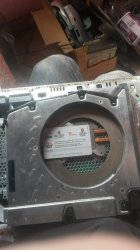
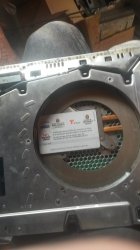
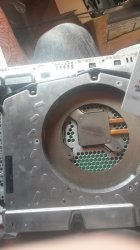
I have the final Solution for PS3 Cells Factory High Temps in the 4 Usbs Who will have newer gpus with frank mod, the Original 90nm Cell is made to work at 74c~ 77c on the factory standarts from the 4 usbs models by syscom fan Steps and Temps, and Rsx 90nm is made to work at past 80c (and thats what Cracks the Bgas of Rsx and General working at 80c) So by Replacing the Rsx with the 40nm model due to physics we will have the Rsx now only generating 58c Max (I think lol cant remenber exactly) exactly because the Transistors on the Rsx are 40 nanometers size and they consume or Should consume more than 65% less Energy and for that generating far less Heat of Course So Finally the Big Secret The great great Majority people don't know or never notice is that Cell and Rsx Heatsinks are Not CONNECTED in the 4 Usbs Models so Now we with the 40nm Rsx on Coks we can Do lots and lots of Cool Mods on the Heatsinks of Coks to Decrease the ~77c on Cell and increase Rsx from ~58c to ~66c and decreasing Cell Max to ~69c, the First method could be to use an Copper Blade with something Like 0,5 mm thickness in the back of Heatsink plates of Cell and Rsx right where the fan sits to connect Cpu and Gpu heatsinks together Using Thermal Paste and of Course the Copper Blade Connecting Both Cell - Rsx Plates HeatSinks Together!!! Also the Other Methods Could be to Install HeatPipes to connect Cell and Rsx Heatsinks but thats harder, must there lots of ways to connect Rsx and Cell Heatsink and the Best for me now is to install really the Copper plate to connect both processors Heatsinks, the card that I put in the Heatsink in the Images i upload shows where I mean to put the Copper Blade with Thermal Paste, also an Copper Blade Replacing Both Ihs and Being one Copper Blade to Replace Both Ihs Right in the Original Position May Have The Highest Performance Removing Heat from Cell and Moving to the Rsx Heatsink with now an 40nm Rsx on franks, that all must make the the Cell never Hit 69c with Stock Fan Speed Syscom!!!
 

Attachments

  • 20220823_142258.jpg
    20220823_142258.jpg
    708.4 KB · Views: 128
  • 20220823_142255.jpg
    20220823_142255.jpg
    683.1 KB · Views: 134
  • 20220823_142249.jpg
    20220823_142249.jpg
    625 KB · Views: 149
Last edited:
Ok so here its an Logic observation of Why bumps Should Not fail or they dont Fall at all I think; in the back of Rsx you have lots and lots of capacitors with their soldering of Course and when reballing is done nobody is Re Applying new Soldering to those capacitors but their solder will still work great after all, but mostly important is that when you Reball or just change some Smds or Ics you dont change the older soldering 100% you May think U do but No, the actual pads are Cooper (Orange Yellow collor) so when you remove the an older component and its older solder you Will always see that the pads are left Silver and not Orange or Yellow, so that means that Even when you clean the older solder with cooper wire, older soldering still there and will never leave Even if you doyng the cleaning of Bga pads, so the bumps Soldering Are Close to the Same thickness or high as the old residue of soldering in the pads, nearly an painting of soldering I would say, and of Course Everybody knows that soldering pads wont need to be 100% cleaned Everybody knows that pads Even with their "paited old soldering" those pads will work, so logical conclusion of the observation is indeed that when an soldering that is Even very old will show not failure at all IF THAT Soldering is extremely thin or of Extremely small thickness or diameter, it sounds very alike to be True, im Not saying is a fact, for that I need more evidencie, but it sounds alike to be True cause in the micro physics level the eletrical Waves would have No problem to go trough an extremely small crack as one inside inside of an Bga bump or the bumps bgas are so small that they dont crack....
 
Can you give an Scientific Example of an processor which has bump failure??? Cause I think in your vídeo was more theory, (great video by the way) so I highly dont think bumps fail, mostly because Intel processors with more than 17 years never fail Running with stock Voltages and frequency and yes Intel uses micro Bgas inside their Cpus, here it's my dead PENTIUM Dual Core 3ghz, and no it not died by life span, it died cause It popcorn when I put in the frying Pan with some eggs

Hello. I got to see it too but I don't think you have fully understood the video. It has nothing to do with Intel or their CPUs . This was the discussion of only specific GPUs designed by Nvidia/Sony/Ati in a specific timeframe when they had bumpgate failures. Please try not to jump to conclusions before you fully understand the idea that was presented.
 
Hello. I got to see it too but I don't think you have fully understood the video. It has nothing to do with Intel or their CPUs . This was the discussion of only specific GPUs designed by Nvidia/Sony/Ati in a specific timeframe when they had bumpgate failures. Please try not to jump to conclusions before you fully understand the idea that was presented.

Hello how is going? Well Felix was talking about lots of things, and lots of Details about the Bumps, he Firstly TALK about the excessive Current in the Bgas/bumps that was destroying them by overheat due to excessive power and that was solved by sharing the Power across multiple bgas, and also i'm sure that Felix Shows that Even the newest bgas has Bump failure, and i'm very sure of what im talking about, Everybody seens to believe that Bga processors has bump failure while I don't, so i'm asking if any body could answer giving an scientific observation of an Chip Who really has bump failure, just describes it's behaviors to conclude scientificaly that the bumps are the problem, well I already know the Details and characteristics of an theoretically bump failure but I Never see anybody rightfully describing or finding an Chip with bump failure, well my views is that if a chip has bump failure then you would need to Reball one Chip and after That the chip Must Work by the heat reparing it's micro Bga theorycal cracks in theory, Then that internal Bga would fail in Max 3 months as expected and by final last test of proof you would need to just reflow that chip again when it has stop working within 3 or less months and if the chip start working again that will finally be proof of Internal bump failure, and again he Felix was Talking about Bumps and not only Gpus, he Felix is an Eletrical Engineer by it'self so he was not only talking about ps3 or gpus only, he was talking about the whole physics behind bgas and Bumps so all sorts of processors that use bumps are included in the observation.

Forgive my horrible english, i'm Not native english speaker!
 
Last edited:
It seems that this argument always comes out . I 'm not sure what observation or proof are you looking for exactly? Because , sure you can reball some chips and wait for them to fail again. But I don't see the point of that? I myself had an nvidia 8600M that kept failing sooner after each reflow. I witnessed that myself. The information is out there and there is nothing surprising or new. Felix has documented failing consoles quite well. Botakompong has himself spoken about GPUs that become shorted in some of the lines but recover connections after heat. They aren't always immediately THIS bad once the error 3034 appears, but that doesn't mean they won't end up that way. If you don't trust the analysis or prefer to wait for the unreliable chip to fail, of course you can probably conduct your own experiment. To have more scientific proof would require access to expensive equipment, I would imagine. For now, best we get is educated conclusions based on experience and available information. I am personally not a fan of the idea to reball dying processors, I wish this argument would not come out so often.... But that's just me.
 
I am personally not a fan of the idea to reball dying processors, I wish this argument would not come out so often.... But that's just me.
Some people are not a fan of the idea of treating living processors as dead... When they arent always dead.

Solving problems that arent there... Sounds very familiar. The NEC Tokin capacitors were also "proven" to be defective and such, but then it took hundreds of machines to actually find a genuinely bad capacitor. We know how that story went, so we should be cautious not to repeat the same mistakes of the past.
Progress only happened when some people questioned that tokin story despite the trends and tried to get to the truth with real world evidences and the proper means.

@Victor Hugo Alvarez is absolutely right to ask... Where is the chip with "broken bumps"?
Has anybody actually found it in the real world? How? And how often?
Theory is good and all, but it cant be complete without reality.

In fact I value reality more.
 
Some people are not a fan of the idea of treating living processors as dead... When they arent always dead.

Solving problems that arent there... Sounds very familiar. The NEC Tokin capacitors were also "proven" to be defective and such, but then it took hundreds of machines to actually find a genuinely bad capacitor. We know how that story went, so we should be cautious not to repeat the same mistakes of the past.
Progress only happened when some people questioned that tokin story despite the trends and tried to get to the truth with real world evidences and the proper means.

@Victor Hugo Alvarez is absolutely right to ask... Where is the chip with "broken bumps"?
Has anybody actually found it in the real world? How? And how often?
Theory is good and all, but it cant be complete without reality.

In fact I value reality more.

I knew you would come to support the idea :D No, it's all good . Nectokins were never fully tested in the beginning, it was a blind fix before error codes could be read.

In my opinion, even the fact that these 90nm GPUs CAN develop a bumpgate failure with high probability, should already be enough to dismiss them as unreliable. Does it really matter how many of them had true bumpgate fault and how many did not yet develop it? Sure, I could find you a gpu with a true bumpgate issue in the real world, but what will that change? Because then you will say that it's just one unlucky one and not enough to draw conclusions. But who is going to reball and use these consoles until they actually start failing withing months /weeks ? Also I could use that same argument and say where is the RSX with bad bga ? How many is there? Is there scientific proof that's documented?

I'm just wondering why do you insist in reballing older processors when there is a new one available? Alright ,maybe for some people it is too much work to do that, but then again. If you can reball the old one, you might as well swap it with a better one, no ? Maybe to save money? I suppose. But how would a customer feel when you tell him 'you know, we can put a more reliable gpu instead or I can reball the old one that's known to develop new failures later on." These days people want to repair their machines properly with the newest methods and not just end up having to ship their consoles back and forth for more repairs...
 
Last edited:
even the fact that these 90nm GPUs CAN develop a bumpgate failure with high probability should already be enough to dismiss them as unreliable
But how do you know this "high probability"?
This is all that I am asking.
For example... The "customer" as you say is in a vulnerable position because their only option is to trust.
Trust when they are told that their chip is defective and it will inevitably fail... So the only way is to replace it anyway, with another chip from different board.
They have to trust that when the repairer told them about this problem, is because they actually found the problem themselves too often, or hell, at least even once.

(And is not just something they heard, or learned from youtube or with pseudoscience)
Because anyone can do that...
But who is going to reball and use these consoles until they actually start failing withing months /weeks ?
Yes, that is the way. Maybe it still wouldnt pinpoint the "broken bump" (another extensive topic), but that is the undisputed way to find a processor with internal damage.
Put it back on the board and see if it actually fails or not. When it still fails after the successful reball... You found it.
Take note of that situation, and over a number of machines, see how frequent it actually is. See if is frequent enough to justify the paranoia you are talking about.

Sounds impossible right?
Well, the thing is that some people have actually done it already...
People who have been repairing PS3 for a long time, giving long warranties and they are the ones that could have an idea of how frequent the "broken bumps" actually are.
People that are still in business after many years, with the same public name and that actually may be part of the reason why you are here at all, as they helped make this new repair possible. I dont think they have reason to be dishonest...

And what do they have to say?
Are all the chips actually dead? No.
Some of them even say, that most of the time they are not dead at all.
Is their reballing pointless then?
I am just not in a position to deny their experience. In fact I value that more than theory alone, so I simply cant ignore it.
 
And how do you know that the probability is not high? How do you know they are not dead? Whose reballing ? How are you going to prove just because the client did not return, that their console stayed working? How many reballed CECHA/Cs are out there still working? Can you also prove proof of that? And how would you explain that Cell almost never gets bga problems? More importantly, what is your motivation behind this #90nmLivesMatter movement ?
 
You fail to remember that the "Frankenstein " mod has only recently come about publicly. So reballing the 90nm has been very much the norm for the past 10+ years and myself as a reballer for the past 13 years have a very different and a very experienced percentage rates of the good,the bad and the ugly!
 
And how do you know that the probability is not high? How do you know they are not dead? Whose reballing ? How are you going to prove just because the client did not return, that their console stayed working? How many reballed CECHA/Cs are out there still working? Can you also prove proof of that? And how would you explain that Cell almost never gets bga problems? More importantly, what is your motivation behind this #90nmLivesMatter movement ?

Bro well about your 8600m you said you Just reflow it, thats not how you test it, you have to do an reballing with Perfection to scientificaly Remove the possibility of the "Big Bgas" to be the problem, and then you need to see if works, if the reballing went fine and the chip works then is ok or the Heat Reflow Repaired its Bumps or the Reball of "Big Bgas" was really the problem, and for detect the an Bump Failure you would need to wait an Max of 3 months with that Machine working fine after being repaired, and then if fail again in that períod then or the chip transístors died or could be the bumps, so you must make an reflow and if the chip come Alive again we will know that it was the bumps all the times cause we just make an Reball 3 months ago max but now is dead and I did reflow and is Alive again then I just repaired the Internal Bumps Micro Bga Cracks Teoretically.
All this is just an representatiin of how an bump failure would be Easy detected.

About the Cell not Having Bgas Issues, that must be due to the Fact that Cell has no Bgas Under the Chip and a Hole in the motherboard so that greatly remove excessive heat from bgas, mostly important is nobody seens to analise Logic, PS3 board has 20 Bgas Chips, Why is Only the Rsx Having Bga Problems???? Rsx is the only chip Bga that gets Hotter than 80c while the Other Bga coponents dont get that hot so of Course heat, peak heat is the main cause of Bga Cracking! And beyond Cell Chip Fiberglass Having no Bgas in the middle also Cell in the Coks is protected by fan syscom to not Reach 80c, if does Reach 80c fan syscom goes to 50% fan speed, Cell mostly in Coks works at 75c, also mostly Important you Should know that with 25XX Slim Ps3 and All Beyond that they Start Having all Cpu Cell Bgas Cracks and not Rsx, I reflow lots of Slims Cpus only and they come back to live, I believe and I know SONY reduced heatsink from the 20xx to the 25 XX slim model and the Cell most work too hot now in the 25xx and have Bga cracks, but about the 2 Usbs PS3s FATS is super Weird Their Cell Cpu is set to work at 80c just after 5 minutes turned and those ps3 rarely rarely has Cell Bga Problem so I dont know how to explain that Cell 65nm in 2 Usbs ps3 fats not Having Bga Problems.

Edit: I know all Slims comes with 45nm Cell and only 20xx uses 65nm Rsx but that Only would be no reason to make Cell Heatsink só small on 25XX model and beyond.
 
Last edited:
Back
Top