PS3 "GUIDE" South Bridge log with possible GLODs & YLODs solutions'

DeadEnd

Senior Member
I'm not sure if it's been shared yet, but I've posted across various threads that sometimes reading south bridge log can give a few extra hints towards a solution in ps3 fault search. So I decided to share some of the sitations I've come across where it has been helpful along with a few other cases I've repaired.

As always, I happen to work the most on COK-001/002 boards so this is what you need to do to read the log (Click on the spoiler to see the guide).

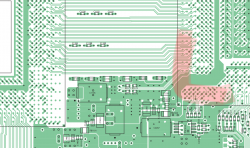
  • For regular (with stock syscon 201/202 chips) COK-001/002, connect with UART to syscon and enter "w 7202 2" It should say that the write was a success. Turn off the machine and then solder UART wires according to the images below. Remember, you cannot send anything so you only need to connect an RX wire for receiving data and ground.
  • The SB log activating command is different for models using later syscons. So for instance Sony refurbished 65 or 40nm COK-001/002 models would have a syscon 303/304, so the command for it is "W 4202 2 ". Same applies for SEM-001 and DIA-00x boards.
  • Then connect with Putty or any other terminal reading tool using Serial setting, specify the port of your UART , speed is 115200 baud.
  • For COK-001
View attachment 39282

  • For COK-002
View attachment 39283

So what can you get from it ? Well, you can see a booting sequence and what is going on with the system. It can be useful if you have a GLOD and the system seemingly boots, but nothing is displayed. It can also be useful if you have a longer YLOD, where the system nearly booted but then shut down , because some information could still be displayed in the bootloader.

Example 1. I had a console with the following errors. The system nearly booted but then shutdown because of BE livelock condition. (This example was explained in greater detail in the nectokin thread, but here I just want to point out how SB logs can be helpful ).

View attachment 39284


Reading South Bridge output and comparing it to a working console revealed that the damaged board would shut down at the RSX detection step. it's a step where FlexIO Core must be functioning correctly in order to allow detection.The voltage responsible for the FlexIO core is RSX_VDDR, so further diagnostics revealed that this voltage was faulty and outputted 1.6v instead of 0.95 v (Because I swapped the ps3 in question with the 40nm chip, normally it would be 1.2v for 90nm chips ).

View attachment 39285


I'll post more examples later...
 
Example 2. GLOD PS3 CECHA, does not display anything on the screen. No analog output and no video output.

Reading the south bridge data reveals that the system has booted. So we can at least safely assume that Cell is fine.
View attachment 39286


In this case, we need to dig somewhere else. A common issue is that RSX has failed but in an unusual way. Perhaps it's a VRAM failure or something else. Let's go back to syscon and check some of the commands to check what is going on with HDMI chip.
"hdmi chstat 0", "hdmi ports", "hdmi redid 0". In the image below I only used the chstat command. We can see that RSX is not setting the resolution despite having HDMI plugged in and detecting the HDMI chip. So the only conclusion is that there is a problem with RSX itself... A good candidate for a frankie procedure.

View attachment 39287
 
Thanks, it certainly looks like an RSX issue in the examples you have given. I don't belive pressure on the cell processor would help boot the console, but it would be interesting to know if it could.

I have gone through some spares and found a GLOD console that wouldn't boot with pressure on the cell so from this I can definitely determine there is different types of causes for the GLOD error.

I will look at trying to follow what you have done so I can see the boot sequence, again I can't do this till after Christmas but will report back when I know the results.
 
Nice guide. Do we also need to thank Timbo for the inspiration?
Thanks, it certainly looks like an RSX issue in the examples you have given. I don't belive pressure on the cell processor would help boot the console, but it would be interesting to know if it could.
Ahh, but this is the interesting part. The thing is, you have seen yourself how it does indeed work in many cases. This is very significant. But how come?

There is a GLOD. No video, or sometimes artifacting, greenish garbage on the screen is common also.
Experience tells us that this is most likely related to RSX.
If you check the southbridge, it makes it even more clear that is RSX or RSX VRAM
related.
So the only conclusion is that there is a problem with RSX itself...
Maybe...

But you put pressure under the CELL CPU and somehow it works?
You are not crazy @Timbo9876, It really works... This is actually quite common.

You would think, maybe this means that the issue is with the CPU, since you put pushed "under" it and it worked. But the southbridge and all doesnt quite agree, since the CPU was already working fine apparently.
There is another explanation.

If you think about it, you are actually pushing the board (not the CPU precisely) from the bottom.
Not the quite the same as pushing the CPU against the board.

What this can do is bend the board in such a way that it is pushed slightly "against" the RSX, (probably more than if you pushed directly under RSX) and this can be enough to reconnect a precarious connection under the RSX which CAN be causing all the symptoms described above.

Particularly the RSX corner nearest to CPU and southbridge for example, we have seen dodgy or even broken pads on the board causing a GLOD until fixed.
Screenshot_20221220-071922_1_1_1.png
I have had machines like these, some of which the GLOD only began after rough shipping or other physical manipulation. Sometimes even just disassembly and reassembly can be enough to change the behavior.

Your pressure test is in effect confirming a precarious connection under the RSX. Something which can be fixed with reballing, and has been fixed like that many times over the years. (And fixing pads if necessary). Not an issue with the RSX itself, but a bad connection between it and the board.
This is how you diagnose something like that.
Not the substrate because if it were, it wouldnt be responding to that kind of pressure.

Cheers
 
Nice guide. Do we also need to thank Timbo for the inspiration?

Ahh, but this is the interesting part. The thing is, you have seen yourself how it does indeed work in many cases. This is very significant. But how come?

There is a GLOD. No video, or sometimes artifacting, greenish garbage on the screen is common also.
Experience tells us that this is most likely related to RSX.
If you check the southbridge, it makes it even more clear that is RSX or RSX VRAM
related.
Maybe...

But you put pressure under the CELL CPU and somehow it works?
You are not crazy @Timbo9876, It really works... This is actually quite common.

You would think, maybe this means that the issue is with the CPU, since you put pushed "under" it and it worked. But the southbridge and all doesnt quite agree, since the CPU was already working fine apparently.
There is another explanation.

If you think about it, you are actually pushing the board (not the CPU precisely) from the bottom.
Not the quite the same as pushing the CPU against the board.

What this can do is bend the board in such a way that it is pushed slightly "against" the RSX, (probably more than if you pushed directly under RSX) and this can be enough to reconnect a precarious connection under the RSX which CAN be causing all the symptoms described above.

Particularly the RSX corner nearest to CPU and southbridge for example, we have seen dodgy or even broken pads on the board causing a GLOD until fixed.
View attachment 39293
I have had machines like these, some of which the GLOD only began after rough shipping or other physical manipulation. Sometimes even just disassembly and reassembly can be enough to change the behavior.

Your pressure test is in effect confirming a precarious connection under the RSX. Something which can be fixed with reballing, and has been fixed like that many times over the years. (And fixing pads if necessary). Not an issue with the RSX itself, but a bad connection between it and the board.
This is how you diagnose something like that.
Not the substrate because if it were, it wouldnt be responding to that kind of pressure.

Cheers

Well, I'm not sure why you're quoting me. I have been trying to tell him that forces from the pressure will spread out over larger area on the board for a while now in the other thread.

As for whether it's an issue with RSX itself or not, I wouldn't exclude the possibility that it could be still die/substrate related as well. Pressing the board against the substrate could affect the die too, since it's attached to the substrate. And any microscopic shift/force could in theory cause the damaged bump to reconnect. In any case, I'm not here to reball RSX, these examples were just to show how to diagnose, but how you want to repair it is up to you. I would never advise reballing a 90nm either, but you already know how I feel about that.
 
I don't deserve any credit for this, its DeadEnd that is the only person that has backed up his claim of RSX failure with actual evidence. Everyone else that has said its RSX couldn't back it up.

I actually had a 3 day old PS3 backwards compatible fo GLOD because of a knock in the post. This rules out bump gate failure and points to a BGA issue. Maybe by pushing down hard on the CPU it reconnects the RSX BGA as DeadEnd has suggested and is what my original thought process actually was.

So to conclude, the CPU pressure mod without doubt pushes on the CPU BGA but could also bend the board so that the RSX reconnects also. In any case its an effective mod, ideal for someone that can't afford a re-ball and wants to get a bit more life out of there fatty.

Thanks DeadEnd, you have convinced me that the CPU pressure mod may also reconnect the RSX, we don't know for sure and I will continue my research to find more evidence so we can be absolutely certain of what's going on with this mod.
 
I don't deserve any credit for this, its DeadEnd that is the only person that has backed up his claim of RSX failure with actual evidence. Everyone else that has said its RSX couldn't back it up.

I actually had a 3 day old PS3 backwards compatible fo GLOD because of a knock in the post. This rules out bump gate failure and points to a BGA issue. Maybe by pushing down hard on the CPU it reconnects the RSX BGA as DeadEnd has suggested and is what my original thought process actually was.

So to conclude, the CPU pressure mod without doubt pushes on the CPU BGA but could also bend the board so that the RSX reconnects also. In any case its an effective mod, ideal for someone that can't afford a re-ball and wants to get a bit more life out of there fatty.

Thanks DeadEnd, you have convinced me that the CPU pressure mod may also reconnect the RSX, we don't know for sure and I will continue my research to find more evidence so we can be absolutely certain of what's going on with this mod.


Are you saying pushing down on the CELL reconnected the balls to the RSX and it started to work again? If so, thats some magic powers I want to get also! I would absolutely stay away from any type of "pressure mod" personally. Using bolts or thermal pads to build up pressure did not work for the 360 in the long-run and won't work for the PS3 in the long-run also. Just do it the right way, read the syscon and/or sb uart and diagnose based off of that.
 
Not everyone has the skill to do a RSX reball.

Not everyone has the money to pay for a RSX reball.

This solution offers hope for people that want to recover there data or just want to extend the life of there console without requiring expertise or cost.

I currently have one of these consoles that's two years old and has done well over 100 hours game time with this mod, not bad fir a temporary fix.

Yes yes yes if you fo have the expertise or can afford a reball this is absolutely the right thing to do. But please understand not everyone can and this mod gives these people an option that they otherwise wouldn't have. See link below

Merry Christmas

 
As for whether it's an issue with RSX itself or not, I wouldn't exclude the possibility that it could be still die/substrate related as well.
The board pressure test is what excludes the possibility that it could be the die/substrate. It really does make a key distinction. This is a widely accepted, general fact.
Pressing the board against the substrate could affect the die too, since it's attached to the substrate. And any microscopic shift/force could in theory cause the damaged bump to reconnect.
Because this is simply not the case. Due to basic geometry and the fact that there is a rigid underfill encapsulating the hypothetical "broken bump", there is no way that a light pressure (on another side of the board) could reconnect it.

Not to mention that the RSX package is stiffened by a thick IHS that is glued with rigid cement on all 4 corners, keeping the package stiff and straight. (Perhaps too stiff while the board can bend)
Meanwhile the board can actually be flexed like that, and this is what makes the pressure test a valid diagnostic.

Finally, as you said it is up to you how you want to "repair it", but this doesnt change the underlying issue. Diagnosing is exactly what we are doing.
 
I belive its a BGA issue and it's either the CPU, RSX or both, I don't think bump gate is a symptom of the consoles I have applied this mod on.
 
The board pressure test is what excludes the possibility that it could be the die/substrate. It really does make a key distinction. This is a widely accepted, general fact.

Because this is simply not the case. Due to basic geometry and the fact that there is a rigid underfill encapsulating the hypothetical "broken bump", there is no way that a light pressure (on another side of the board) could reconnect it.

Not to mention that the RSX package is stiffened by a thick IHS that is glued with rigid cement on all 4 corners, keeping the package stiff and straight. (Perhaps too stiff while the board can bend)
Meanwhile the board can actually be flexed like that, and this is what makes the pressure test a valid diagnostic.

Finally, as you said it is up to you how you want to "repair it", but this doesnt change the underlying issue. Diagnosing is exactly what we are doing.

I just wanted to show an example of the problem with RSX. I don't know 100% what's causing RSX to GLOD like that and I don't want to argue about it. I hypothesized that a higher pressure from the bottom of the board could potentially flex the substrate. Either ways, I know you have the need to hijack every thread to say that RSX must be reballed. Your reballing may not last long though, because 90 chips are prone to other failures too... And again, we've all been there so that's nothing new.
 
I just wanted to show an example of the problem with RSX. I don't know 100% what's causing RSX to GLOD like that and I don't want to argue about it. I hypothesized that a higher pressure from the bottom of the board could potentially flex the substrate as well. Either ways, I know you have the need to hijack every thread to say that RSX must be reballed. Your reballing may not last long though, because 90 chips are prone to other failures too... And again, we've all been there so that's nothing new.
Well, your example of "problem with RSX" seems like an example of perfectly working RSX.

No way to flex the substrate like that, only the board.
Trying to deny this is simply dishonest. Response from light pressure test is the way to identify a legitimate BGA issue, which yes, can be solved with reballing.
Whether you can or want to do it or not, is another story.

"Wont last long..."
Maybe... Again, as you said this thread is supposed to be about diagnosing only, so I wonder why that suggestion came about.

It is possible to replace problems that arent there,
But at the same time be real about it, and say that you simply dont want, or cant reball. No need to be spreading fears of ghosts and other defects, simply because it may be more profitable or something.

Cheers
 
Last edited:
To be honest, if I was going to the trouble of reballing the RSX, I would do the Frankenstian mod as bump gate is well documented and the 90nm RSX chips where definitely prone to it

Peace and merry Christmas
 
To be honest, if I was going to the trouble of reballing the RSX, I would do the Frankenstian mod as bump gate is well documented and the 90nm RSX chips where definitely prone to it

Peace and merry Christmas
Excellent. It is up to you and your own personal reasons. Is also up to you if you want to "fix it" with squished thermal pads and that can be respected too. Everyone has their own priorities

However, this would not be about diagnostics anymore.

Diagnostic says that:
GLOD/artifacts + respond to pressure = legitimate BGA issue

Merry Christmas to you too
 
bump gate is well documented and the 90nm RSX chips where definitely prone to it
Though before claiming or spreading stuff like that, I'd still like to see at least one single example of a "broken bump" on an RSX though.
Which as far as I am aware, it hasnt actually been found yet. Only speculated.
And shouldnt be that hard to find if it actually were that common...

Probably wouldnt belong in this thread however.

Cheers again
 
Though before claiming or spreading stuff like that, I'd still like to see at least one single example of a "broken bump" on an RSX though.
Which as far as I am aware, it hasnt actually been found yet. Only speculated.
And shouldnt be that hard to find if it actually were that common...

Probably wouldnt belong in this thread however.

Cheers again

Stop polluting this thread. Go make your own and make your points there. I didn't make this for you to come here and argue about your theories and what's bga or what's not bga. In fact, from the history of our encounters, you're not welcome in this thread.
 
Umm, I'm entitled to my point of view, sorry if its not what you wanted to hear. I'm sure if anything doesn't belong in a thread the actual moderators will either move it or delete it.

So I do agree with you that pressure does indicate and highlight a BGA fault.

I have also done plenty of experiments, the pressure mod which your already aware of, I have also applied 150 degrees directly to the RSX die which on some PS3's has booted the console. This doest last but is definitely worth a mention because 65nm RSX chips don't support firmware below 3.15. So by getting a temporary boot will give the repairer enough time to update the console to the required firmware so when the 65nm chip is applied it won't produce a system failure. The point is that the heat is not enough to fix a BGA issue so the only reason a console would boot after applied heat is that the chip itself was faulty and the heat has temporarily fixed the bump issue.

My conclusion is that the PS3 consoles do suffer from BGA issues. All evidence would also indicate that PS3 consoles with a 90nm RSX could be failing due to bump gate. Please note this my point of view but its based on sound rationale.
 
Last edited:
Of course you are entitled to your point of view.
But apparently not anymore because he decided that everything should be deleted. It wasnt me... I did not delete anything, I am not a moderator.
Also I am a strong proponent of people saying what they think.

Hopefully as you say the real moderators can see what actually happened.
 
Stop polluting this thread..
The edited deletions were reverted.

Please do not edit message and delete messages like that
It messes up the forum, if everyone did that would be a problem.Right ?
Its a public forum we will not always agree with each other.

Just please consider others in the forum just not a few or a couple people.
 
The edited deletions were reverted.

Please do not edit message and delete messages like that
It messes up the forum, if everyone did that would be a problem.Right ?
Its a public forum we will not always agree with each other.

Just please consider others in the forum just not a few or a couple people.

Strange, I decided to share this information so I assumed I could remove as well... But I think I'll do better, I'll stop posting on this forum alltogether.

This is not the first time @Pacorretaco has personally accused me and attempted to discredit me just because I disagreed with him. I feel extremely disappointed having to constantly defend my reputation against his pointless lies while nobody even backs me up. He says that I only do this for my own profit , while I invested my own time and money to build my own bga machine, import broken consoles to practice on and learn the process of replacing the chips, and still barely breaking even. That I don't have enough skill to reball - a pathetic attempt to make me seem like I'm not capable, while I literally filmed a video doing it. And using examples some of the failures I told him about openly to make it seem like i'm simply not skilled enough. Except I'm not ashamed of failures, I used them to learn and improve myself. All this while he himself has not fixed a single machine nor have I seen any of his flawless work. This just seems like jealousy that went out of control and obsessive behavior to criticise what some of us have accomplished.

Anyway... Indeed I wanted to post more examples of sb log and various faults and solutions, but it wasn't my vision to have people like him make it personal and accuse me of unrelated things. People like him make this community rather unpleasant place to be. On top of that, I think we are way past the point of messing up the forum. I have often said that every threads and topics should be cleaned and sorted. What about the NecTokin thread? The misinformation on the first page is still there and lots of people can't be bothered to read 200+ pages to find out what else has happened. There's a also loads of important info buried in all kinds of threads but nobody will see it because of how messy it all is...

So this is just too toxic and stressful for me. Good luck with everything.
 
Last edited:
Back
Top