
You are using an out of date browser. It may not display this or other websites correctly.
You should upgrade or use an alternative browser.
You should upgrade or use an alternative browser.
PS2 NTFS as Default File system in OPL. Who can make it happen?
- Thread starter SkyNet
- Start date

jolek
Senior Member
SMB3 is comparable to SMB1? Does it improve productivity and security?
Please read the link about SMB that I gave you previously in a post #17.
What about other protocols and servers?
I think that SMB (Server Message Block) is the most common protocol for the file-sharing.
There are also:
NFS (Network File Service)
AFP (Apple File Protocol)
... and more:
https://www.iplocation.net/file-sharing-protocols.
Is Samba really unique and NASs always will support Samba? I just wonder how much longivity Samba will have? Because when you buy NAS you want to make sure it will serve a good service to ps2.
The mian advantages of Samba is that is free, it is still in development.
Latest (stable) version is from 15\12\2020.
Samba runs on most Unix, OpenVMS and Unix-like systems, such as Linux, Solaris, AIX and the BSD variants, including Apple's macOS Server, and macOS client (Mac OS X 10.2 and greater). Samba is standard on nearly all distributions of Linux and is commonly included as a basic system service on other Unix-based operating systems as well.
Created thread at GitHub:

...it doesn't reach that speed anyway and it is not exactly USB 1.1 if I remember correctly, or my information is outdated...
I think that at least once you had this conversation:
https://www.psx-place.com/threads/common-misconceptions-about-the-ps2-scene.20485/#post-135243.

SkyNet
Member
Tried to play a little bit with setting up SMB share and results are very interesting.
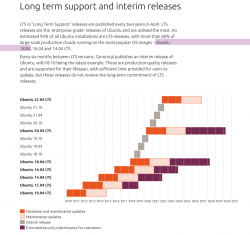
Since OPL supports SMBv1 only and in Ubuntu 18.4 smbv1 was restricted, looks like Ubuntu 16.04.7 (Xenial Xerus) and Ubuntu 14.04.6 LTS (Trusty Tahr) are the most easiest methods to do it.
All you need to do is create PS2SMB folder on Ubuntu desktop and check to share it in options. It will install Samba package first, then you check two ticks to have access for everyone in option of folder.
On PS2 side check DHCP-server for ps2 to get IP-address automatically, for share section in opl enter IP of PC , it could be wifi or ethernet ip address, and in share write PS2SMB. Try to connect, then save config.
Plus looks like 14.4 and 16.4 got ESM...
What is in teresting that in Ubuntu 14.4, if OPL creates folders in shared folder, then they all have locks and you cant put your files in, so better to create yourself DVD and others folders.
Works like a charm. Later Linux versions and Windows 10 is not user friendly way to do it since even enabling smb1 and other options does not help immediately.
Ubuntu 12.04 also kind of like works, but gui not stable for pc--,maybe i need driver for gpu?
So if you have old laptop or PC--Ubuntu 16.4 and 14.4 is way to go.
Also tried to share usb pen drive through usb port of router--can not open smb share--maybe protocol not smb1?
hey TnA for how many percentage BDM manager already finished? Just wonder when we will be able to enjoy smb2,3 and other goodies like i.link and exFAT?
Since OPL supports SMBv1 only and in Ubuntu 18.4 smbv1 was restricted, looks like Ubuntu 16.04.7 (Xenial Xerus) and Ubuntu 14.04.6 LTS (Trusty Tahr) are the most easiest methods to do it.
All you need to do is create PS2SMB folder on Ubuntu desktop and check to share it in options. It will install Samba package first, then you check two ticks to have access for everyone in option of folder.
On PS2 side check DHCP-server for ps2 to get IP-address automatically, for share section in opl enter IP of PC , it could be wifi or ethernet ip address, and in share write PS2SMB. Try to connect, then save config.
Plus looks like 14.4 and 16.4 got ESM...
What is in teresting that in Ubuntu 14.4, if OPL creates folders in shared folder, then they all have locks and you cant put your files in, so better to create yourself DVD and others folders.
Works like a charm. Later Linux versions and Windows 10 is not user friendly way to do it since even enabling smb1 and other options does not help immediately.
Ubuntu 12.04 also kind of like works, but gui not stable for pc--,maybe i need driver for gpu?
So if you have old laptop or PC--Ubuntu 16.4 and 14.4 is way to go.
Also tried to share usb pen drive through usb port of router--can not open smb share--maybe protocol not smb1?
hey TnA for how many percentage BDM manager already finished? Just wonder when we will be able to enjoy smb2,3 and other goodies like i.link and exFAT?
Attachments
Last edited:
SkyNet
Member
So looks like Sata -Firewire/i.Link enclosures with SATA Chipset based on Oxford 934 are compatible and based on
Oxford 911 for example isn't compatible. Plus for some strange reason usb port on enclosure does not help for compatibility to be good.. Maybe because not direct sata to FireWire link?
Oxford 911 for example isn't compatible. Plus for some strange reason usb port on enclosure does not help for compatibility to be good.. Maybe because not direct sata to FireWire link?
@Maximus32 recently described it somewhere, either in a thread here or on GitHub.
Most of the parts are 90% or even 100% ready.
For some yet unknown reason, the compatibility of USB (not sure about others), decreased by implementing it which is the reason why he didn't yet make a Pull request.
However... BDM itself already works very well.
I suppose it will be the "next big feature" of OPL, hence I suppose it might be in the OPL 1.1.0-release, which is likely closer than it seems.
Once BDM is included, A LOT more is possible!
I describe BDM by this term --> Masterclass
Most of the parts are 90% or even 100% ready.
For some yet unknown reason, the compatibility of USB (not sure about others), decreased by implementing it which is the reason why he didn't yet make a Pull request.
However... BDM itself already works very well.
I suppose it will be the "next big feature" of OPL, hence I suppose it might be in the OPL 1.1.0-release, which is likely closer than it seems.
Once BDM is included, A LOT more is possible!
I describe BDM by this term --> Masterclass

sp193
Developer
at least it should have better performance than usb 1.0 since it is accordibgly to wikipedia s400 version(400 megabit/sec half duplex( 393.216 Mbit/s)-- 49.152 MB/s)) which ps2 supports--the same as usb 2.0, or actually almost twice as good since usb 2.0 most of the time has around 20MB a sec.
S400 is 400Mbit, while USB 2.0 is actually 480Mbit. And these numbers are likely not considering any protocol overhead.
I'm not sure where you got the 20MB/s number from, but if it's from observing how fast you can copy files to/from a USB flash disk, it's probably limited by the flash memory's speed.
I think that i.Link is a "Game-Changer". Also I think that OPL should have in settings possibility to have i.Link as tab next to USB, Ethernet and so on.
In our current state for supporting its full capabilities? I don't think so.
Hey Berion its probably because how sony designed ps2? Like why in a world sony would add not usb 2.0 but 1.1? They either wanted to save cost of building system or they just been ok with 1.1? I know that sony started design ps2 probably in 1998 or 97 and most likely usb 2.0 didi not exist yet? I see, it was introduced in 2001.
Yes, USB 2.0 was too new for the PS2. Similarly, the contemporary Pentium III PCs from that era likely didn't have USB 2.0 support integrated either.
I don't think that the PS2's original design really had any usecases for having a high-speed external bus. Other than not having any peripherals that needed such a thing, the original idea was to just pop in a CD and the user could play games, without any hassle.
But what would they have gained from adding that later on? And if newer games actually required USB 2.0, what about users of older models?But at same time ps2 slim which was introduced i think in 2004 did not have usb 2.0 either.
Given some of the old presentations from Sony, I do believe that the network adaptor was added later on. The original design for networking multiple PlayStation 2 consoles seems to be via the i.Link.I wish Sony would have ethernet port installed in PS2 fat initially, then things would be completely different
It also adds on to the cost, if you don't actually use the network features.
and plus if sony would make progressive scan mandotory in every game if console connected through component cable--would make more sense, interlace video for interlace cable and progressive video for progressive cable. Threy needed to take it into account when designing--but now its too late. Its a history already...
In 1999, progressive scanning was not a common feature of the CRT TV, I suppose.
They didn't have support for the 480P mode in the early SDKs, even though all hardware and EE kernel versions already supported it.
Software for the PS2 must be specifically made to support the characteristics of the video mode. Since the progressive scan mode (720x480) has a different shape and is not interlaced, supporting both would affect thei game design. For example, if they wanted the half-pixel offset trick for interlaced scanning, they needed to disable that for progressive scanning. If they chose to use 512x512 for PAL, it wouldn't fit the progressive-scan mode well (we'll get letterboxing or stretched graphics).
So what I think is that they didn't design it wrong, but it's just an early console design that made it from the SD to HD era. The "progressive scan" mode offered by games is not actually the 480P HD mode we usually see today, but it's 720x480.
I think the problem with i.Link not full spec performance could be related to how ps2 built--its not like personal computer which has hdd and from hdd os could pump from swap file everything and anything--ps2 works like Preprogrammed game controler--as soon as it gets commands--it executes them, but 32mb of ram makes it probably capable acheive portion of what firewire could do...
The 32MB you speak of, is EE memory. The i.Link interface is integrated into the 36MHz IOP, which only has 2MB. 400Mbit is only possible with DMA, but DMA was not usually used in the official driver.
What about other protocols and servers? Does it make sense and is it even possible to use in addition to smb other protocols? Can ps2 even use other protocols?
The protocols you refer to, would be application-level protocols that run over some transport layer like TCP. So I would say that it can support other protocols, but whether one would take the trouble to do it is another thing.
Is Samba really unique and NASs always will support Samba? I just wonder how much longivity Samba will have? Because when you buy NAS you want to make sure it will serve a good service to ps2
I suppose, as long as Windows is mainstream, it will.
But even if it doesn't, it should be possible to write a new software to support the new protocol, unless we get limited by the hardware.
sp193
Developer
Performance measurement is a complicated thing. If you mean to ask how fast I have ever managed to get it to transfer data, I remember getting something like 64MB/s over DMA... which is not actually possible since i.Link is a 400Mbit bus. I guessed that there was inaccuracy due to how the measurement was made and it was also just a test for reading data from the connected disk, without any further processing of the data.Hey SP193, does this FireWire/i.Link driver which was included in special PS2ESDL version supported DMA?
Also Which speeds with DMA on driver could deliver?
But the thing is that there's just no way to really get that sort of speed for practical use since there will always be overhead, so I didn't look further into why that number was derived. Since we never found out how to disable the byte-swapping by the i.Link DMA FIFO, the IOP had to be used to swap the bytes back into the right order - so the throughput took a nosedive to only about 7MB/s.
If you add in support for a filesystem, expect it to get lower. There's only so much that can be done with a 36MHz processor, without extra help from dedicated hardware.
While I don't think it'll be really as awesome as you think it is, it will surely be still better than USB 1.1. The optical drive of the PS2 wasn't very fast either, if you consider its specifications.
It's just not going to be easy to support. The enclosures are also not as common as USB enclosures.
The biggest external HDD which OPL can handle is up to 2 TB (MBR) with FAT32 file system.
If you have 2 partition only the 1st (primary) will be read.
Sorry if I'm wrong to answer in this thread.
Is it possible to use an external hdd partitioned with a fat32 partition for games and an NTFS partition for use in Windows?
What I should do is set the fat32 partition as primary and enable my PS2 to read it?
I want to use the external hdd to have backups of movies and files larger than 4 GB. That is why I wanted to know if 2 partitions can be used. One with fat32 to use on the PS2 and one with NTFS for my backupsIf 4 GiB for a single file is not a problem why not use FAT32 for Win and for PS2?
TokyoRebirth
Forum Noob
Even though this thread is a few days old now, I have to add something apparently no one actually considered:
The PS2USB2.0 device does use exFAT for the USB HDDs. And even though the name features for whatever reason "2.0" in it, it has actually USB 3.0 built in. No one seemed to care about the device when it got released three years ago, but since the day I have it, I have a 5TB exFAT HDD on my PS2. The website from Leo Chow (the maker of the PS2USB2.0) said it has a maximum size of 2TB, but that wasn't true. I also got into contact with Leo to update the info and that I tested it to be apparently limitless, but the project (at least his special version of OPL) is dead. However, that particular version of OPL has indeed exFAT as file system support, so shouldn't it be somehow possible to extract the firmware and get more info on this version?
The PS2USB2.0 device does use exFAT for the USB HDDs. And even though the name features for whatever reason "2.0" in it, it has actually USB 3.0 built in. No one seemed to care about the device when it got released three years ago, but since the day I have it, I have a 5TB exFAT HDD on my PS2. The website from Leo Chow (the maker of the PS2USB2.0) said it has a maximum size of 2TB, but that wasn't true. I also got into contact with Leo to update the info and that I tested it to be apparently limitless, but the project (at least his special version of OPL) is dead. However, that particular version of OPL has indeed exFAT as file system support, so shouldn't it be somehow possible to extract the firmware and get more info on this version?

Berion
Developer
@TokyoRebirth This is the last version (?) of PS2USB v2.0 (without docs and POPS). Could You confirm that this version support exFAT? Does uLE from this package also support exFAT?
Attachments
TokyoRebirth
Forum Noob
@Berion Yes this is sadly the latest version. I asked Leo if he continues the project, but he won't (I guess because of really, really bad marketing, since the hardware is far superior than anything else I've encountered but no one has it). And yes, this version does support exFAT. I use macOS at home and love the fact about exFAT, since I can just drag and drop between them (NTFS is not supported on macOS and FAT32 doesn't like 8GB ISO files  )
)
For uLE, I have to take a look. I only use the OPL integration and don't even know if uLE is in the firmware (there is no launcher at the beginning, it directly takes you to OPL). I tried to launch uLE as an app inside OPL and it works, but the mass storage option does not see any HDD.
I'm no PS2 developer, so I can't take a look inside the firmware files. I asked Leo if he would be interested in open sourcing his project, but I got no answer after that question... so I guess not.
)For uLE, I have to take a look. I only use the OPL integration and don't even know if uLE is in the firmware (there is no launcher at the beginning, it directly takes you to OPL). I tried to launch uLE as an app inside OPL and it works, but the mass storage option does not see any HDD.
I'm no PS2 developer, so I can't take a look inside the firmware files. I asked Leo if he would be interested in open sourcing his project, but I got no answer after that question... so I guess not.
@Berion.
Je peux te confirmer que PS2USB2 gère le format de fichier exFAT parfaitement car j'en possède un depuis longtemps. Je possède aussi une interface PS2NetBox qui elle aussi utilise le format de fichier exFAT. Toutes les deux sont parfaites et fonctionnelles.
Je suis l'auteur de la traduction en Français des ressources linguistiques du OPL pour ces interfaces.
I can confirm that PS2USB2 handles the exFAT file format perfectly because I have had one for a long time. I also have a PS2NetBox interface which also uses the exFAT file format. Both are perfect and functional.
I am the author of the French translation of the OPL linguistic resources for these interfaces.
Je peux te confirmer que PS2USB2 gère le format de fichier exFAT parfaitement car j'en possède un depuis longtemps. Je possède aussi une interface PS2NetBox qui elle aussi utilise le format de fichier exFAT. Toutes les deux sont parfaites et fonctionnelles.
Je suis l'auteur de la traduction en Français des ressources linguistiques du OPL pour ces interfaces.
I can confirm that PS2USB2 handles the exFAT file format perfectly because I have had one for a long time. I also have a PS2NetBox interface which also uses the exFAT file format. Both are perfect and functional.
I am the author of the French translation of the OPL linguistic resources for these interfaces.
Berion
Developer
If it is matter only of USBD.IRX, it can be take out from main executable and probably used as standalone. If changes was also made to USBDHFSD.IRX then it would not be easy as not all homebrew allow to read external USB interface file. If also some headers was needed on OPL side to use this "libs" then some RE is needed.
I took the base packages, updates and "extras",and merged all into one package. I did the same with PS2NetBox back then.
However, most ethical would be create exFAT module from scratch, especially that MS open the documentation and implementation can be full, without guessing work.
I took the base packages, updates and "extras",and merged all into one package. I did the same with PS2NetBox back then.
However, most ethical would be create exFAT module from scratch, especially that MS open the documentation and implementation can be full, without guessing work.
TokyoRebirth
Forum Noob
Depends. Ethical...for a dead project, I don't know. Whatever would be easier I guess. I would love to help, but I have no clue about developing at all other than icon creation. At least I hope that the knowlege of its excisting gets out so more people are drawn to it
