PS3 Frankenstein PHAT PS3: CECHA with 40nm RSX

I did a quick research and from what I verified this oil is mixed with the thermal paste to prevent it from hardening over time, but in some cases the mixture does not occur in the necessary way or because of the stopped time there is a separation of them.
This is more common in cheap thermal pastes, where the composition of the paste itself evaporates and only this oil remains, which does not seem to damage the surrounding components as they appear to be electrically non-conductive, at least in electrically non-conductive pastes.
While my CECHG was working (test console, it only lasted 20 days and died for good:rolleyes:) I used an extremely bad and cheap folder just to have something there because every two or three days I had to open it again, and that time was necessary for the paste disappear and only that oil remains (it was always above 75 degrees Celsius, usually at 80 degrees), it looked like soy oil, used in frying and in the kitchen.]
I still have this paste at home, and I have already tested it, if I apply it to the processor, close the device normally and forget it somewhere for 2 to 4 weeks, a large amount of such oil will have formed, I can test it again and check if it is electrically conductive for example.

The tip for this not to occur or to occur in small quantities is to use excellent quality pastes (of quality equal to or greater than MX-4, for example) and that are not electrically conductive, to prevent this oil, if it happens to appear and fall into the motherboard, do not damage the components by short circuit, in addition to changing it every 6 months on average or earlier if necessary.
I mentioned "some kind of oil" because im not completly sure if the term "oil" is accurate enought. I guess there are many susbstances that feels and looks similar, dunno, the gliceryne or liquid vaseline and probably many other that are considered "pure", but i dont know if are vegetal or mineral, anyway... without going picky i think is fine for us to tell that all them are oil, because the most important characteristic that counts for us is that his thermal transfer sucks, is pretty much like using any vegetal cooking oil
For curiosity sake... i remember some geeks made a chart for fun of the thermal performance of "unconventional thermal pastes" like: toothpaste, honey, peanut butter, milk butter, ketchup, moustarde, water, sunflower oil, peanut oil, palma oil, car engine oil, etc... and the honey was beating all the others
The only good thing about that oil (from the thermal pastes that are not electrical conductive) is that it should not be electrical conductive either, so nothing to worry about shorcuts
Is just it sucks to buy an expensive thermal paste thinking you are paying a "premiun" price to have a nice product... but if it have that effect in the practise is like cooking oil :(
 
Last edited:
I believe it's a silicone oil. TechIngredients did a video not long back that describes how they made one.

 
Last edited:
I mostly use Galinstan (liquid metal) for paste
sorry to quote myself, but there is something important I want to add about using liquid metal (to those who are not aware of):

you have have to reapply liquid metal after some extense use (latest about 3 months), cause it will form some kind of alloy, even with nickel plated copper and thus it will dry out a bit. this is even worse on PS3 CPU/GPU compared to PC components

and additionally, I have noticed on my old CECHL, it somehow has even reacted with the CELL silicium crystal die, and there was a grey shadow left on it after cleaning

maybe it is not really recommended to use it between die and heatspreader, but I never have read about anything like this. this you should decide yourself and honestly, this won't stop me either from using it

edit
I even have tried pure Gallium, which also works, but this will harden if below body temperature
 
the grey shadow isnt something bad. lm can do things like this on any die cpu-gpu. but victor is agains the use of lm even with nail polish glue lm ruin two of his rsx thats very discouraging of trying any further
yeah, I can completely understand the thinking, cause to me, liquid metal is somehow a "Devil's material", considering the cleaning, if you are not very careful
 
Well not really killed but one rsx died, second one working on LM about one week testing like 2 hours in day, after ylod in 3 seconds, you all can test further, I did not had time to test Felix ways. Probably I did something wrong idk I stopped testing against high temperature, I'll come with forced ideas on water cooler and fan stock mod in same time. Felix can explain my idea much more.
 
I'll come with forced ideas on water cooler
well, I also have thought about water cooling, but only those closed AIOs if at all. these should be more than sufficient, if you correctly customize the attachment

though, currently I am running my test CECHL with customized original heatsinks, where I have attached PC heatsinks onto original CECHL heatplate (cooling fins removed). the temps hardly reach 50°C, even in summer

I first had 2 tower coolers mounted (beating even water cooling, lol), but these were too dangerous, because of too much pressure. already killed 2 CECHLs with them :(

P-20220528-135450-v-HDR-Auto.jpg
 
It is more complex setup what I think, desolder copper pipes from factory, modified circuit of in/out with car coolant passing inside pipes and return out of units. This way we use same factory fan radiators and same time cooling pipes that should force ish cold. Is complex what I think but hope to work. If I don't get time to explain I'll describe theory for those willing to test. For about 4 years I abandoned this project. Not much time to run test /development.
 
and additionally, I have noticed on my old CECHL, it somehow has even reacted with the CELL silicium crystal die, and there was a grey shadow left on it after cleaning

Using Coollaboratory liquid ultra I saw some grey/black spots on the RSX-die and the RSX-IHS, just after one week... Problem was that the liquid won't stick anymore at the oxide spots, very similar to an extreme lotus effect. I guess re-visiting this kind of thermalpaste isn't satisfying...
 
Using Coollaboratory liquid ultra I saw some grey/black spots on the RSX-die and the RSX-IHS, just after one week... Problem was that the liquid won't stick anymore at the oxide spots, very similar to an extreme lotus effect. I guess re-visiting this kind of thermalpaste isn't satisfying...
personally, I would stay away from Ultra stuff and it does not really outperform high quality pastes. it has some other ingredients, to make it more "solid" and it was only sold for being better application. use only the original, Gallium or Galinstan

you have to use fine sandpaper, to get this stuff/alloy completely off

@vyktormvmpay25
since I'm a freak, when it comes to such projects, I would be interested in. I once also wanted to make custom heatpipes with cooling solution
 
It is more complex setup what I think, desolder copper pipes from factory, modified circuit of in/out with car coolant passing inside pipes and return out of units. This way we use same factory fan radiators and same time cooling pipes that should force ish cold. Is complex what I think but hope to work. If I don't get time to explain I'll describe theory for those willing to test. For about 4 years I abandoned this project. Not much time to run test /development.
We dont know how are made the copper pipes of the PS3 heatsinks, some months ago we was discussing it and as far i found there are at least 3 different manufacturing methods, to simplify it... in 2 of them the pipes are "filled" with a material that cant be removed (so is not posible to "empty" the pipes)

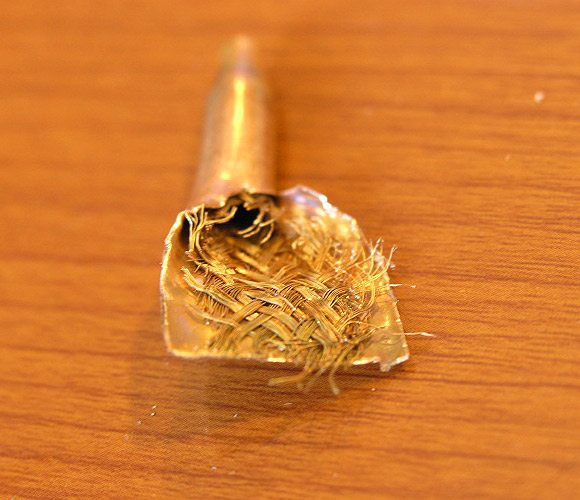
But there is another manufacturing method where the the pipe is filled with a "mesh" of a material that seems to be copper (pretty much like the ground shielding of a TV cable)... in this case it seems the mesh can be removed just pulling from it with plyers. After that you would have to figure how to solder some connectors to the pipes for the water tubes

*Personally... i think the water cooling is a bit overrated... keep in mind the water cooling circuit requires a water pump (that makes his own noise), and a radiator with a fan (that makes his own noise too)... so is not like you are removing the noise
 
Well you can't obtain both , is each person option. Yes I know pump must be included, we don't use water but car coolant will protect pipes from corrosion. This is why I gave up to this complex idea, it takes to much time and I don't know how will work , I've added already in research thread photos about how to deal and desolder copper pipes.
 
Well you can't obtain both , is each person option. Yes I know pump must be included, we don't use water but car coolant will protect pipes from corrosion. This is why I gave up to this complex idea, it takes to much time and I don't know how will work , I've added already in research thread photos about how to deal and desolder copper pipes.
Hmm, i missed that photos, im curious about them because time ago i was thinking how to "unglue" them with some chemicals. My idea was to drop the heatsink in a big bottle filled with the chemical and wait 48 hours
As simple as that, without any effort, i know there are some chemical products (not much expensive) to clean metal parts from engines that are extremelly aggresive, lol... this thing is going to "eat" every other materials, except metals

Btw, for curiosity sake... the problem i mentioned about the manufacturing methods that are "filling" the pipes with some material that cant be removed... is mostly an invconvenient that is going to cause problems in long term
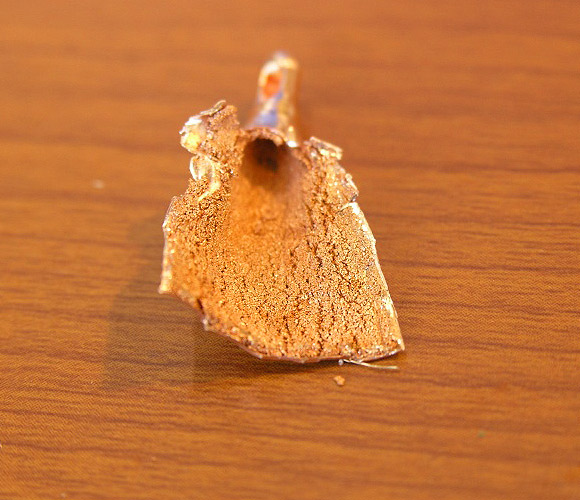
In one of them it seems they uses some kind of "copper powder" (with accurate diameter of the copper partcles), then they fills the pipe with it (except the center) and then they "solders" the particles to the inner walls of the pipe (not sure if made with heat or an electrical dischargue). The result is the pipe have an internal wall with some kind of "pores" that works as tiny conducts to allow the gas to change his state in between liquid or gas
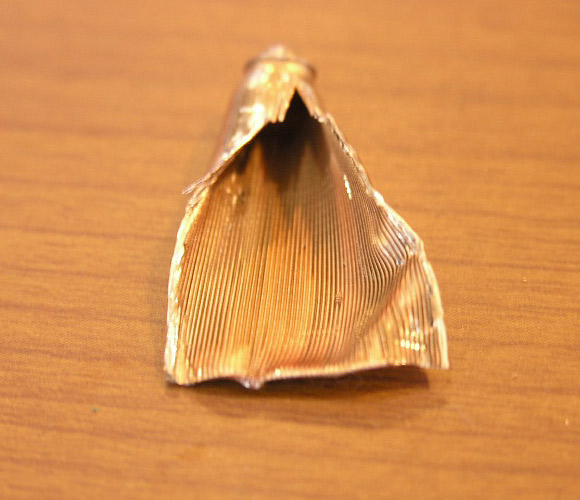
In the other manufacturing process is like if the pipe was manufactured with a wall of 2mm then they "scratchs" the pipe internal wall in the same way is made in the cannon of an assault rifle... you know the cannons have like an "spiral" all along. In the heatsink pipes the only difference is are straight lines, not spirals, but is the same

The problem in both cases is this tiny "pores" "scratches" or "holes" of the internal walls are going to be very attractive to cummulate residues... you know all the "shit" of the fluid is going to be cummulated in them, to a point where all this tiny "conducts" are going to be blocked
Is not a critical problem because at the center all the pipes are "empty"... but is going to reduce his efficiency in around 50% because is pretty much like reducing the diameter of the pipes to half
 
hm, afaik the solution in the pipes is more or less gaseous with very high pressure, so would this work with alcoholic solution? I am not so positive about it. I once have "opened" a heatpipe and it was like cooking water steam was comming out
 
hm, afaik the solution in the pipes is more or less gaseous with very high pressure, so would this work with alcoholic solution? I am not so positive about it. I once have "opened" a heatpipe and it was like cooking water steam was comming out
Yep, are filled with some gas (nitrogen ?) at a specific pressure, is calculated accuratelly to force the gas to change his state in between fluid and gas at the 2 extremes of the pipe
Think in it as a highway of 2 directions, from point A to B it moves in gas state (i guess at the center of the pipe)... and from point B to A it moves in fluid state (using the "pores", "scratches" or the "mesh" i mentioned)

The root of the problem of vyktor idea is we dont need this effect of a "double direction pipe". For watercooling we just need an empty pipe
But i like the idea anyway because is repurposing the original design :)
 
Yep, are filled with some gas (nitrogen ?) at a specific pressure
I don't think it is nitrogen, otherwise the pipe would be unbearable cold. I also know it is the principle of phase change and the inner surface of the heatpipe supports this even more (the inner looks kind of messy and corroded)
 
I don't think it is nitrogen, otherwise the pipe would be unbearable cold. I also know it is the principle of phase change and the inner surface of the heatpipe supports this even more (the inner looks kind of messy and corroded)
I never opened one, but i guess that corrosion effect depends of how is manufactured, you said you opened one, it was from a PS3 heatsink, or from a PC part ?

I found a nice link with photos of the 3 manufacturing methods i was talking about
https://www.frostytech.com/articles/2466/index.html

The first one is what i was calling "pores"
sinter2-thermolab.jpg


The second is what i was calling the "scratches" of a cannon
gloove2-thermolab.jpg


And the third is the "mesh"
felt2-thermolab.jpg


--------------
I think the only that can be removed (to empty the pipe and remove that bidirectional effect) is the mesh... but after looking at this photos i have my doubts :/
 
Last edited:
damn smartphone, I open the pix. I cannot stand it any longer...:mad:

@sandungas
right, a vacuum is inside, thus the boiling effect when opening

it was a PC heatsink and the messy inner surface helps for enlarging, so the gas can better condense
 
Yeah, I thinking of the water cooler route at this point as a preventative thing. I want to go hyper aggressive to the point we hit ambient. That underfill shouldn't matter if the board never heats up! Tax refund is coming in and it's a big one so there's a 900W water cooler I have my eyes on
 
Hello everyone, has anyone tested a 40nm RSX without IHS on a cecha01, does the Cecha01's cooler come in contact with the die and the memories dissipating heat?
 
Back
Top