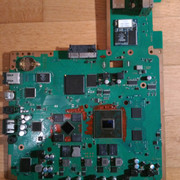
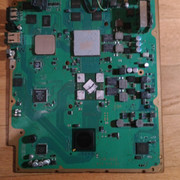
@sandungas another question, but does using the multimeter can cause any damage?
Is safe because you need to do it without any current in the motherboard, in other words, after disconnecting the power cord and after removing the battery cell, this way there is not electricity in the motherboard
you have mentioned bridging tristate point, so can anything happen if I test against ground? I really don't wanna hurt my baby. on all the other mainboards I had no fear, but this one is so special for me. btw, it looks awesome compared to all the other boards I have seen. this really looks high quality
edit
southbridge is same than on cechl cxd2984agb
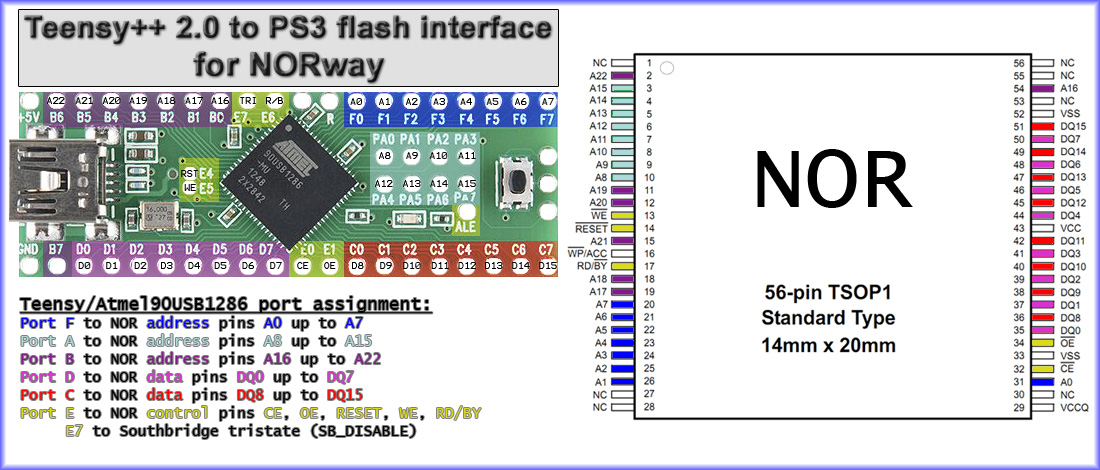
Finding the tristate is another adventure in itself, the purpose of the tristate pin (in southbridge) it to make all the other I/O pins of the southbridge to enter in a special state (named literally tristate... a.k.a "the third state")
The theory is... an I/O pin usually have only 2 states (like an ON/OFF) that represents byte 0 or 1
But sometimes that states could be problematic because we dont want any state... lets say... the state 0 represents something and 1 represents a different something... but we dont want anything, thats the purpose of the tristate
The tristate doesnt represents anything... technically is the same than if we take a solder iron and desolder all the I/O pins of the southbridge from the motherboard
When the tristate is enabled it means that the syscon is not able to communicate with his "peripheral devices" (and are a lot, USB ports, LAN, FLASH, BD, SATA, etc...)
If we try to turn ON the PS3 with the tristate enabled the PS3 cant complete the boot sequence (because is not able to find the peripherals), and it stays quiet in a black screen. But doesnt auto-shutdowns, you have half of the motherboard components "inactive", but is stable
The reason why sometimes is useful to enable the tristate when using a flasher is because we are "disconnecting" southbridge from FLASH, this way our write/read commands from the flasher are not going to have any interference from the southbridge
This way the southbridge is not going to try to read data from FLASH when the PS3 boots
-------------------------
I know some of you already know how this works, im just explaining it in general if there is someone interested in it

The way to enable the southbridge tristate is always by connecting the tristate pin to ground, the circuit is designed for it, is safe
But i said it could be dangerous because right now you are not completly sure which tespad is the tristate... lets say... you think you found it but instead of tristate the point you are using is some voltage line... so you solder a wire in between it and ground then you turn ON the PS3 and BOOM the fireworks !
The other pins flash pins are not much problematic, specially the ones for data, if you connect them incorrectly in between the flash and the flasher the most that could happen is that you are going to receive "garbage" when you read it (or more garbage when writing)... in the specific addresss related with that specific wire
But this is not going to cause any damage to the circuits
So is very important to identify the tristate tespad very well before using it (incase of doubts i would not use it)
You only need to use the tristate incase your flasher requires to have the motherboard turned ON btw... in other words, when the power to the FLASH is provided by the PS3 PSU
But... there are some flashers (like teensy) where you are powering the NOR directly with the flasher (so the rest of motherboard components are not powered, we dont need to do the tristate because the southbride is completly inactive)
I dont know your flasher, so im not sure if you need to use the tristate
Btw, are you planning to do this to install a flasher permanently ? (to have an anti-brick setup and to work in CFW development)
--------------------
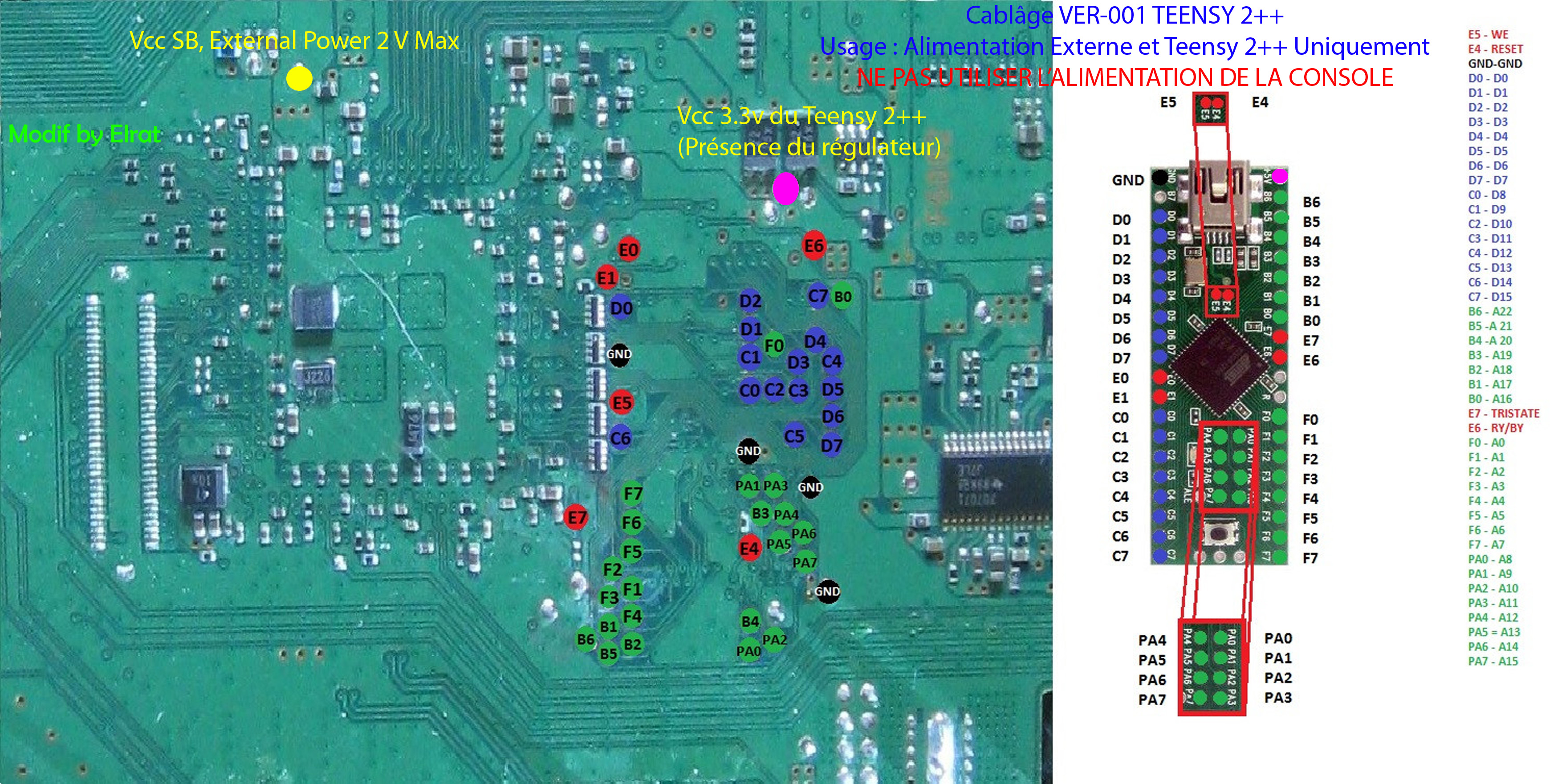
The tristate pin of the southbridge should be connected
always to a testpad... because that testpad is intended to connect with it in factory (or service repair) with a testbench using pogo-pins (i think is named "jig-pin machine" in sony slang)
That testpad for tristate is a "must have" for them when they designs the motherboards, so we know it exists for sure
Aaaaand... im not so sure if the tristate is connected to any other component of the motherboard... the only other component that could potentially be able to do the tristate is the syscon chip... but i dont think it does it
So... i guess the tristate pin of southbridge is not connected to any other component (other than the testpad for the jig-pin machine)
And it should be located very close to the southbridge