PS3 OPL and more on PS3

In general netemu works good enought, and there are many games with problems that could be theoretically fixed with a config (kozarovv and mrjaredbeta are constantly giving proofs)
Is just most of that fixes consists in "nuking" or "disabling" something
There are other games that seems to be lot more tricky to fix... and netemu have a bad fame because there are a lot of users tryng to run this games (special mention to valkirye profile 2, we have tenths of post about it in the forum, lol)
I always thought there is hope for most of the problematic games though...

---------------
Keep in mind your PS3 CECHC have the GS (Graphics Synthesizer) of the PS2
Basically, your PS3 have 2 GPUs... the RSX (used by PS3 games) and the GS (used by PS2 games)
And the video problem could be located in the GS solder pads... or maybe is because the GS is overheating

Well, yes, that's what I mean. At the end of the day, netemu is actually not bad at all, and it keeps getting better. And the thing is, that for the games that are problematic, normally gxemu has the same problems too! Gxemu is a bit faster, but not enough difference in my opinion. The games that have issues, still have issues. Personally for the games I am aware of, none really are better enough in gxemu over netemu. (Sly Raccoon for example comes to mind; quite slow on netemu, but fine in gxemu. But then again, it has a Remaster version, so for me these cases aren't really counting)


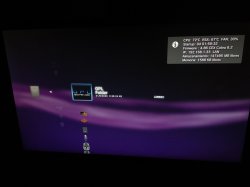
As for my particular hardware issue, I am fairly certain it is the RSX, because it has come to a point where the artifacts show also outside of ps2 games. In fact, sometimes I am lucky and I can boot into a Ps2 game fine, and be hours playing without issue. Then Reboot the console and get the artifacts again. The temperatures were OK. But the console now it's just borderline GLOD.

The real deal for me kinda was the Network and peripheral support. And maybe the ability to use physical discs and swap the Virtual Memory cards on the fly.
But these are just too unreliable. So this Is why I want to debate wether it's really worth fighting so much over them. (I know they are, but if you hadn't figured by now I'm kinda crazy and some normal people may get suckered into chasing these models, for ultimately no much reason at all.

Cheers, and thanks for the conversation. I really think it is worth having.
 
Well, yes, that's what I mean. At the end of the day, netemu is actually not bad at all, and it keeps getting better. And the thing is, that for the games that are problematic, normally gxemu has the same problems too! Gxemu is a bit faster, but not enough difference in my opinion. The games that have issues, still have issues. Personally for the games I am aware of, none really are better enough in gxemu over netemu. (Sly Raccoon for example comes to mind; quite slow on netemu, but fine in gxemu. But then again, it has a Remaster version, so for me these cases aren't really counting)
And there is lot of room for improvement in the netemu configs, just because the fact most of the commands availables are unknown
Right now is a bit pointless to argue if that unnkowns are going to be something pointless that is not going to help ...or... we are going to be like "dude thats gold"
Is like a cave in darkness, we lighted some parts of the cave and we found some nice treasures in them, so most probably there is going to be something useful in the other parts of the cave
Are commands waiting for someone to explore them... is just some of them requires reverse engineering because the command needs to use very specific values (trying to enter a random number have 99.9% chances of failure)... but there are others that are just a "switch" (with 2 positions ON or OFF)

Just to show you an example, zar made a PC app to create custom PS2 configs just by clicking in some checkboxes with the mouse... it allows to use the "switch" commands (but not the others that requires specific values, offsets, memory ranges, etc...)
Later that same config editor was integrated in managunz (it have a screen dedicated to manage and modify PS2 configs for netemu)
This was an attempt to make the process of creating PS2 configs a bit more "noob friendly", because it allows to create configs to everyone, there is no need to know anything (not even what each "switch" command does, because nobody knows it yet, lol)... is like playing lottery

Eventually... if someone find what the unknown commands does... this kind of config editors could be imrpoved... there will be more people playing around with configs, etc...

Is just is a long road... the PS2 emulator has been a long "unknown" for many years in the PS3 scene, we never had full control of it until late in the PS3 scene history when cobra source code was released

As for my particular hardware issue, I am fairly certain it is the RSX, because it has come to a point where the artifacts show also outside of ps2 games. In fact, sometimes I am lucky and I can boot into a Ps2 game fine, and be hours playing without issue. Then Reboot the console and get the artifacts again. The temperatures were OK. But the console now it's just borderline GLOD.

The real deal for me kinda was the Network and peripheral support. And maybe the ability to use physical discs and swap the Virtual Memory cards on the fly.
But these are just too unreliable. So this Is why I want to debate wether it's really worth fighting so much over them. (I know they are, but if you hadn't figured by now I'm kinda crazy and some normal people may get suckered into chasing these models, for ultimately no much reason at all.

Cheers, and thanks for the conversation. I really think it is worth having.
Ok, then it seems to be the RSX
It makes sense that eventually you are able to play normally under PS2 mode because the RSX should be almost idle when playing a PS2 game in your CECHC
Not completly idle, but you know... is relaying most of his graphics functions to the GS chip
As far i remember this PS3 models with total or partial backwards compatibility have some weird circuit design for the graphics where the data buses does some kind of "triangle" to the video controller chip/s

Btw, in my oppinion that kind of details counts too when deciding if is worthy to have one of the bc PS3 models, because s not just the software features what needs to be considered
I mean... using cars as example... if you tell me you designed a car that reachs 250km/h then im going to say "ok, good feature", but the next thing you need to show me is the design on it, because is not the same a ferrari than a volkswagen with a rocket attached at the back
The ferrari is a good design because is realliable, and if at some point you have a mechanical failure is going to be relativelly easy to find and fix because is a "conventional" engine... but the volkswagen with the rocket... you know

In the PS3 motherboard there are many subcircuits that was redesigned for good reasons, just to mention a few
SB ---> to starship ---> to 2*NAND (SB ---> to NOR in new PS3 models)
SB ---> to USB HUB/s ---> to USB ports/MC reader/Wifibt board (SB ---> to USB in new PS3 models)
SB ---> to SCSI/PATA ---> to BD (SB ---> to SATA in new PS3 models)
CELL ---> to 8 RAM chips (later changed to 4 chips... and later to only 2)

Etc...
With this i mean... the most parts involved... the easyest to have a failure (and harder to find the cause and to fix it). Also, the most parts involved, the smaller efficiency

If you achieve to do the same in a more simple way then we could say is a more "smarter" design
In general most of the changes in the PS3 motherboard was for good, i know them a bit and right now i cant even mention anything bad... other than the removal of the PS2 components, but i agree completly with the decission of removing them, it was excesive

 
And there is lot of room for improvement in the netemu configs, just because the fact most of the commands availables are unknown
Is like a cave in darkness, we lighted some parts of the cave and we found some nice treasures in them, so most probably there is going to be something useful in the other parts of the cave
Are commands waiting for someone to explore them... is just some of them requires reverse engineering because the command needs to use very specific values (trying to enter a random number have 99.9% chances of failure)... but there are others that are just a "switch" (with 2 positions ON or OFF)

Eventually... if someone find what the unknown commands does... this kind of config editors could be imrpoved... there will be more people playing around with configs, etc...

Is just is a long road... the PS2 emulator has been a long "unknown" for many years in the PS3 scene, we never had full control of it until late in the PS3 scene history when cobra source code was released
I agree. There is a lot of potential in netemu.
To me it is just impressive how well it can do in most cases, fully emulating the ps2 on 2006 hardware. Even more with the Config tweaks.
Just as a comparison (even if probably a bit unfair) PCSX2 is just still behind in most cases, even with modern hardware after all these years.
So I suppose many good things can come some day if more of netemu gets reverse engineered/the source code ever gets out.

If you achieve to do the same in a more simple way then we could say is a more "smarter" design
In general most of the changes in the PS3 motherboard was for good, i know them a bit and right now i cant even mention anything bad... other than the removal of the PS2 components, but i agree completly with the decission of removing them, it was excesive

Yes, it was reasonable that they removed the ps2 hardware inside, and we can all approve this. Now the little issue is that they also dropped the whole PS2 backwards compatibility aspect (dropped softemu) And perhaps decided to take a slightly different road.
Maybe they took the opportunity to just drop the b/c feature and instead start selling the "classics" again as new things. While as we were discussing, all ps3s should be able to have retained the ability to use ps2 games. "NET"emu works like 80% well. Imagine if Sony had kept working on it just a little more, instead of us trying with out little config files, which even with our extremely limited ability have improved so much.

Remember this story happened too, but with a better ending in the ps2 days. Ps1 chip was inside for the first models, then later removed, using just software instead. The key difference being that the user never had to really notice. All ps2s could accept ps1 games. (Except maybe the couple technical exceptions) User didn't have to be crazy geeks like us to get a ps2 model that had all the advertised features.
Then the ps3 came out keeping the near perfect ps1 emulation.
This was all before this "change of priorities". Now surprise surprise, not only after our adventure with ps2 games on PS3, turns out the ps4 doesn't even read ps1 games. So it clearly isn't just a technical issue. (Much less ps2 games, or God forbid, ps3 games) And if this is the trend, we can guess what ps5 and future consoles will do.
Honestly I can't blame them. They also have to fit in this world. But obviously we can't give credit either.


Well, speaking of hardware again, I actually decided to take a heatgun and some flux and give my RSX a half-assed "reflow". I'm pretty sure the solder balls didn't get to melt, probably didn't go past 180 C. I don't really think It is a BGA issue. Just a bad chip probably.
Anyway the thing worked. And not only that, I was able to test again of the same bunch of OPL isos and what do you know, they worked too!
So I decided to go get newest OPL build (uploaded yesterday) and make an ISO.
The damn thing works too! It even loads SMB games fine, and
So @Coro we don't actually have to deal with an ancient 0.8 version without most of the recent features.

But yea for me still the same story. The console is not fixed. I didn't break it but It still has a funny RSX.
After some reboots it starts to give artifacts again. Still not sure what I'll do with it. Hence this thread.

To end this long post clearly: recent OPL works on CECH-C model. I attach the ISO that I made.

Cheers, and thanks for the conversation.
 

Attachments

Last edited:
In my oppinion is completly fair the comparison with PCSX2, in the way i see it all this emulators are composed by:
-Core functions (generic for all games)
-Emulator Settings (intended to modify the core functions)
-Game fixes (specific for each game, intended to modify the game functions)

The core functions of PS3 NETemu are as good as the core functions of PCSX2
As you mentioned, there are many games that presents exactly the same problems in NETemu and PCSX2, and thats not a coincidence, is because the core functions of both emus are failing exactly doing the same
And from that results we could deduce the core functions are working fine... so the problem is in other place

The emulator settings depends of how many features was implemented in the emu, and most of the ones availables in PS3 NETemu are unknown so is hard to imagine how many things we can do with it

The game fixes used in PCSX2 are made with a pnach, and all them can be "ported" to the CONFIG format required by PS3 NETemu
And the result when using them in NETemu is the same than in PCSX2, so this is a confirmation that the game was problematic for the emulator core functions

The interesting thing of all this is the emulator core functions are not written with a lot of conditionals to try to "catch" all the mistakes from the problematic games... this development road would be a complete pain and would hit the performance of the emulator
The good way to do it is by using specific settings and patch files for each game, and this is not going to change ever, if at some point sony wants to create a PS2 software emulator for the PS5 or PS6 they will have the same problem
Theoretically (in the incoming years) at some point it would be posible to create a single "database" with specific "fixes" for the whole PS2 game library... and if that happens then yeah... thats the time to integrate this huge database inside the emulator itself
This way you have the whole PS2 game library automatically fixed by your emulator (either by emulator settings, or by patches) using the ID of every game

Thats a dream though, but it could happen, and sony would love to achieve it ;)
 
Last edited:
What happened with SOFT emu is that they was not ready yet to create a PS2 emulator for the PS3 100% software based
The code was a fork of the PS2 emulator used in CECHA, CECHB, CECHC, CECHE and the way how was emulated the PS2 components using the CELL "multithreading" (that is a bit special) was the same
It seems after several revisions of SOFT emu they was at a road end, because they was having a bottleneck in the performance (as far i know there was some games laggy because they was pushing the SPUs of CELL to full workload)

So they created NETemu that does the multithreading in a different way, and they added some new features, etc...
I guess it was a full rebuilding of the emulator... and from that point they achieved a good performance
Sadly they did a big rebuilding only one time... but i bet another rebuilding would not make it any bad... usually the third attempt is the good one :P
The decission of not allowing optical discs was dirty, i dont see any technical reason why they didnt allowed it, i guess was just a marketing decission :/

----------------------
If the reflow was working (temporally) thats a clear signal that you have some problem in the BGA solders, now you are confident a (good) reballing should fix it definitivelly

Btw, have you tryed to mount a virtual PS2 memory card in the PS3 XMB and then run uLaunchELF to try to import/export his contents ? :eek:
Is something i imagined the other day, not sure if genious or stupid though :rolleyes:
 
I was thinking unfair PCSX2 vs netemu being one made by sony and the other not. But then again, yes they do the same thing, and one has been in development almost 20 years. Netemu may well have even been influenced by PCSX2 in some aspects, we can guess. I wouldn't be surprised.


In earlier posts I mentioned I tried uLaunchELF i had and it "worked", being able to access the Virtual Memory cards. But not the USB mass storage. So not that much use.
But ha, I didn't give up even with my funny console, especially after I now confirmed that USB should be and is supported.

wLaunchELF v4.43 does fully work. It can access the memory card AND the usb device. I attach a CD iso that works.

Now until now I hadn't actually thought about doing this for practical use.
Funny moment to talk about this, .VM2 files created by the ps3 are actually the same format as PCSX2 . ps2 virtual memory card files. (Minus perhaps the fact that ps3 will not handle properly memory cards over 8MB, in my experience, I would love to know a way to get around this. In theory it should be possible)
So I have been editing the .VM2 files outside of the ps3 without much issues.

But yes. @sandungas It is possible to use wLaunchELF to browse and edit these ps3 virtual memory cards with a usb in a backwards or semi compatible console.

Let me know if this opens some possibilities that I hadn't thought about.

Cheers
 

Attachments

I actually have an update:

I ended up finding, buying and fixing another CECH-C04 console.
The thing was inside its original box (even with the 599€ price tag still stuck on it since 2007 from the store), but disassembled and with all the screws rolling inside the box and everything. Funny to shake it haha.
It was missing the Blu-ray drive and had the board where the power and eject buttons are damaged, so that the power button was constantly pressed (therefore apparently the console would turn on then turn off then not turn on...)
Most annoyingly one of the heatsink clamp screws was badly stripped, which was a big pain to remove.
Doing so revealed a kilogram of thermal paste (thankfully non conductive it seems) on top of both chips and their surroundings, and flux remains from what seemed a prior RSX reflow.

Anyway, I put it back together, swapped the power button board with mine and the damn thing unbelievably turned on fine!

Although unsurprisingly it was overheating like hell too. So I delidded both RSX and CELL (My dad likes to paint, he had a painter's spatula that worked perfect for the CPU)... To find even some more grams of thermal paste shoved under there too haha.

The thing was now working. I put my Blu Ray drive from my matrix console and installed cfw to remarry it (a bit tricky).
Now I seem to have a fully working fat girl again, running Rebug 4.86.1 (I bought it hoping at least to secure a working RSX, so one day I might swap it with my funny one. But it was not necessary yet)

-Now, the detail I actually had to share:
I tried then to load the famous recent OPL iso (1828 DB) and it actually did not work now. Hmm? Freeze black screen, have to cut power to turn it off.

But I also found the reason why. Newer OPL will freeze on b/c PS3 if there are no OPL savedata settings files inside the mounted Virtual Memory card.
This can be circumvented by somehow having such files inside the memory card. For example, generating them externally with PCSX2 by running said OPL ISO on a PC, then renaming and transferring the VMC back to the ps3. Or I guess injecting the savedata with wLaunchELF.
In my case I just brought back my VMC files with my saves, including this OPL settings save.
So now it works without problem again.

My only minor concern now is the temperatures and the noise. I went to the trouble of delidding both chips successfully etc, but the console still struggles to keep under 70°C with over 40% fan speeds in game. Especially CPU.
I guess it may be considered normal for these models, but I'm not sure to what extent. When idle, the console begins with about a 10 degree difference CPU over RSX. When left idle at a fixed 30% fan speed the gap diminishes to about 5 degrees, reaching and stabilizing at 73°C CPU and 67° RSX in the XMB.

Nothing dangerous, but I'd like that CELL a bit cooler, or closer to the RSX. I also read a thread about putting some rubber on the motherboard hole under CELL, for better and more even pressure. This was aimed at non - delidded consoles, but, I suspect this might help my case too? Because both chips should be pretty close in temperatures, right? In my slim, the RSX is hotter than CELL when idle.
What do you think?

Sorry for the very long posts. Maybe not so easy to read.

(TL/DR, newer OPL only works if settings file is already present)

Cheers
 

Attachments

  • IMG_20200823_235016.jpg
    IMG_20200823_235016.jpg
    956.8 KB · Views: 48
Last edited:
Btw the console came with a non - working controller.
Which is a shame because it actually was in great condition, barely seems used.

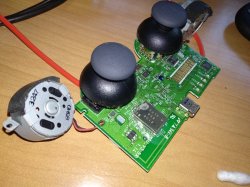
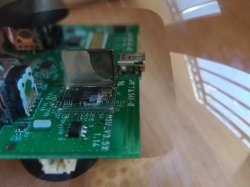
It doesn't turn on at all. And it's not the battery because it's still dead when plugged via USB. Battery I'd actually say is pretty good shape too. I attach picture of what I found interesting (Maybe water damage? But to me impossible water getting there! I don't know... Maybe a candidate for reflow hehe).

And sorry I know this thread is getting convoluted, but hey, we already got master @sandungas attention, who I'd say knows and likes to know a lot about everything. So I just write my mind, and be surprised. I just find these things interesting too, if you couldn't tell by now.

Cheers.
 

Attachments

  • IMG_20200722_152511.jpg
    IMG_20200722_152511.jpg
    2.5 MB · Views: 30
-Now, the detail I actually had to share:
I tried then to load the famous recent OPL iso (1828 DB) and it actually did not work now. Hmm? Freeze black screen, have to cut power to turn it off.

But I also found the reason why. Newer OPL will freeze on b/c PS3 if there are no OPL savedata settings files inside the mounted Virtual Memory card.
This can be circumvented by somehow having such files inside the memory card. For example, generating them externally with PCSX2 by running said OPL ISO on a PC, then renaming and transferring the VMC back to the ps3. Or I guess injecting the savedata with wLaunchELF.
In my case I just brought back my VMC files with my saves, including this OPL settings save.
So now it works without problem again.
Not sure if it could be considered a problem worthy to be reported in the OPL support thread or this other thread for new features but you could comment it there
I guess the problem is solved just by including a "blank" settings file with the initial OPL installation (this way the settings file exists at the first OPL boot)

Btw, you could backup/restore that OPL installation from the virtual memory card by exporting/importing it as an individual save in PSV format (or the whole virtual memory card in either VM2 or VME formats), we was talking about it in apollo thread
By now you can stick to the official XMB features and formats, but eventually i guess is going to be posible to do everything in the PS3 with apollo and with support for all non-official formats
 
My only minor concern now is the temperatures and the noise. I went to the trouble of delidding both chips successfully etc, but the console still struggles to keep under 70°C with over 40% fan speeds in game. Especially CPU.
I guess it may be considered normal for these models, but I'm not sure to what extent. When idle, the console begins with about a 10 degree difference CPU over RSX. When left idle at a fixed 30% fan speed the gap diminishes to about 5 degrees, reaching and stabilizing at 73°C CPU and 67° RSX in the XMB.

Nothing dangerous, but I'd like that CELL a bit cooler, or closer to the RSX. I also read a thread about putting some rubber on the motherboard hole under CELL, for better and more even pressure. This was aimed at non - delidded consoles, but, I suspect this might help my case too? Because both chips should be pretty close in temperatures, right? In my slim, the RSX is hotter than CELL when idle.
What do you think?

Sorry for the very long posts. Maybe not so easy to read.

(TL/DR, newer OPL only works if settings file is already present)

Cheers
I dont know how much difference of temperatures in between CELL/RSX should have a BC PS3 model that could be considered "good", but im guessing you are not going to make it better than that
I can tell you in a CECH-25xx (and inside iris, that generates a bit and very stable CELL workload)... after waiting 30 minutes in idle inside iris you should have the CELL around 5ºC over RSX (or even smaller, i dont remember well, but this small amounts are nothing to worry)
And when "ingame", after 1 hour playing or so RSX should a a temperature bigger than CELL. Keep in mind the temperatures of RSX while "ingame" are moving up and down constantly in a range of 5ºC or so and you need to meassure the max generated in the biggest RSX temperature peak
 
Last edited:
Btw the console came with a non - working controller.
Which is a shame because it actually was in great condition, barely seems used.

It doesn't turn on at all. And it's not the battery because it's still dead when plugged via USB. Battery I'd actually say is pretty good shape too. I attach picture of what I found interesting (Maybe water damage? But to me impossible water getting there! I don't know... Maybe a candidate for reflow hehe).

And sorry I know this thread is getting convoluted, but hey, we already got master @sandungas attention, who I'd say knows and likes to know a lot about everything. So I just write my mind, and be surprised. I just find these things interesting too, if you couldn't tell by now.

Cheers.
This is the BT module, and it handles the USB communications too, if you take a look at the other side of the circuit board you are going to realize the USB data lines goes directly to the BT module
https://www.psdevwiki.com/ps3/CECHZC2#V3.5X
So... i guess with the BT module "dead" there are no external communications at all
And additionally... maybe also have a shortcircuit in the rusty BT that could be draining the battery

What i would do first is... try to remove/desolder the metal shield that is covering the BT module, just to take a look inside it (most probably there is more shit inside)
Create some kind of "pool" (a cutted brick of milk have the correct size), fill it with isopropil alcohol, and use a toothbrush to clean all the rusty very well

The only thing that should not be wetted with alcohol is the "potentiometers" at the sides of the sticks (and the plastics/lubes of the sticks itself, the alcohol is not going to make any good to them)

If that doesnt works.... yeah... try a reflow... or better try to remove the whole BT module completly, this would allow you to "clean" (and replace) the BGA solders well
 
This is the BT module, and it handles the USB communications too, if you take a look at the other side of the circuit board you are going to realize the USB data lines goes directly to the BT module
https://www.psdevwiki.com/ps3/CECHZC2#V3.5X
So... i guess with the BT module "dead" there are no external communications at all
And additionally... maybe also have a shortcircuit in the rusty BT that could be draining the battery

What i would do first is... try to remove/desolder the metal shield that is covering the BT module, just to take a look inside it (most probably there is more shit inside)
Create some kind of "pool" (a cutted brick of milk have the correct size), fill it with isopropil alcohol, and use a toothbrush to clean all the rusty very well

The only thing that should not be wetted with alcohol is the "potentiometers" at the sides of the sticks (and the plastics/lubes of the sticks itself, the alcohol is not going to make any good to them)

If that doesnt works.... yeah... try a reflow... or better try to remove the whole BT module completly, this would allow you to "clean" (and replace) the BGA solders well

Aha, yes you were right. There must be a short in there, trouble seems to be inside this BT module full of crap (Any idea what this "corrosion" might come from? I don't think water could have come...)

Indeed the group of capacitors nearest to the USB seems shorted (also notice brown stain under this corner of the shield).
Most likely problem is with that main square BGA chip... Maybe just bad shorted chip inside... Maybe a reflow with some flux might help. I cleaned everything best I could with alcohol, but issue still there.

Before this I will have to desolder the joysticks in order not to damage them with the heat. They still are good.

Which brings me to new question... Do you know a good way to lubricate them or something? These are fine, but I have many controllers that are "good" but with a lot of friction.
I once tried a spray for bycicle chain lubrication and it did pretty much no help... (Keep in mind I'm Spanish too, maybe we have similar things around)

Oh, and regarding OPL again, I found easier way to solve the settings save issue. You can simply run the old ass v0.8 ISO with no problems first. It doesn't crash even without the save file present.
But it will create its settings file no problem, so after that, you can run the newer OPL versions and they will inherit this file and not crash. So both ISOs I shared are useful!

First time I hear about Apollo.
Maybe this has nothing to do, but Would be nice if there was some way to have VMCs larger than 8MB... Not ideal having 4 instead of 1 or 2. In theory it should be possible. In practice I couldn't manage to do it. Heck, I used to have 32MB Memory card on real PS2.

Anyway, thanks for the help

Cheers
 

Attachments

  • IMG-20200824-WA0000.jpg
    IMG-20200824-WA0000.jpg
    117.2 KB · Views: 23
Regarding fat ps3 temperatures, I guess you are right. Already delided, not much room to improve temperatures I suppose I will leave it running a bit hotter. As far as I understand, CPUs in general are no so likely to fail. And also true in PS3s guess. The way I see it, RSX is much more common to fail, together with the NEC Tokin capacitors. In my case RSX has good temperatures and will not be stressed so much either.

And yes now that I think of it, the PS3 heatsink design is actually kinda "split" instead of the same hunk of metal for both CELL and RSX. So the design allows for temperatures to be different for each chip even when both are making proper contact. So the rubber as you say probably will not necessarily do more help.

I think I'll set webman temperature target higher, like 74c or something, maybe even a bit higher and I should be fine. CELL should handle it, as I imagine many cells run at about 84°c at Syscon no delid, and they are not the ones failing, similar to other CPUs of this era.
Also worth noting it's Southern Spanish Summer. Probably it would be better in other conditions.

But yea this thread idea was for similar B/C models console owners to come and comment on how they use their consoles too.

Cheers
 
I think it was caused by some liquid (different from water or fruit juice) it looks like something corrosive so maybe it was cocacola ?, lol
I think the liquid entered inside the DS3 by the "hole" of the right stick, then it "bounced" in the spherical base of the plastic stick
jKzML5k.jpg


Is nice you removed the sticks (there are some DS3 models where is very hard to desolder them because they have some metal bent (and soldered) at the back "grabbing" the circuit board, and when you try to "unbend" that metal the circuit board could break a bit

As probably you noticed, most/all the DS3 have the left stick more damaged then the right stick... usually the left stick is destroyed and right stick is almost new
So... the trick is to take the right stick from a damaged DS3 and solder it in the position of the left stick of another damaged DS3... this way you have 2 good sticks in a DS3 (and 2 damaged sticks for the other, for parts)

I didnt metioned it in my previous post because i was not sure if you are used to sodlering but yeah.. the best you can do is to desolder the sticks + desolder the motors (otherway that tiny wires are going to break when you are working on it)... and after that you can handle the circuit board without not much care
I mean... you could submerge completly in a bath of isopropil alcohol, and you could rub it strong with a toothbrush, you could reflow it, or even you could put the whole circuit board inside an oven... because there are no plastic parts as far i remember (except inside the USB connector, this could melt) So most probably the whole circuit board can handle over 90ºC or more without problems

Imo is really needed to remove the metal shield of the BT module, because maybe the damage inside it is way bigger
Incase there is a lot of damage inside it... well... try luck but most probably is going to be needed to replace it, in that case there are several BT module models compatible, are the ones in this section, 12x15mm size with 40 pins/pads https://www.psdevwiki.com/ps3/CECHZC2#40_pins_.2812x15mm.29
There are some pinouts and schematics in this link that could help you to find the problem btw, i was having some fun with DS3's ;)

The main reason why some old sticks starts feeling with "friction" (up to the point that sometimes gets stucked in a angle and doesnt returns back), is because they cummulates "shit" in the "pivots" of the orbital parts
This is hard to explain... you will need to open a stick to study that parts... you are going to notice there is a bubstance with coffe color in the pivots (that substance is composed by the factory lube + shit cummulated for years of use), and that substance doesnt makes any lubing function at all because is degraded... actually the effect is like glue
Just by cleaning that shit you are going to notice the stick is almost completly "fixed" (with a way better feeling)

Additionally... at the bottom of the stick there is a plastic piece with an spherical shape (pushed by an spring inside the stick body), usually that spherical surface is too much degraded (so it lost his spherity), you could try to recover the spherity by rubbing it on top of sandpaper with a veeeeery fine grain (and later a polishing with some cloth and a abrasive substance, like toothpaste with fluor)

But thats only half of the problem.... the other half that goes degraded is the "base" of the stick body... originally was a plane surface... but after lot of use the spherical surface i mentioned before degraded it
Think in it this way.... the sperical surface (from the stick) is constantly "pushing" and rubbing on top of the plane surface... and both are made of plastic... so both are damaged by the use

The best lubes you could use for plastics are the ones made with vaseline (because are neutral, they doesnt degrades the plastics chemically), you can buy it in a drugstore, ask them about "vaseline for babies of 1 years old or so"
And the only places that needs to be lubed re the "joins" i mentioned from the orbital parts (4 joints in total as far i remember).... and the base (where the spherical surface rubs with the other flat surface)
 
Last edited:
Regarding fat ps3 temperatures, I guess you are right. Already delided, not much room to improve temperatures I suppose I will leave it running a bit hotter. As far as I understand, CPUs in general are no so likely to fail. And also true in PS3s guess. The way I see it, RSX is much more common to fail, together with the NEC Tokin capacitors. In my case RSX has good temperatures and will not be stressed so much either.

And yes now that I think of it, the PS3 heatsink design is actually kinda "split" instead of the same hunk of metal for both CELL and RSX. So the design allows for temperatures to be different for each chip even when both are making proper contact. So the rubber as you say probably will not necessarily do more help.

I think I'll set webman temperature target higher, like 74c or something, maybe even a bit higher and I should be fine. CELL should handle it, as I imagine many cells run at about 84°c at Syscon no delid, and they are not the ones failing, similar to other CPUs of this era.
Also worth noting it's Southern Spanish Summer. Probably it would be better in other conditions.

But yea this thread idea was for similar B/C models console owners to come and comment on how they use their consoles too.

Cheers
Yeah, it looks RSX is way more sensitive to temperature than CELL, i guess one of the reasons is because RSX have the 4 memory chips (with data buses in between them and the central DIE)... so there is more room for things that could be broken
Usually what gets broken are the RSX BGA solders though (and not the memory chips), but we dont have statistics of this kind of problems so i guess sometimes are the memory chips (or his buses) what is damaged, anyway killing a RSX is not much probable because the BGA solders gets damaged before the RSX is damaged itself
I guess most RSX dies when people tryes to reflow them... because you are applying heat at top but what you really want to heat is the bottom
Lets say... if you want to increase the temperature at bottom up to 110ºC then you need to apply 130ºC at top... and so on

One of the reasons why CELL and RSX should be close to each other in temperatures is because the heat is transfered from one of them (the hotter) by the BGA solders, to the motherboard, then to the other
The result is one of them is heating the other :D

This effect is specially notable when you stay in idle for more than 30 minutes without doing anything (this way the temperatures are very stable)
 
Oh, well. This second fat ps3 gave the YLOD today, after little use.
I don't really know the cause. I hope it may be the capacitors, but I don't know.
It shut itself off blinking red minutes after launching a game. Overheating was not a problem because as I mentioned I had delidded and repasted, with OK results. Temperatures were monitored with webman and were nowhere near danger. Today is probably didn't even get past high 60s. RSX always cooler.
So I hope the chips are ok. However there were indeed evidence of a prior RSX reflow from previous owner, so I hope this chip is not damaged as well, that would be unfortunate. Even if not "overheating", it was during a warm up cycle. I hope microBGA was not precarious and broken.

Any troubleshooting I could easily do to Maybe pinpoint the cause of the YLOD?
Or only next step would be to change capacitors?

Honestly I may have to postpone this since I really didn't find in the end the real reason to fight so much for these systems, and also I won't have so much time for it. Since netemu is pretty comparable anyway, better in some cases even. Shame about the network and peripheral support though.

Cheers
 
Back
Top