Hi guys just asking I've heard some rumours from some guys on YouTube saying we found a way to increase the voltages by flashing on Syscon motherboard i think and then doing a simple PUP update that Will allow us to control the voltage from 1v to 1.01V is this true are we so close to stabilise all the ps3 that can't handle a higher overclock? Ty.

You are using an out of date browser. It may not display this or other websites correctly.
You should upgrade or use an alternative browser.
You should upgrade or use an alternative browser.
PS3 Project RSX Boost: Overclock your Retail PS3 RSX Speeds (ps3 cfw only)
There is an application for patching eboots, check out the Game Patches thread for more info https://www.psx-place.com/threads/game-patches.43706/page-3#post-389436
Thanks I'll keep an eye on that, doesn't look like it's quite doing things like changing internal render resolution or allowing a game to be installed from disc to the HDD yet though.
Hi guys just asking I've heard some rumours from some guys on YouTube saying we found a way to increase the voltages by flashing on Syscon motherboard i think and then doing a simple PUP update that Will allow us to control the voltage from 1v to 1.01V is this true are we so close to stabilise all the ps3 that can't handle a higher overclock? Ty.
1. An increase to 1.01v is absolutely nothing and well within normal voltage fluctuations. 2. Some youtubers might have read me talking about how to skew the VRM signal (if you know where the code is for the VRM signals) to push a higher voltage while the console itself still thinks the voltages are the same. 3. A physical shunt mod might be possible as well, but no, at this stage full voltage and clock frequency control a'la something like MSI Afterburner is not possible for the PS3. It might be one day, but not right now. I think in theory it's probably possible though but you'd need to ask someone whos been digging around PS3 code for years for an answer on viability.
Last edited by a moderator:
EumelEumel
Member
I just tried 900 core once again and I can totally reproduce a crash around 50-53c every time so I am 99% sure it gets unstable due to temperature. Unfortunately absolutey not viable via air cooling
my ears
Now I really want to get my hands on a 1A 25xx
Or 4xxx if we get CFW for those one day haha
my ears
Now I really want to get my hands on a 1A 25xx
Or 4xxx if we get CFW for those one day haha
I just tried 900 core once again and I can totally reproduce a crash around 50-53c every time so I am 99% sure it gets unstable due to temperature. Unfortunately absolutey not viable via air cooling
my ears
Now I really want to get my hands on a 1A 25xx
Or 4xxx if we get CFW for those one day haha
750MHz should be stable 24\7 for you although I'd set 650MHz and see how high you can clock the memory. Bandwidth is more important so save that thermal headroom for the memory the core isn't really starved of clock frequency once you hit 650MHz, which in and of itself is still a massive 30% OC.

Razmann4k
Member
My question to those with more knowledge: Does the heat from reballing (when swapping GPUs for a Frankenstein) really impact the overclockability of the chip?I just tried 900 core once again and I can totally reproduce a crash around 50-53c every time so I am 99% sure it gets unstable due to temperature. Unfortunately absolutey not viable via air cooling
my ears
Now I really want to get my hands on a 1A 25xx
Or 4xxx if we get CFW for those one day haha
Say we took the 40nm out of a 2500 that we know can reach 950/1000 before removing it and solder it onto a CECHA, should we really be expecting the achievable clock speed to be lower (e.g. max of 800/950) due to the heat from the process of removing and soldering back onto its new board? It sounds reasonable at first, but then again, weren't these chips soldered on from the factory at the same or even higher temperatures (due to lead-free solder being used)? If the achievable clock speed is lower, are there not other factors that may be the cause (say the VRMs on the CECHA not being as good, or maybe the old TOKINs not giving the best smoothing performance?
The reason I ask this is, while we can't use the 28nm RSXs for a Frankenstein (yet, maybe one day), surely we can use the latest 40nm from the early 4000 super slims before the 28nm changeover, and in theory they should be even more capable of higher clocks than even the best 2500s, and even a step above in quality than the 2500s Slims with minver of 3.60 and above like the 3000s. This is of course assuming that they aren't negatively affected by the heat involved in plundering them off their super slim motherboards and soldering them onto CECHA boards, which is what my question at the top of this post is asking about.
The CXD5302DGB or CXD5302A1GB are the 40nm's I'm referring to from the MSX-001 and MPX-001 40xx respectively, 42xx and 43xx were the 4000s with 28nm RSXs.
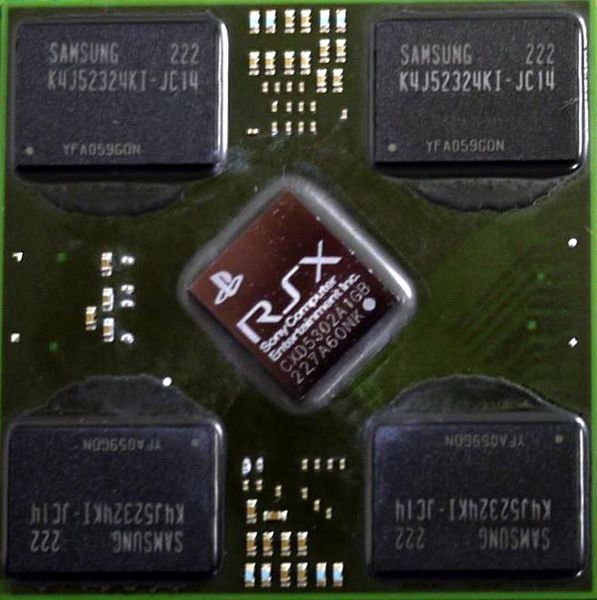
Last edited:

marcoselball
Forum Noob
yall i got my PS3 bricked with 900/950. 
it was an 2504A
(press F to pay respects)
it was an 2504A
(press F to pay respects)
yall i got my PS3 bricked with 900/950.
it was an 2504A
(press F to pay respects)
Did you just try jumping straight to those frequencies? If you'd increased vRAM speed in 25MHz steps you'd have very likely been able to avoid this "death". You'll now need a hardware flasher to revive that poor PS3. You really don't need insane clocks like 900\950 to get solid performance from a PS3 either, 650\800 will overcome most obstacles and anything that isn't overcome the game has more to worry about like just crap coding or CPU bottlenecks.
marcoselball
Forum Noob
Did you just try jumping straight to those frequencies? If you'd increased vRAM speed in 25MHz steps you'd have very likely been able to avoid this "death". You'll now need a hardware flasher to revive that poor PS3. You really don't need insane clocks like 900\950 to get solid performance from a PS3 either, 650\800 will overcome most obstacles and anything that isn't overcome the game has more to worry about like just crap coding or CPU bottlenecks.
i mean i didn't just Jump so much, i tried 850/850 a bit ago and it worked just fine, well i Guess I'll do the hardware Flasher myself, or i could get it to a repair Center, so sorry if i Made somebody mad for that. I sincerely apologise. AND i promise I'll do my absolute best to get my PS3 working again, i promise.
Did you just try jumping straight to those frequencies? If you'd increased vRAM speed in 25MHz steps you'd have very likely been able to avoid this "death". You'll now need a hardware flasher to revive that poor PS3. You really don't need insane clocks like 900\950 to get solid performance from a PS3 either, 650\800 will overcome most obstacles and anything that isn't overcome the game has more to worry about like just crap coding or CPU bottlenecks.
BIG NEWS!!!!: I'm able to access the safe mode and I'm going to update back to the safe 850/850 firmware. I promise i Wont go Beyond this limit. and i must admit that the brick really scared me. I'm never messing with the clocks again.
Last edited by a moderator:
It seems I'm as stupid as I'm lucky - after little more than an hour with a 850/975 in Crysis at 4th stage I tried with 900/975 I built myself (because in mediafire there is a beta8 PUP instead of beta9).
Everything went smooth until I checked the clocks in XMB - it turns out I had a brainfart and made a 950/975 firmware XD
Even though, I had to try Crisis, but sadly, there were light artifacts instantly. We'll see what will come out of 900/975
Everything went smooth until I checked the clocks in XMB - it turns out I had a brainfart and made a 950/975 firmware XD
Even though, I had to try Crisis, but sadly, there were light artifacts instantly. We'll see what will come out of 900/975

Tanzu15
Member
I don't feel bad for these morons destroying their PS3s trying to copy people that can do those high frequencies. I stopped feeling bad all together.Did you just try jumping straight to those frequencies? If you'd increased vRAM speed in 25MHz steps you'd have very likely been able to avoid this "death". You'll now need a hardware flasher to revive that poor PS3. You really don't need insane clocks like 900\950 to get solid performance from a PS3 either, 650\800 will overcome most obstacles and anything that isn't overcome the game has more to worry about like just crap coding or CPU bottlenecks.
My question to those with more knowledge: Does the heat from reballing (when swapping GPUs for a Frankenstein) really impact the overclockability of the chip?
Say we took the 40nm out of a 2500 that we know can reach 950/1000 before removing it and solder it onto a CECHA, should we really be expecting the achievable clock speed to be lower (e.g. max of 800/950) due to the heat from the process of removing and soldering back onto its new board? It sounds reasonable at first, but then again, weren't these chips soldered on from the factory at the same or even higher temperatures (due to lead-free solder being used)? If the achievable clock speed is lower, are there not other factors that may be the cause (say the VRMs on the CECHA not being as good, or maybe the old TOKINs not giving the best smoothing performance?
The reason I ask this is, while we can't use the 28nm RSXs for a Frankenstein (yet, maybe one day), surely we can use the latest 40nm from the early 4000 super slims before the 28nm changeover, and in theory they should be even more capable of higher clocks than even the best 2500s, and even a step above in quality than the 2500s Slims with minver of 3.60 and above like the 3000s. This is of course assuming that they aren't negatively affected by the heat involved in plundering them off their super slim motherboards and soldering them onto CECHA boards, which is what my question at the top of this post is asking about.
The CXD5302DGB or CXD5302A1GB are the 40nm's I'm referring to from the MSX-001 and MPX-001 40xx respectively, 42xx and 43xx were the 4000s with 28nm RSXs.
yeah I have a PS3 super slim with a 40nm chip. Which I'm 100% sure can like easily do 1200mhz on the vram and 1000 or more on the core. And I've been wondering that too. If I had someone who can Frankie this chip into a fat I'd easily sacrifice the super slim. But I do wonder if it's potential will go down due to the heat. But I have a feeling it might not affect it too much.
:/
Last edited by a moderator:
Razmann4k
Member
As Ketxxx said, you can revive it with a hardware flasher, most likely no damage was actually done, your GPU is just way too unstable to even work at those frequencies, although it's probably the VRAM that's causing the issue more than the Core. If you don't have a flasher, you can try keeping your PS3 super cool by putting it in the fridge for a few minutes and it might buy you enough time to boot into safe mode and install a lower frequency firmware. If that doesn't work, then you have to get an E3 flasher.yall i got my PS3 bricked with 900/950.
it was an 2504A
(press F to pay respects)
I'd be very curious to see this! I think it's actually better to sacrifice super slims rather than Slims, as at least 2000-2500s before March 2011 Slims are all capable of CFW, but ZERO Super Slims can CFW, and SS's are just cheaper, more plasticky, less desirable overall consoles that fewer people are gonna shed any tears over if they're sacrificed IMHO lolI don't feel bad for these morons destroying their PS3s trying to copy people that can do those high frequencies. I stopped feeling bad all together.
yeah I have a PS3 super slim with a 40nm chip. Which I'm 100% sure can like easily do 1200mhz on the vram and 1000 or more on the core. And I've been wondering that too. If I had someone who can Frankie this chip into a fat I'd easily sacrifice the super slim. But I do wonder if it's potential will go down due to the heat. But I have a feeling it might not affect it too much.
Perhaps you could ask Computer Booter or Octal450 (Josh Davidson) to perform the Frankie, but I know Octal is busy with studies atm.
Last edited:

yall i got my PS3 bricked with 900/950.
it was an 2504A
(press F to pay respects)
Try to cool it down, open the shell or even leaving it in the freeze for some minutes.
Tanzu15
Member
Where you been broTry to cool it down, open the shell or even leaving it in the freeze for some minutes.
 ? You haven't been here often anymore.
Mitsu™
Senior Member
Glad you succeed !BIG NEWS!!!!: I'm able to access the safe mode and I'm going to update back to the safe 850/850 firmware. I promise i Wont go Beyond this limit. and i must admit that the brick really scared me. I'm never messing with the clocks again.

Now, enjoy your 850/850 OC ! That's already great !
Tanzu... Don't be too harsh. We all make mistakes, I bricked a 20XX slim, you almost brick a 25XX...I don't feel bad for these morons destroying their PS3s trying to copy people that can do those high frequencies. I stopped feeling bad all together.
The difference between a functioning PS3 and a brick is sometimes small, sometimes without warning signals.
Of course, I would rather that our mistakes could prevent other people from destroying their consoles, but the human being is like that.
Hey ! How's your PS3 doing ? Is 900MHz core manageable enough for it ?Try to cool it down, open the shell or even leaving it in the freeze for some minutes.
@RIP-Felix is working on it and giving news about this project.Hi guys just asking I've heard some rumours from some guys on YouTube saying we found a way to increase the voltages by flashing on Syscon motherboard i think and then doing a simple PUP update that Will allow us to control the voltage from 1v to 1.01V is this true are we so close to stabilise all the ps3 that can't handle a higher overclock? Ty.
Only check his posts for reliables informations.
https://www.psx-place.com/threads/p...peeds-ps3-cfw-only.36801/page-114#post-391922
Last edited:
Hi, thanks for your save file, I tested my 2504b and it worked flawlessly for two hours at 900/975try Crysis
btw, duck test even if is not streaming enough, is somewhat a good approximation of raw horsepower - at 800/975 I could set the number on screen to ~560 ducks before stopping frames, on 900 stopping started at ~600
I don't feel bad for these morons destroying their PS3s trying to copy people that can do those high frequencies. I stopped feeling bad all together.
True, but it's worth repeating sometimes to hopefully stem the death rate of PS3s from over zealous individuals. The more I've experimented with the GPU working out how much bandwidth is increasing, raw pixel pushing power, etc, the more I've become convinced that while there is always going to be an improvement with an OC the GPU really isn't the bottleneck in the PS3 in most cases, it's the Cell. Those sharp dropoffs to like 20FPS or below when you're otherwise at a solid 30 isn't the GPU that's the CPU not feeding the data to the GPU fast enough. Even if it is worked out how to OC the Cell I would strongly advise against people going nuts OCing it, while from what I've found out clock frequency was curtailed due to thermal concerns there are also other more technical rumors I've heard as well so my recommendation would be to start with a target of 4GHz and if that uplifts performance for the majority of cases then mission accomplished any game that has crappy performance after that is just that; a crappy game.
You also then have to consider that when the Cell had a die shrink to 65nm did Sony just flat out switch the original Cell for the revised 8i? There's no documentation on that, and if Sony did indeed do that then programmers at the time were never aware of the vastly superior double precision floating point calculation capabilities. The more I look at the revisions the PS3 had the more I'm convinced that Sony were toying with releasing a "Pro" model but never had the balls to pull the trigger on it until the PS4.
Last edited:
Mitsu™
Senior Member
Duck test is great, my only problem about it is that the framerate is not "free". It will fall back to 30, then 20, 15, etc...Hi, thanks for your save file, I tested my 2504b and it worked flawlessly for two hours at 900/975
btw, duck test even if is not streaming enough, is somewhat a good approximation of raw horsepower - at 800/975 I could set the number on screen to ~560 ducks before stopping frames, on 900 stopping started at ~600
Without even talking about the CPU, looking at the GPU, they improved it so much that they could have indeed release a PS3 pro.The more I look at the revisions the PS3 had the more I'm convinced that Sony were toying with releasing a "Pro" model but never had the balls to pull the trigger on it until the PS4.
The 90nm variant was supposed to be clocked at 550/700. But heat issue, etc... Okay.
The 65nm RSX could have been set to 600/750 easily, without issues.
Starting from the 40nm series, 650/800 (or /850).
To be honest (and really, don't take it personally, I respect your analysis and your work), when we talk about a 25XX, I have a hard time considering 650/800 as an overclock. Officially yes, it is an overclock, but taking into account the capabilities of these chips ? Not so much.
I think one of the main reasons why Sony did not release a PS3 pro and kept the clocks at 500/650 is to avoid complicating the development of the games (same for the CPU). It took time for the developers to barely "master" (so to speak) this console, so if in addition they had to develop for consoles with various performances, it would have been hellish.
It was just not the right generation to do it/the right console nor the right time.
Last edited:
Tanzu15
Member
Yup I agree. The cpu is our biggest problem. But the gpu is also a problem. The gains are massive with overclocks at 800/950 to 950/1000. It's huge. Hell even OC of 700/900 has big gains and stability. But the cell along with the gpu overclock would literally fix 98% of all PS3 games instantly. 30 FPS locked and 60 FPS locks for those that do 60? It's why I'm crossing my fingers for those working on it. If there is any work being done. 4ghz on the cpu would be wonderful. We won't have to worry about dog shit performance anymore. Both cpu and GPUs need big overclocks to fix these games.True, but it's worth repeating sometimes to hopefully stem the death rate of PS3s from over zealous individuals. The more I've experimented with the GPU working out how much bandwidth is increasing, raw pixel pushing power, etc, the more I've become convinced that while there is always going to be an improvement with an OC the GPU really isn't the bottleneck in the PS3 in most cases, it's the Cell. Those sharp dropoffs to like 20FPS or below when you're otherwise at a solid 30 isn't the GPU that's the CPU not feeding the data to the GPU fast enough. Even if it is worked out how to OC the Cell I would strongly advise against people going nuts OCing it, while from what I've found out clock frequency was curtailed due to thermal concerns there are also other more technical rumors I've heard as well so my recommendation would be to start with a target of 4GHz and if that uplifts performance for the majority of cases then mission accomplished any game that has crappy performance after that is just that; a crappy game.
You also then have to consider that when the Cell had a die shrink to 65nm did Sony just flat out switch the original Cell for the revised 8i? There's no documentation on that, and if Sony did indeed do that then programmers at the time were never aware of the vastly superior double precision floating point calculation capabilities. The more I look at the revisions the PS3 had the more I'm convinced that Sony were toying with releasing a "Pro" model but never had the balls to pull the trigger on it until the PS4.
Razmann4k
Member
If I'm not mistaken, some individuals have gotten the 90nm Cell to run at 4.8GHz in OtherOS? If that's true, surely one day if we find a way to do it in GameOS and for 65/45nm Cells, 4.8GHz should be relatively easy? If so, that's a 50% clockspeed improvement, and then who knows, increasing XDR clocks too? Of course that part is entirely speculative.Yup I agree. The cpu is our biggest problem. But the gpu is also a problem. The gains are massive with overclocks at 800/950 to 950/1000. It's huge. Hell even OC of 700/900 has big gains and stability. But the cell along with the gpu overclock would literally fix 98% of all PS3 games instantly. 30 FPS locked and 60 FPS locks for those that do 60? It's why I'm crossing my fingers for those working on it. If there is any work being done. 4ghz on the cpu would be wonderful. We won't have to worry about dog shit performance anymore. Both cpu and GPUs need big overclocks to fix these games.
Tanzu15
Member
4.8ghz? Wtf? That's insane. That doesn't sound right. Hell 4ghz sounded high as hell already to me. And 4ghz would do so much for so many games. 3.2ghz is low as hell and that's why games suffer so much. The fact we can't keep a measly already shit 30 stable is a crime. The cpu should have been the one thing Sony overclocked on the slims. That could have been a massive selling point, and it would have cost them nothing.If I'm not mistaken, some individuals have gotten the 90nm Cell to run at 4.8GHz in OtherOS? If that's true, surely one day if we find a way to do it in GameOS and for 65/45nm Cells, 4.8GHz should be relatively easy? If so, that's a 50% clockspeed improvement, and then who knows, increasing XDR clocks too? Of course that part is entirely speculative.
Similar threads
-
PS3 [Guide] Sourcing the right PS3 for the best Overclocking performance
- Started by M4N14C
- Replies: 1
-
 PS3 {CFW Release} 4.92.2 Evilnat Custom Firmware (w/ Cobra v8.5) - Includes: CEX/PEX/D-PEX) + noBD/BT
- Started by Evilnat
- Replies: 1
-

-
 PS3 PS3HEN w/ Linux & Overclocking Support? BadHTAB A hardware-software based hypervisor (lv1) exploit
- Started by STLcardsWS
- Replies: 52