PS3 PS3 BC CECH-A01 NoPS2 Issue

Hi. I recently have restored a BC PS3 that I bought from local marketplace, solving YLOD issue by
1) Removing 1x NEC Tokins and replaced it with 5x 2R5TPE470M9 470uf 2.5v caps on the CELL side
2) Removing 2x NEC Tokins and replaced it with 10x 2R5TPE470M9 470uf 2.5v caps on the RSX side

SYSCON error logs did show error 1002 then 3004 so I did the above. Console has original 90nm RSX with 20 days runtime. Console was never opened, warranty seal was intact.

The console can play heavy load games like TLoU, GT5/6 with no issues/artifacts. When it comes to playing PS2 games with hardware mode, the PS2 hardware refused to boot but I can access the menu. From what I have researched, on Internet and this forum site, I got NoPS2_Menu. ps2_netemu on the other hand works flawlessly. No sudden shutdown, no YLOD.

What's more weirder is that if I keep the console on 29% fan speed for PS2 via webMAN, the PS2 hardware can boot if the RSX temperature is within 64.5-66.0 degrees. I'm not sure if CELL plays the role as well.

Any lower and higher than that, it will not boot or if you're playing and the temps suddenly got out of range, it will froze immediately. Despite I manage to get the RSX within the temp range by fiddling with Smoothing On/Off, sometimes it would be hit or miss. Sometimes I can play the game until I turn off the console or exit the game, sometimes I can play within 30 seconds, first it will show weird graphical artifacts then froze completely. I don't think it is the RSX issue since the menu did not indicate any artifacts. Oh, there will be 10% chance you get no sound when booting PS2 hardware.

To be honest, I really don't like hitting the reset game thing for many times until I can get it right. I just want to get back from work and play PS2 games straight away.

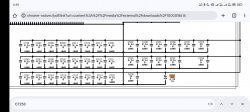
Since I am a beginner at repairing these complicated machines, I tried probing capacitors connected to the EE+GS randomly. What I found is that the C7253 cap and the rest on the same positive rail (from service manual) were shorted to ground. Second row and first were not shorted. Is it supposed to short to ground perhaps? I'm new to electrical engineering stuff.

Console is on 4.92 Evilnat DEX. I have tried FW like Rebug 4.84, all have same issue. I'm not sure if I have to downgrade to pre-3.55 to get the PS2 hardware working again or performing the capacitor replacement on the mentioned rail. Thanks.
 

Attachments

  • Screenshot_2025-06-27-18-59-39-242_com.android.chrome.jpg
    Screenshot_2025-06-27-18-59-39-242_com.android.chrome.jpg
    478.5 KB · Views: 55
when you say ps2 hardware it means that you launch ps2 dvd? and if yes have you try to launch backup or iso of your dvd ?
 
when you say ps2 hardware it means that you launch ps2 dvd? and if yes have you try to launch backup or iso of your dvd ?
nah, webMAN on CECHA/CECHC/CECHE allows you to select ps2_emu/ps2_gxemu or ps2_netemu. ps2_emu uses the real PS2 hardware, EE+GS chip on the motherboard which is very problematic on my end. the ps2_netemu (PS2 Classics@PS2 Software Emulation) on the other hand worked very well. The problem with netemu is that picture is a bit blurry with few games (NFS Carbon/Guitar Hero 3) has a bit low framerate. And of course, few graphical glitches.
 
Since I am a beginner at repairing these complicated machines, I tried probing capacitors connected to the EE+GS randomly. What I found is that the C7253 cap and the rest on the same positive rail (from service manual) were shorted to ground. Second row and first were not shorted. Is it supposed to short to ground perhaps? I'm new to electrical engineering stuff.
In that diagram all those capacitors are connected in parallel. If one of those ceramic caps shorted to ground, all three rails should be shorted as well. If your probing is correct, at least one of the caps on the third row has shorted and the trace on the positive side has fused.

In this case I would inject some current across that row to find the failed caps, replace them, then run a wire to reconnect the positive rail.
 
Progress Update on the "No PS2" Issue: Q6600 and C6620 Findings

Over the past few months I've been investigating the long-standing "No PS2 playback" issue on early backwards-compatible PlayStation 3 consoles (CECHA / CECHB, COK-001). Historically this fault has been attributed mainly to BGA fatigue under the EE/GS, often leading to risky chip removal or reballing with very mixed results. Up untill recently, I was sure it was BGA fatigue but now my opinion has changed.
Through repeated testing across multiple boards and with help.from the PS3 community i have identified EE/GS local power delivery as an additional and independent failure mechanism that can produce identical symptoms.
Specifically, components Q6600 (MOSFET) and C6620 (antalum capacitor, (a subscriber pointed me to these components, Rambonz alson kown as Sean told me to try replacing these components) sit directly adjacent to the EE/GS and form part of its local power conditioning network. On boards exhibiting the classic behaviour — PS3 mode working normally, PS2 mode black-screening, but temporarily booting when heat is applied behind the EE/GS — replacing Q6600 and C6620 has repeatedly restored reliable PS2 playback from cold.
This strongly indicates that in many cases the original fault is power-rail instability caused by solder fatigue or marginal joints,or a failed mosfet and capasitor, not a dead EE/GS or failed BGA. Applying heat whilst the console was running, behind the EE/GS was effectively masking the issue by temporarily stabilising these nearby power components, which explains why the fault has historically been misdiagnosed as a BGA problem.
In several earlier experiments, ultrasonic cleaning and controlled low-temperature baking also restored PS2 playback for extended periods (months to nearly a year), further supporting the idea that the silicon itself was intact and that interconnect integrity was the limiting factor.
Importantly, this does not rule out EE/GS BGA fatigue — that failure mode absolutely exists — but it does explain why EE/GS replacement and reballing have such a high permanent failure rate when power integrity is not addressed first. In at least one case, unnecessary EE/GS removal introduced board-side damage that resulted in partial video output (red-tinted black screen), even though the original No PS2 fault was power-related and repairable.
Based on these findings, the repair order that makes the most technical sense is:
  1. Stabilise EE/GS power delivery (Q6600, C6620, solder integrity)
  2. Address mechanical stress and board flatness
  3. Treat EE/GS BGA intervention strictly as a last resort
This approach has already proven more consistent, lower-risk, and more informative than immediately lifting the EE/GS. I'm continuing to document results across additional boards, but so far Q6600 and C6620 have emerged as critical and previously overlooked contributors to the No PS2 issue.

Replacing these components when PS2 goes to black screen or needs to be at a high temperature to run, has resolved this issue in 4.out of 4 consoles so far

Oh, and i.almost forgot, I got it all.on video.....

 
Last edited:
Progress Update on the "No PS2" Issue: Q6600 and C6620 Findings

Over the past few months I've been investigating the long-standing "No PS2 playback" issue on early backwards-compatible PlayStation 3 consoles (CECHA / CECHB, COK-001). Historically this fault has been attributed mainly to BGA fatigue under the EE/GS, often leading to risky chip removal or reballing with very mixed results. Up untill recently, I was sure it was BGA fatigue but now my opinion has changed.
Through repeated testing across multiple boards and with help.from the PS3 community i have identified EE/GS local power delivery as an additional and independent failure mechanism that can produce identical symptoms.
Specifically, components Q6600 (MOSFET) and C6620 (antalum capacitor, (a subscriber pointed me to these components, Rambonz alson kown as Sean told me to try replacing these components) sit directly adjacent to the EE/GS and form part of its local power conditioning network. On boards exhibiting the classic behaviour — PS3 mode working normally, PS2 mode black-screening, but temporarily booting when heat is applied behind the EE/GS — replacing Q6600 and C6620 has repeatedly restored reliable PS2 playback from cold.
This strongly indicates that in many cases the original fault is power-rail instability caused by solder fatigue or marginal joints,or a failed mosfet and capasitor, not a dead EE/GS or failed BGA. Applying heat whilst the console was running, behind the EE/GS was effectively masking the issue by temporarily stabilising these nearby power components, which explains why the fault has historically been misdiagnosed as a BGA problem.
In several earlier experiments, ultrasonic cleaning and controlled low-temperature baking also restored PS2 playback for extended periods (months to nearly a year), further supporting the idea that the silicon itself was intact and that interconnect integrity was the limiting factor.
Importantly, this does not rule out EE/GS BGA fatigue — that failure mode absolutely exists — but it does explain why EE/GS replacement and reballing have such a high permanent failure rate when power integrity is not addressed first. In at least one case, unnecessary EE/GS removal introduced board-side damage that resulted in partial video output (red-tinted black screen), even though the original No PS2 fault was power-related and repairable.
Based on these findings, the repair order that makes the most technical sense is:
  1. Stabilise EE/GS power delivery (Q6600, C6620, solder integrity)
  2. Address mechanical stress and board flatness
  3. Treat EE/GS BGA intervention strictly as a last resort
This approach has already proven more consistent, lower-risk, and more informative than immediately lifting the EE/GS. I'm continuing to document results across additional boards, but so far Q6600 and C6620 have emerged as critical and previously overlooked contributors to the No PS2 issue.

Replacing these components when PS2 goes to black screen or needs to be at a high temperature to run, has resolved this issue in 4.out of 4 consoles so far

Oh, and i.almost forgot, I got it all.on video.....

Interesting, nice job. Have you already got a thread dedicated to documenting your findings?
For some reason the thread I was previously aware of for documenting NoPS2 seems to have vanished, did someone delete it? Any admins/mods know why?
https://www.psx-place.com/threads/nops2-lets-solve-this.48849/
https://www.psx-place.com/threads/nops2-lets-solve-this.48849/page-2
 
Thanks. I don't currently have a single, consolidated thread dedicated solely to documenting the NoPS2 findings in one place. To be clear these findings are a result of the PS3 community coming together to suggest various solutions, its not all down to me.

The earlier "NoPS2 – let's solve this" thread you've linked was not deleted by me. My understanding is that it was either locked or removed by moderation, which is why it no longer appears publicly. I don't have visibility into the specific moderation decision behind that.

Going forward, I'll continue to document any additional findings, test cases, and outcomes directly within relevant technical threads as the work progresses, rather than relying on a single long-running discussion. That should also help keep individual updates clearer and easier to follow.

If there's interest, I'm happy to summarise current conclusions and remaining unknowns in a dedicated post once testing across more boards is complete.
 
Last edited:
It could be nothing but have you noticed a strange flickering of the text that says "charge complete" when you bring up the PS3 menu that has quit, reset, turn off system, etc.?
It doesn't happen on every backwards compatible model I have, but I did notice it on some of them and I'm wondering if perhaps it's an early indication of some sort of hardware failure.
 
Progress Update on the "No PS2" Issue: Q6600 and C6620 Findings

Over the past few months I've been investigating the long-standing "No PS2 playback" issue on early backwards-compatible PlayStation 3 consoles (CECHA / CECHB, COK-001). Historically this fault has been attributed mainly to BGA fatigue under the EE/GS, often leading to risky chip removal or reballing with very mixed results. Up untill recently, I was sure it was BGA fatigue but now my opinion has changed.
Through repeated testing across multiple boards and with help.from the PS3 community i have identified EE/GS local power delivery as an additional and independent failure mechanism that can produce identical symptoms.
Specifically, components Q6600 (MOSFET) and C6620 (antalum capacitor, (a subscriber pointed me to these components, Rambonz alson kown as Sean told me to try replacing these components) sit directly adjacent to the EE/GS and form part of its local power conditioning network. On boards exhibiting the classic behaviour — PS3 mode working normally, PS2 mode black-screening, but temporarily booting when heat is applied behind the EE/GS — replacing Q6600 and C6620 has repeatedly restored reliable PS2 playback from cold.
This strongly indicates that in many cases the original fault is power-rail instability caused by solder fatigue or marginal joints,or a failed mosfet and capasitor, not a dead EE/GS or failed BGA. Applying heat whilst the console was running, behind the EE/GS was effectively masking the issue by temporarily stabilising these nearby power components, which explains why the fault has historically been misdiagnosed as a BGA problem.
In several earlier experiments, ultrasonic cleaning and controlled low-temperature baking also restored PS2 playback for extended periods (months to nearly a year), further supporting the idea that the silicon itself was intact and that interconnect integrity was the limiting factor.
Importantly, this does not rule out EE/GS BGA fatigue — that failure mode absolutely exists — but it does explain why EE/GS replacement and reballing have such a high permanent failure rate when power integrity is not addressed first. In at least one case, unnecessary EE/GS removal introduced board-side damage that resulted in partial video output (red-tinted black screen), even though the original No PS2 fault was power-related and repairable.
Based on these findings, the repair order that makes the most technical sense is:
  1. Stabilise EE/GS power delivery (Q6600, C6620, solder integrity)
  2. Address mechanical stress and board flatness
  3. Treat EE/GS BGA intervention strictly as a last resort
This approach has already proven more consistent, lower-risk, and more informative than immediately lifting the EE/GS. I'm continuing to document results across additional boards, but so far Q6600 and C6620 have emerged as critical and previously overlooked contributors to the No PS2 issue.

Replacing these components when PS2 goes to black screen or needs to be at a high temperature to run, has resolved this issue in 4.out of 4 consoles so far

Oh, and i.almost forgot, I got it all.on video.....


Where do you buy quality mosfet/cap replacements? Or where do you source them.

I have a CECHA00 with the nops2_menu but works when hot issue. I would love to test if swapping these components fixes it but I would love to rely on quality parts no ali or ebay junk.
 
Last edited:
Q6600 (MOSFET) and C6620 (tantalum capacitor) could be a reason for the nops2_menu problems.

A guy on Reddit said he fixed his with spare parts from another cok002 their is a mosfet and cap package near the rax, this he say are the same values and can be used. Now my question is on the SEM001 there are similar looking mosfet+cap aswell, source them from theri would be much cheaper then relying on cok001-2 boards and way easier to get. At least in europe.

Can anybody confirm if the mosfet and the cap near the eegs has same specs as the one found on a cok002 or sem001?
 
Below is a link to the schematics for the COK-001, COK-002 and the SEM 001

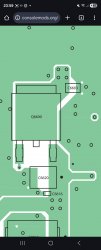
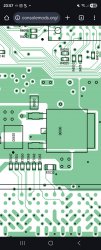
The components might work i will need to look at a SEM001 board to determine if the part numbers are the same, its not conclusive looking at the schematics, I cant see any part listed as.Q6600. In the pics I show these parts are listed on both COK001/002 motherboards.

SEM-001 contains MOSFETs of similar type and package to Q6600, but none are designated Q6600, and none serve an EE/GS power rail. For this reason its unlikely it would work. I will.look at an actual SEM-001 motherboard, if the mosfit serial.number is the same (the code thats etched into the mosfit) then it may work but I will physically have to.check.

https://consolemods.org/wiki/PS3:Technical_Documentation
 

Attachments

  • Screenshot_20260122_235908_Chrome.jpg
    Screenshot_20260122_235908_Chrome.jpg
    246.2 KB · Views: 25
  • Screenshot_20260122_235741_Chrome.jpg
    Screenshot_20260122_235741_Chrome.jpg
    657.6 KB · Views: 21
Last edited:

Similar threads

Back
Top