PS3 (Research/Experimental) - NEC/TOKIN Capacitors Replacement - YLOD

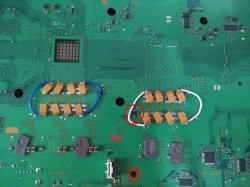
Here in this photo below, the Tantalums are only on the bridge wire...

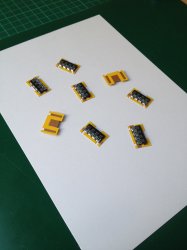
I want to test this a little further to document the results for you guys, first results were good and the PS3 booted and worked fine, with 8 of these proto-types. I did one for every NEC replacement.

It's for those using bridge wires:- if we look at the way the NECs work, and what their role is, then adding a bridge wire can be counter-productive for our Tantalums unless done correctly. Because if we give the current the option (a route) to leap-frog (by-pass) the filtering capacitors and go straight to the RSX / CELL, then the processors won't work correctly, because the current is fluctuating all over the place and the line is too noisey.

Adding a bridge wire (incorrectly) is like having little, to no capacitors at all...

The current will always take the path of least resistance, so we need to force the current through the filtering process of the capacitors, with no other options / routes, and only then arrive at the RSX or CELL once filtered. That's how those processors want it so they can function correctly.

I tried this concept on my 1st PS3, i did all 8 x NEC replacements with this idea, Tantalums only on the bridge wire(s), like this photo is showing for 1 x NEC replacement, it was all like that (x 8) and it worked, the PS3 booted up, and worked fine! Originally for that test i had used size B Tantalums, and in this photo it's those 'Panasonic' size D ones - this photo below is just to give an idea of how the concept / idea was installed / looks)

However, the same day i had just received the "new" NECs from China in the mail, and i was too excited to wait any longer, so i took out my test bridge-wire Tantalums and soldered the "new" 8 x NECs, and that worked too, but now i can't de-solder the "new" NECs and they are stuck there, so i am working on another (2nd) PS3 to hopefully show the test results again, with photos etc, of this Tantalum only on the bridge wire idea working.

I also want to add an array of MLCCs (0.01uF to 1uF) to this proto-type, will aim to report back the results soon, all being well, but it might be some time yet because i have some other commitments (work) that i need to sort out first.

NEC_Proto_A.JPG


Here are all 8 of them, that i installed together for the original test, the PS3 booted and worked.
NEC_Proto_2.JPG
 
Last edited:
Here in this photo below, the Tantalums are only on the bridge wire...

I want to test this a little further to document the results for you guys, first results were good and the PS3 booted and worked fine, with 8 of these proto-types. I did one for every NEC replacement.

It's for those using bridge wires:- if we look at the way the NECs work, and what their role is, then adding a bridge wire can be counter-productive for our Tantalums unless done correctly. Because if we give the current the option (a route) to leap-frog (by-pass) the filtering capacitors and go straight to the RSX / CELL, then the processors won't work correctly, because the current is fluctuating all over the place and the line is too noisey.

Adding a bridge wire (incorrectly) is like having little, to no capacitors at all...

The current will always take the path of least resistance, so we need to force the current through the filtering process of the capacitors, with no other options / routes, and only then arrive at the RSX or CELL once filtered. That's how those processors want it so they can function correctly.

I tried this concept on my 1st PS3, i did all 8 x NEC replacements with this idea, Tantalums only on the bridge wire(s), like this photo is showing for 1 x NEC replacement, it was all like that (x 8) and it worked, the PS3 booted up, and worked fine! Originally for that test i had used size B Tantalums, and in this photo it's those 'Panasonic' size D ones - this photo below is just to give an idea of how the concept / idea was installed / looks)

However, the same day i had just received the "new" NECs from China in the mail, and i was too excited to wait any longer, so i took out my test bridge-wire Tantalums and soldered the "new" 8 x NECs, and that worked too, but now i can't de-solder the "new" NECs and they are stuck there, so i am working on another (2nd) PS3 to hopefully show the test results again, with photos etc, of this Tantalum only on the bridge wire idea working.

I also want to add an array of MLCCs (0.01uF to 1uF) to this proto-type, will aim to report back the results soon, all being well, but it might be some time yet because i have some other commitments (work) that i need to sort out first.

View attachment 26227

Here are all 8 of them, that i installed together for the original test, the PS3 booted and worked.
View attachment 26228


@Workz_777 Amazing work you do.

I can see where you're going with this and your point.
Your setup that is pictured more accurately mocks the original circuit design and allow the noise to be filtered as designed.
The wired "jumper bridge" that we are currently installing is allowing the noise to bypass the caps. Excellent theory. It would be nice to see this set up on an oscilloscope to see the difference between the two configurations.

What are you using for the under insulator plate (yellow piece)? Maybe some type of lexan or poly?
 
@Workz_777 Amazing work you do.

I can see where you're going with this and your point.
Your setup that is pictured more accurately mocks the original circuit design and allow the noise to be filtered as designed.
The wired "jumper bridge" that we are currently installing is allowing the noise to bypass the caps. Excellent theory. It would be nice to see this set up on an oscilloscope to see the difference between the two configurations.

What are you using for the under insulator plate (yellow piece)? Maybe some type of lexan or poly?

Hiya mate, exactly, you summed it up nice, and yeah it would be great to see how this looks with an o-scope. So the yellow piece is just some thin card wrapped in Kapton tape for insulation + heat protection, the copper traces i made from "slug tape" or copper tape and then cut it to size.

Also, here is a simplified diagram of how the NEC/Tokin, as "Decouping" or "Bypass" capacitors, work for the RSX / CELL (IC)

Firstly, as the current arrives to the processor, the capacitor filters away any unwanted AC noise down the drain (to ground) and allows only DC to pass to the processor (IC).

Secondly, the capacitor acts like a "water tank" and fills up, so when the current arrives fluctuating (coming from the power rail) - if there are any dips in power (like at home when we have the lights on in the kitchen and boil some hot water via an electric kettle, we see the lights dip slightly, or same in the car with lights and heaters) then the capacitor will top up any missing dips in current, to keep the power line nice & stable. Because the RSX / CELL won't function correctly if not. Some ICs are more sensitive than others, and without filtering on the power line some ICs won't work at all. See this in action here....

ByPass_Cap_No_Bridge_Wire.png


However...
If we add a bridge wire, then we create a (2nd) route for the current to take where it doesn't get any (to little) filtering by the capacitor (because the current always takes the path of least resistance) and then arrives at the IC (RSX / CELL) very noisey and fluctuating in voltages, see here below...

ByPass_Cap_Bridge_Wire.png


This isn't great for the RSX / CELL

Note:- For people who had success with bridge wires, in my view, it depends if the wire was soldered directly to the cathodes of a capacitor on one side of the bridge and then directly to the cathodes of another capacitor on the other side of the bridge, then some current could get filtered, but still not all the current will get filtered that way. And how much current goes through un-filtered to the RSX / CELL will depend on how much resistance the bridge wire has:- if there's more resistance on the bridge wire route than the route via the capacitor, then more current will get filtered, but the opposite is also true.
 
Last edited:
Here in this photo below, the Tantalums are only on the bridge wire...

I want to test this a little further to document the results for you guys, first results were good and the PS3 booted and worked fine, with 8 of these proto-types. I did one for every NEC replacement.

It's for those using bridge wires:- if we look at the way the NECs work, and what their role is, then adding a bridge wire can be counter-productive for our Tantalums unless done correctly. Because if we give the current the option (a route) to leap-frog (by-pass) the filtering capacitors and go straight to the RSX / CELL, then the processors won't work correctly, because the current is fluctuating all over the place and the line is too noisey.

Adding a bridge wire (incorrectly) is like having little, to no capacitors at all...

The current will always take the path of least resistance, so we need to force the current through the filtering process of the capacitors, with no other options / routes, and only then arrive at the RSX or CELL once filtered. That's how those processors want it so they can function correctly.

I tried this concept on my 1st PS3, i did all 8 x NEC replacements with this idea, Tantalums only on the bridge wire(s), like this photo is showing for 1 x NEC replacement, it was all like that (x 8) and it worked, the PS3 booted up, and worked fine! Originally for that test i had used size B Tantalums, and in this photo it's those 'Panasonic' size D ones - this photo below is just to give an idea of how the concept / idea was installed / looks)

However, the same day i had just received the "new" NECs from China in the mail, and i was too excited to wait any longer, so i took out my test bridge-wire Tantalums and soldered the "new" 8 x NECs, and that worked too, but now i can't de-solder the "new" NECs and they are stuck there, so i am working on another (2nd) PS3 to hopefully show the test results again, with photos etc, of this Tantalum only on the bridge wire idea working.

I also want to add an array of MLCCs (0.01uF to 1uF) to this proto-type, will aim to report back the results soon, all being well, but it might be some time yet because i have some other commitments (work) that i need to sort out first.

View attachment 26227

Here are all 8 of them, that i installed together for the original test, the PS3 booted and worked.
View attachment 26228

we want the best way to let our ps3s are work without any issues do your best to give us the best result
 
we want the best way to let our ps3s are work without any issues do your best to give us the best result

Well, if that's the case, then i would recommend buying "new" (but old stock) NEC/Tokins 0E128.

For the following reasons...

(1) Currently they are easy to find & buy online (eBay) etc.

(2) The total cost of buying Tantalums is about 4 times more expensive than buying "new" (but old stock) NEC/Tokins.

(3) "new" NECs fit perfectly and are easier to solder into place, compared to the Tantalums.

(4) No bridging wire(s) to worry about.

(5) If the PS3 doesn't work with "new" (but old stock) NEC/Tokins installed, then it will never work with Tantalums anyway. The problem, in that case, would surely be elsewhere and not related to those capacitors.

(6) An oscilloscope could tell us if the original NEC/Tokins are the problem. All that before de-soldering or soldering a thing. However a Rigol oscilloscope costs $300+, but a set of "new" 10 x NEC/Tokins only costs $10 (and lots of elbow grease lol) to find out the same thing. :wink:

(7) In my view, we can't beat what an NEC/Tokin can do, after all it's not a capacitor, it's a "Proadlizer" :frog: lol. Meaning in the space avaliable it does the best job for what the RSX / CELL need. Even compared to Tantalums + MLCCs (in combination).

Here is the PDF Specs from NEC, they sell it well, and show in charts how it compares to Tantalums + MLCCs (in combination) and we can see the NECs are much better than any other solution...
https://www.nec.com/en/global/techrep/journal/g06/n05/pdf/t060514.pdf

If i was Sony, i would have put them in my PS3s too, muhahaahaaa! :emmersed:

Just buy enough, like 16 x "new" (but old stock) NEC/Tokins 0E128, so you have 8 to use now, and then another 8 to use years later, all being well, because all capacitors sooner or later will fail (they only have "X" hours of life-span to begin with). And unlike electrolytic capacitors, NECs could be stored for years & years with no problems.:cool2:
 
Last edited:
Well, if that's the case, then i would recommend buying "new" (but old stock) NEC/Tokins 0E128.

For the following reasons...

(1) Currently they are easy to find & buy online (eBay) etc.

(2) The total cost of buying Tantalums is about 4 times more expensive than buying "new" (but old stock) NEC/Tokins.

(3) "new" NECs fit perfectly and are easier to solder into place, compared to the Tantalums.

(4) No bridging wire(s) to worry about.

(5) If the PS3 doesn't work with "new" (but old stock) NEC/Tokins installed, then it will never work with Tantalums anyway. The problem, in that case, would surely be elsewhere and not related to those capacitors.

(6) An oscilloscope could tell us if the original NEC/Tokins are the problem. All that before de-soldering or soldering a thing. However a Rigol oscilloscope costs $300+, but a set of "new" 10 x NEC/Tokins only costs $10 (and lots of elbow grease lol) to find out the same thing. :wink:

(7) In my view, we can't beat what an NEC/Tokin can do, after all it's not a capacitor, it's a "Proadlizer" :frog: lol. Meaning in the space avaliable it does the best job for what the RSX / CELL need. Even compared to Tantalums + MLCCs (in combination).
Here is the PDF Specs from NEC, they sell it well, and show in charts how it compares to Tantalums + MLCCs (in combination) and we can see the NECs are much better than any other solution...
https://www.nec.com/en/global/techrep/journal/g06/n05/pdf/t060514.pdf

If i was Sony, i would have put them in my PS3s too, muhahaahaaa! :emmersed:

Just buy enough, like 16 x "new" (but old stock) NEC/Tokins 0E128, so you have 8 to use now, and then another 8 to use years later, all being well, because all capacitors sooner or later will fail (they only have "X" hours of life-span to begin with). And unlike electrolytic capacitors, NECs could be stored for years & years with no problems.:cool2:

they are going to give the same problem again i guess we want the best way to use tantalum
 
@Workz_777 Clean job as always, very clever. But I don't recommend you to leave a fat with MLC installed, since those are a really big problem on SSs, those likes to go in short whenever they like. I'm more of the idea of using only original tantalums instead of those, or the NECs, 'cause the ones you bought are for sure expired or some of them could be fake. I don't know, I don't trust those people anymore haha.

Apart of that, the NECs are like old batteries, the moment they lost big part of their potential, you get a YLOD. I don't see a solution there either.

@Griggs Have you shared a video with the type of YLOD you have? If it's really fast, then you have a short somewhere.
 
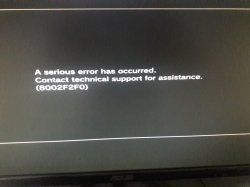
Hi.i'm sorry about asking this question but i have a slim console Cech-2004B and when i turn it on this message appeared and i enter in recovery mode and want factory reset it but that message appeared again.
how can i fix it?20200614_174226.jpg
please help
 
@Workz_777 Clean job as always, very clever. But I don't recommend you to leave a fat with MLC installed, since those are a really big problem on SSs, those likes to go in short whenever they like. I'm more of the idea of using only original tantalums instead of those, or the NECs, 'cause the ones you bought are for sure expired or some of them could be fake. I don't know, I don't trust those people anymore haha.

Apart of that, the NECs are like old batteries, the moment they lost big part of their potential, you get a YLOD. I don't see a solution there either.

@Griggs Have you shared a video with the type of YLOD you have? If it's really fast, then you have a short somewhere.

I have not uploaded a video. It is the very common 2 second Ylod. Upon power up, the fan will start to ramp up, after 2 sec it will do the 3 beep and go to a flashing red.
It does not seem to be immediate.
 
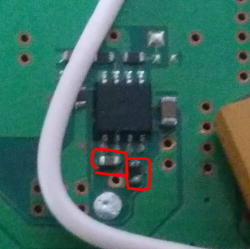
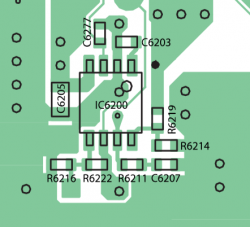
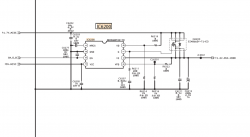
So after i saw this thread, i just gone ahead and bought one broken ps3 with ylod ofc. It was just for fun. So i replaced all the nec/tokin's on the top side with tantalums. And added bridge wires. But it didn't change anything. Also while i was trying to pull nec/tokins off from the board i accidentally removed two little caps from the down side of the chip in the second pic. I lost the caps. But i had another ps3 lying around, different model tho. And kinda picked similar caps to fit in there. I don't know if i put the right ones. It is still in ylod. The board i'm trying to fix is C0K-002, 1-873-513-31, and the donor board is SEM-001, 1-875-384-11. I have the schematichs for the board i'm trying to fix but i'm not good at reading them. So which little caps can i get from the donor board to put under that chip? I don't have schematics for the donor board tho. I ordered more tantalums from china, but they haven't arrive yet. I'll replace more nec/tokins when they arrive. Thanks for the amazing tutorial and help!
 

Attachments

  • WhatsApp_2020-06-14_18-25-01.jpg
    WhatsApp_2020-06-14_18-25-01.jpg
    248.6 KB · Views: 177
  • WhatsApp_2020-06-14_18-25-24.png
    WhatsApp_2020-06-14_18-25-24.png
    518.8 KB · Views: 179
  • ApplicationFrameHost_2020-06-12_16-57-32.png
    ApplicationFrameHost_2020-06-12_16-57-32.png
    39.6 KB · Views: 166
  • ApplicationFrameHost_2020-06-13_02-55-20.png
    ApplicationFrameHost_2020-06-13_02-55-20.png
    92.7 KB · Views: 170
Hiya mate, exactly, you summed it up nice, and yeah it would be great to see how this looks with an o-scope.

My guess is that the noise is just inherent to tantalum caps and this won't make any breathtaking difference. Just like you're not supposed to use MLCC in audio circuits because they can resonate and introduce noise. I have to make another order from Mouser today, I'll check out what kind of weird polymer caps I can find to test out. While I'm at it, I'll just grab some NOS TOKIN from eBay so we can see old versus new.

Added to the list either way when I get the next set of bad caps someday.
 
@Griggs See these couple of videos and watch which goes in your case. I assume you're near the resurrection by what you're saying. Keep adding good quality capacitance (haha) and see what happens with that YLOD.

[QUOTE="ElGris, post: 243297, member: 50626"
It's all in the YLOD behaviour. If you have an instant YLOD, then there's a short somewhere, either on the mobo, the NECs, the BGAs under a processor, or even a processor with a broken die. But if you have non-instant YLOD, then the party is about to begin.

A couple of examples of a instant YLOD:

https://imgur.com/a/pTT8lpo (turn on the audio in the video)

A non instant YLOD, that's quite fast (this depends of the state of the NECs on the RSX mostly):

https://imgur.com/a/1jU12z2
[/QUOTE]

@vaiz aragorn The brown one is C6203 (0.1uF 10v) and the black one is C6277, smaller (100pF 50v). Use a multimeter with capacitance reader for the replacement.

@aminiani Remove the HDD and see what you get, if it's asking for a device storage, format another HDD and try again. That HDD must be almost dead. Btw, post a thread apart for your issue.
 
@ElGris
I've replaced that section but still no luck, i'm waiting for the new caps for now. I don't know are there any other solutions i can try other than waiting for the caps.

I think i also have instant YLOD tho, i don't know how can i check for shorts. Any suggestions?
 
@Griggs See these couple of videos and watch which goes in your case. I assume you're near the resurrection by what you're saying. Keep adding good quality capacitance (haha) and see what happens with that YLOD.

@Griggs See these couple of videos and watch which goes in your case. I assume you're near the resurrection by what you're saying. Keep adding good quality capacitance (haha) and see what happens with that YLOD.

[QUOTE="ElGris, post: 243297, member: 50626"
It's all in the YLOD behaviour. If you have an instant YLOD, then there's a short somewhere, either on the mobo, the NECs, the BGAs under a processor, or even a processor with a broken die. But if you have non-instant YLOD, then the party is about to begin.

A couple of examples of a instant YLOD:

https://imgur.com/a/pTT8lpo (turn on the audio in the video)

A non instant YLOD, that's quite fast (this depends of the state of the NECs on the RSX mostly):

https://imgur.com/a/1jU12z2

@vaiz aragorn The brown one is C6203 (0.1uF 10v) and the black one is C6277, smaller (100pF 50v). Use a multimeter with capacitance reader for the replacement.

@aminiani Remove the HDD and see what you get, if it's asking for a device storage, format another HDD and try again. That HDD must be almost dead. Btw, post a thread apart for your issue.
thanks about your answer..i check it..with and without Hdd when i turn on the console that error code appeare..and i check with one 40gb fat console hdd but no result..
i can enter to recovery mode and when i want restore factory no result..and when i want upgrade system in recovery mode that error appeared again..
 
Here in this photo below, the Tantalums are only on the bridge wire...

I want to test this a little further to document the results for you guys, first results were good and the PS3 booted and worked fine, with 8 of these proto-types. I did one for every NEC replacement.

It's for those using bridge wires:- if we look at the way the NECs work, and what their role is, then adding a bridge wire can be counter-productive for our Tantalums unless done correctly. Because if we give the current the option (a route) to leap-frog (by-pass) the filtering capacitors and go straight to the RSX / CELL, then the processors won't work correctly, because the current is fluctuating all over the place and the line is too noisey.

Adding a bridge wire (incorrectly) is like having little, to no capacitors at all...

The current will always take the path of least resistance, so we need to force the current through the filtering process of the capacitors, with no other options / routes, and only then arrive at the RSX or CELL once filtered. That's how those processors want it so they can function correctly.

I tried this concept on my 1st PS3, i did all 8 x NEC replacements with this idea, Tantalums only on the bridge wire(s), like this photo is showing for 1 x NEC replacement, it was all like that (x 8) and it worked, the PS3 booted up, and worked fine! Originally for that test i had used size B Tantalums, and in this photo it's those 'Panasonic' size D ones - this photo below is just to give an idea of how the concept / idea was installed / looks)

However, the same day i had just received the "new" NECs from China in the mail, and i was too excited to wait any longer, so i took out my test bridge-wire Tantalums and soldered the "new" 8 x NECs, and that worked too, but now i can't de-solder the "new" NECs and they are stuck there, so i am working on another (2nd) PS3 to hopefully show the test results again, with photos etc, of this Tantalum only on the bridge wire idea working.

I also want to add an array of MLCCs (0.01uF to 1uF) to this proto-type, will aim to report back the results soon, all being well, but it might be some time yet because i have some other commitments (work) that i need to sort out first.

View attachment 26227

Here are all 8 of them, that i installed together for the original test, the PS3 booted and worked.
View attachment 26228
Wow,
very good job.
When do you plan to complete the prototype and start mass production?
I buy the first series :)
 
@ElGris the tantalums i put shorted to ground on both sides, i don't know if it relates to anything or not. Also some of the caps under both rsx and cell are shorted too. I don't know where to check tbh. I want to try the reflowing rsx chip thing at last. Because it wasn't having instant ylod before i replaced tokins

Does tantalums have to be shorted on both sides? If they are shorted what should i do to diagnose it
 
thanks for all of you :) now my cechg04 is fully working i have only changed 2 nec capacitor one for the cell and one for the rsx with 4 330uF for chip and now work flawlessly and no problem for TLOU
 
@vaiz aragorn Having a lot of caps in short, even NECs/tantalums, on the processors periphery is normal. Look for something else you could damage near the NEC zone. By looking at your complete pic, I can say there're a few tantalums that could be in short with the negative band, and there's something really bad with some soldering too. You should use flux for that, and try to imitate what others did.
Use the method Workz_777 did to make sure you aren't shorting anything.

To make sure your replacements are good, you should measure everyone of them with a capacitance reader, if it shows you values, then it's good.

@aminiani Then your NOR is messed up. Create a thread and ask for advice. Pretty sure you're gonna need a flasher to fix that.
 
Ok then, i'll resolder and check all of them. My flux is really bad, i think it causes bad results tbh. Once i got all the tantalums off the board the should i have short between positive and negative on the pads of the nec/tokins?
 
Back
Top