I thought so, I can definitely see there are many different types of people that are passionate about this console. I can see very experienced technicians like Felix that will only accept the absolute correct way, from an engineering point of view, and then there's the rest of us that have varying different levels of expertise and experience with this console.
I think everyone is entitled to their point of view however for me to accept it I need evidence. And I will test a theory because that's the absolute correct way to ser whether it's sound or not.
So there are counter arguments for the eraser mod and as no one has reported a failure due to the mod I believe it to be a sound way to help keep the CPU temperature low.
I am in the process of testing a variation of this mod to revive GLOD consoles. So far to date it has had no failures and all 7 consoles are working with no issues. The first one I did this to is now nearly 14 months old and has now clocked over 80 hours of gameplay since the mod was done.
As another experienced repairer point out the correct fix is a CPU reball however this costs a lot of money to get a reputable repairer to do the fix and like you say the damage the heat can cause to the surrounding components could result in the fix being counterproductive. My mod uses no heat and a small amount pressure to connect broken solder connections. To date it has a 100 percent success rate with all the consoles still working.
At last you heard, this console was trying to lift off earth with 75-80% Fan speeds, just to keep the CPU at 68C. First order of Business was to calm that down. So I opened the console. There were a few thing of note:
The warranty sticker was removed and the rubber foot was missing. But the security screw was in place. Although the plastic retaining clip that keeps the top cover on was broken.
All screws were present, even the 2 that screw the top shell to the posts by the PSU, which are recessed and often forgot about. However, they showed signs of being screwed in with power tools and/or an improperly sized driver. Many were stripped.
The console was immaculately clean. The case is actually quite good looking. It's one of the shiniest used consoles I've seen. No major scratches or cracks. No flux Residues to indicate the GPU or CPU were ever reflowed or reballed. There were a few dust bunnies, but the console looked to have been recently cleaned. Besides a few loose dust bunnies, the metal surfaces were shiny and the Thermal paste was fresh, not the factory white stuff either. The application was not even, indicating they used the "pea sized blob in the center" method. It was squeezed off to one side and didn't reach the corners of the chip. This is why I prefer the X pattern myself. Regardless, it was adequate.
There was a Retengular white sticker that I've seen before from refirbished consoles.
The SYSCON errorlog shows no history of 3034/4XXX errors that would indicate the console was ever reballed or reflowed, but the log was filled with 1001 errors. This may have bumped any previous 3034's off the end of the list, so I can't know for sure the console was never reballed/refloed. It just doesn't look like it was. Many of the 1001 errors occurred at Step# 80 (PWR ON State). This means that the console was on and probably running an intense games at the time the CPU Power Failed (most likely because of NEC/TOKINs). But there also many at step# 90 (PWR OFF state). So they occurred while attempting to power off. That's interesting because I'm currently seeing the same behavior from PS3 #12 (an E01 I Frankied with a 40nm RSX). It's not YLOD in games, but does give a 90 1001 on every shutdown. I have not discovered the source of that issue yet. But I haven't attempted to replace tokins either, since the Oscilloscope images looked okay (more on this later)....
Code:
Firmware Version: 4.88 (50731)
Platform ID: CokB10
Hardware Config: 20000000FFFFFEFF
Syscon Fimware Version: 0C16.0001000100030003 (0001000100030003)

Bringup Count: 1413, Shutdown Count: 1329
Runtime: 409 Days, 22 Hours, 59 Minutes, 10 Seconds

Error Log
01: A0801002  Thu Jan  5 18:34:53 2006
02: A0801001  Thu Jan  5 18:34:23 2006
03: A0801001  Thu Jan  5 18:33:17 2006
04: A0901001  Thu Jan  5 18:32:11 2006
05: A0801001  Sat Dec 31 08:26:40 2005
06: A0901001  Sat Dec 31 00:19:52 2005
07: A0901001  Sat Dec 31 00:00:24 2005
08: A0901001  Sat Dec 31 07:36:12 2005
09: A0901001  Sat Dec 31 07:35:26 2005
10: A0901001  Sat Dec 31 04:01:47 2005
11: A0801001  Sat Dec 31 01:11:45 2005
12: A0801001  Sat Dec 31 01:05:13 2005
13: A0801001  Sat Dec 31 01:03:36 2005
14: A0801001  Sat Dec 31 01:01:34 2005
15: A0901001  Wed Nov 18 04:04:46 2020
16: A0901001  Sun Oct 25 03:49:13 2020
17: A0901001  Mon Oct 19 07:21:28 2020
18: A0901001  Sat Oct 17 23:22:11 2020
19: A0901001  Sat Oct 17 03:57:48 2020
20: A0901001  Sat Oct 17 03:57:24 2020
21: A0901001  Sat Oct 17 03:57:10 2020
22: A0901001  Fri Oct 16 06:08:33 2020
23: A0901001  Fri Oct 16 06:08:07 2020
24: A0901001  Fri Oct 16 00:13:43 2020
25: A0101001  Fri Oct 16 00:13:18 2020
26: A0901001  Fri Oct 16 00:13:14 2020
27: A0101001  Fri Oct 16 00:12:45 2020
28: A0901001  Fri Oct 16 00:04:13 2020
29: A0901001  Sat Oct 10 06:00:32 2020
30: A0801001  Sun Sep 27 00:13:25 2020
31: A0901001  Sun Sep 27 00:12:49 2020
32: FFFFFFFF  Sun Sep 27 00:09:59 2020
To take care of the overheating CPU I delided the CELL BE to find this...
That's pretty typical of the CPU. I've never seen one this bad and still work, without giving a 1200 SYSCON error code (CPU thermal shutdown). Pretty impressive really. However, it's hard to know what that kind of stress is doing to the CPU and it's Voltage Regulation Module, which includes the NEC/TOKIN Proadlizers. It may have contributed to their demise.
I used SYY thermal paste, because I ran out of MX-4. I thought I'd give it a try, but spoiler...SYY is garbo! It's even more expensive than MX-4 and performs 2-3C worse. Avoid it!
The Last of Us stress test went well. I was able to confirm that this console is indeed experiencing a YLOD under intense load in some demanding games. TLoU is often cited as being a trigger for the PS3 and I can now attest to this fact. I will repeat this test with PS3 #12 to see if I can trigger an 80 1001 in TLoU on it. I'll also take more careful Oscilloscope measurements to see if there's any resemblance to this consoles bad tokins. Now that I know what I'm looking for under load. I'll get to the actual scope images shortly.
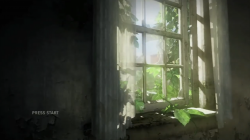
This console did not YLOD in GTA5 at the waterfront with the city in the background, which is quite difficult for the PS3 to render. However, TLoU is even harder. I started with my normal stress test spot, which is just the "Press Start" screen with the window in the background...
The fans ramped up to 36% to maintain the 68C setpoint in webMAN Dynamic. The CPU is under control now, but man that SYY sucks! To be fair the top shell of the console was off and it's not able to circulate air properly, so these tests are not comparible to a fully assembled console. But that's still too high IMO.
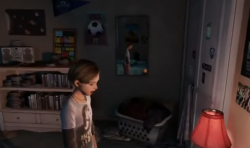
Then I pressed start and continued to this part...
I find that the shadow on the wall and reflection in the mirror causes the fan to ramp up even more. About 40% (I hate SYY). So I just stood there while conducting my O-Scope measurements.
I have a RiGol DS1054z.
2x Probes set to 1x on output side of RSX/CELL VDDC (at the tokins)
Acquire Mode set to HiRez
AC coupling to center the ripple around 0V. Makes it easier to find the signal and I'm only interested in the AC component anyway (ripple voltage and noise spikes)
I am using ground springs to minimize the effect of interference on my measurements, so I can trust the ripple and noise I'm measuring are actually from the tokins, not being coupled in from other electronics.
The trigger is set to the rising edge and I set it to the Channel I'm interested in seeing the maximum amount of noise on. In this case the CPU tokins are bad and so it's voltage ripple had the highest amplitude (peak-peak).
Now, the tokins are marginal. They are bad, and causing the YLOD, but it's very intermittent. It took about 2-5 minutes in TLoU at the mirror before a particularly bad voltage ripple caused it. Think of it as a particularly big wave at the beach. It might take a while before you see one. Eventually, one comes along that is big enough to trigger the High or low voltage treshshold of the Buck Controller, which informed the SYSCON (Nark) that the PWR is not stable. The SYSCON immediately shuts off Power to protect the Processor from damage and issues an 80 1001 error code.
The trick is setting my trigger just high enough to ignore the normal waves that don't trigger a YLOD. So what I did was begin increasing the trigger level a small turn at a time and pressing the single button. That waits for a wave of a certain height to trigger the snapshot (basically a picture of the wave). Then I would increase it again and press single again. Each time I did this it was taking longer and longer to capture an image of the wave that triggered the scope. All these little waves were also useful for me to see about what the largest "normal waves" were, before the scope wouldn't trigger anymore. Here's one of the largest waves that took a few seconds of waiting to capture.
It's over 100mV! But those didn't trigger the YLOD. When I raised the trigger level just a bit higher it would stop triggering, that was the point I knew that only "the big one" would trigger it. So that's how I set up the scope to capture the YLOD event itself. And here it is...
THE BIG ONE! Almost 250mVpp!
That's clearly bad tokins. But I only saw this after looking closely under load. If I were to look only at the Idle test, I would have concluded they were fine...
But when I use the "trigger wait method" to start catching the individual waves I was able to see more of the concerning ripple ...
(yellow is CPU and Blue is GPU)
You can see there's more noise. The RSX doesn't have it's characteristic bad sawtoothe pattern, but the Cell does have the rectified sine wave that's characteristic of bad CPU tokins. Just compare them to known good and bad tokins...
Clearly I need to replace the CPU tokins. But at this point I should cool it, take a step back and think about how I want to proceed. I have an oppritunity here to study a genuine bad tokin console. One with bad CPU tokins non the less. So before I proceed I am taking suggestions about the kinds of tests I should attempt.
And in which order I should do them. Here's a list of tests I can think of. Not that I am going to perform them.
Heat test to see if it affects the ripple
Adding a single 470uF cap to cell side tokins, parasite cap. See if that makes TLoU stable and measure the difference in ripple.
Remove 1 tokins and replace it with 1 tantalizer to see what effect that has.
Yes. Page 77 of the SYSCON thread user @hrist reported issues after the eraser mod. Here is my note from that case in the spreadsheet compiled every report into...
Also in the errorlog are A0313031 & A0902120. "YLOD was caused after i did the eraser mod on the CPU." This mod places pressure on the underside of the CPU and can result in CPU BGA Defects. This 3031 error appears to be a CPU BGA defect. He later reflowed and got earlier errors, YLOD'd with 10x A0202120 followed by A0213010 [pg78]. Looks like the reflow was unsuccessful. He measured TH2501 = 3.6 ohms & TH2401 = 4.1. Noticed he knocked off C2570.
Hypothesis:
Step# 31 = CPU Initialization. Eraser mod put too much or uneven pressure on the CPU DIE and caused a BGA/Bump defect to a critical voltage. May have cracked the die too. Reflow did more harm than good, bga/bumps did not flow.
If the rubber is from a hard eraser and way too thick, then I think this could lead into a BGA damage 'during' assembly.
But as soon as the heatsink screws are tightened, nothing will happen, no stress to the ball grid, only a little bit more pressure to the whole package. The pressure works in the same direction, its clamped in between like in a vise
You could argue that a reball will apply a lot of destructive heat to the whole board, a very unwholesome process for many components and the eraser-mod will prevent this :p
Just because an answer isn't given immediately doesn't mean the evidence is non-existent. You should be careful of that kind of bias. It's used to manipulate people all the time.
I have seen people do this successfully. But there does exist a danger. Which is why I recommended using something with more give than hard rubber eraser, like thermal pads. But the proper method is to replace the aged and useless thermal paste under the IHS. Just because you are inexperienced doing it, doesn't mean it's not the correct method of repair.
But I see your point about the pressure being under the die and against the HS for support, not transfering it's strain to the MB or BGA. But the Bumps are also of concern. An I suspect that was the real cause of @hrist 3031 error.
At last you heard, this console was trying to lift off earth with 75-80% Fan speeds, just to keep the CPU at 68C. First order of Business was to calm that down. So I opened the console. There were a few thing of note:
The warranty sticker was removed and the rubber foot was missing. But the security screw was in place. Although the plastic retaining clip that keeps the top cover on was broken.
All screws were present, even the 2 that screw the top shell to the posts by the PSU, which are recessed and often forgot about. However, they showed signs of being screwed in with power tools and/or an improperly sized driver. Many were stripped.
The console was immaculately clean. The case is actually quite good looking. It's one of the shiniest used consoles I've seen. No major scratches or cracks. No flux Residues to indicate the GPU or CPU were ever reflowed or reballed. There were a few dust bunnies, but the console looked to have been recently cleaned. Besides a few loose dust bunnies, the metal surfaces were shiny and the Thermal paste was fresh, not the factory white stuff either. The application was not even, indicating they used the "pea sized blob in the center" method. It was squeezed off to one side and didn't reach the corners of the chip. This is why I prefer the X pattern myself. Regardless, it was adequate.
There was a Retengular white sticker that I've seen before from refirbished consoles.
The SYSCON errorlog shows no history of 3034/4XXX errors that would indicate the console was ever reballed or reflowed, but the log was filled with 1001 errors. This may have bumped any previous 3034's off the end of the list, so I can't know for sure the console was never reballed/refloed. It just doesn't look like it was. Many of the 1001 errors occurred at Step# 80 (PWR ON State). This means that the console was on and probably running an intense games at the time the CPU Power Failed (most likely because of NEC/TOKINs). But there also many at step# 90 (PWR OFF state). So they occurred while attempting to power off. That's interesting because I'm currently seeing the same behavior from PS3 #12 (an E01 I Frankied with a 40nm RSX). It's not YLOD in games, but does give a 90 1001 on every shutdown. I have not discovered the source of that issue yet. But I haven't attempted to replace tokins either, since the Oscilloscope images looked okay (more on this later)....
Code:
Firmware Version: 4.88 (50731)
Platform ID: CokB10
Hardware Config: 20000000FFFFFEFF
Syscon Fimware Version: 0C16.0001000100030003 (0001000100030003)

Bringup Count: 1413, Shutdown Count: 1329
Runtime: 409 Days, 22 Hours, 59 Minutes, 10 Seconds

Error Log
01: A0801002  Thu Jan  5 18:34:53 2006
02: A0801001  Thu Jan  5 18:34:23 2006
03: A0801001  Thu Jan  5 18:33:17 2006
04: A0901001  Thu Jan  5 18:32:11 2006
05: A0801001  Sat Dec 31 08:26:40 2005
06: A0901001  Sat Dec 31 00:19:52 2005
07: A0901001  Sat Dec 31 00:00:24 2005
08: A0901001  Sat Dec 31 07:36:12 2005
09: A0901001  Sat Dec 31 07:35:26 2005
10: A0901001  Sat Dec 31 04:01:47 2005
11: A0801001  Sat Dec 31 01:11:45 2005
12: A0801001  Sat Dec 31 01:05:13 2005
13: A0801001  Sat Dec 31 01:03:36 2005
14: A0801001  Sat Dec 31 01:01:34 2005
15: A0901001  Wed Nov 18 04:04:46 2020
16: A0901001  Sun Oct 25 03:49:13 2020
17: A0901001  Mon Oct 19 07:21:28 2020
18: A0901001  Sat Oct 17 23:22:11 2020
19: A0901001  Sat Oct 17 03:57:48 2020
20: A0901001  Sat Oct 17 03:57:24 2020
21: A0901001  Sat Oct 17 03:57:10 2020
22: A0901001  Fri Oct 16 06:08:33 2020
23: A0901001  Fri Oct 16 06:08:07 2020
24: A0901001  Fri Oct 16 00:13:43 2020
25: A0101001  Fri Oct 16 00:13:18 2020
26: A0901001  Fri Oct 16 00:13:14 2020
27: A0101001  Fri Oct 16 00:12:45 2020
28: A0901001  Fri Oct 16 00:04:13 2020
29: A0901001  Sat Oct 10 06:00:32 2020
30: A0801001  Sun Sep 27 00:13:25 2020
31: A0901001  Sun Sep 27 00:12:49 2020
32: FFFFFFFF  Sun Sep 27 00:09:59 2020
To take care of the overheating CPU I delided the CELL BE to find this... View attachment 37133
That's pretty typical of the CPU. I've never seen one this bad and still work, without giving a 1200 SYSCON error code (CPU thermal shutdown). Pretty impressive really. However, it's hard to know what that kind of stress is doing to the CPU and it's Voltage Regulation Module, which includes the NEC/TOKIN Proadlizers. It may have contributed to their demise.
I used SYY thermal paste, because I ran out of MX-4. I thought I'd give it a try, but spoiler...SYY is garbo! It's even more expensive than MX-4 and performs 2-3C worse. Avoid it!
The Last of Us stress test went well. I was able to confirm that this console is indeed experiencing a YLOD under intense load in some demanding games. TLoU is often cited as being a trigger for the PS3 and I can now attest to this fact. I will repeat this test with PS3 #12 to see if I can trigger an 80 1001 in TLoU on it. I'll also take more careful Oscilloscope measurements to see if there's any resemblance to this consoles bad tokins. Now that I know what I'm looking for under load. I'll get to the actual scope images shortly.
This console did not YLOD in GTA5 at the waterfront with the city in the background, which is quite difficult for the PS3 to render. However, TLoU is even harder. I started with my normal stress test spot, which is just the "Press Start" screen with the window in the background... View attachment 37132
The fans ramped up to 36% to maintain the 68C setpoint in webMAN Dynamic. The CPU is under control now, but man that SYY sucks! To be fair the top shell of the console was off and it's not able to circulate air properly, so these tests are not comparible to a fully assembled console. But that's still too high IMO.
Then I pressed start and continued to this part... View attachment 37140
I find that the shadow on the wall and reflection in the mirror causes the fan to ramp up even more. About 40% (I hate SYY). So I just stood there while conducting my O-Scope measurements.
I have a RiGol DS1054z.
2x Probes set to 1x on output side of RSX/CELL VDDC (at the tokins)
Acquire Mode set to HiRez
AC coupling to center the ripple around 0V. Makes it easier to find the signal and I'm only interested in the AC component anyway (ripple voltage and noise spikes)
I am using ground springs to minimize the effect of interference on my measurements, so I can trust the ripple and noise I'm measuring are actually from the tokins, not being coupled in from other electronics.
The trigger is set to the rising edge and I set it to the Channel I'm interested in seeing the maximum amount of noise on. In this case the CPU tokins are bad and so it's voltage ripple had the highest amplitude (peak-peak).
Now, the tokins are marginal. They are bad, and causing the YLOD, but it's very intermittent. It took about 2-5 minutes in TLoU at the mirror before a particularly bad voltage ripple caused it. Think of it as a particularly big wave at the beach. It might take a while before you see one. Eventually, one comes along that is big enough to trigger the High or low voltage treshshold of the Buck Controller, which informed the SYSCON (Nark) that the PWR is not stable. The SYSCON immediately shuts off Power to protect the Processor from damage and issues an 80 1001 error code.
The trick is setting my trigger just high enough to ignore the normal waves that don't trigger a YLOD. So what I did was begin increasing the trigger level a small turn at a time and pressing the single button. That waits for a wave of a certain height to trigger the snapshot (basically a picture of the wave). Then I would increase it again and press single again. Each time I did this it was taking longer and longer to capture an image of the wave that triggered the scope. All these little waves were also useful for me to see about what the largest "normal waves" were, before the scope wouldn't trigger anymore. Here's one of the largest waves that took a few seconds of waiting to capture.
It's over 100mV! But those didn't trigger the YLOD. When I raised the trigger level just a bit higher it would stop triggering, that was the point I knew that only "the big one" would trigger it. So that's how I set up the scope to capture the YLOD event itself. And here it is...
That's clearly bad tokins. But I only saw this after looking closely under load. If I were to look only at the Idle test, I would have concluded they were fine... View attachment 37147
But when I use the "trigger wait method" to start catching the individual waves I was able to see more of the concerning ripple ...
You can see there's more noise. The RSX doesn't have it's characteristic bad sawtoothe pattern, but the Cell does have the rectified sine wave that's characteristic of bad CPU tokins. Just compare them to known good and bad tokins...
Clearly I need to replace the CPU tokins. But at this point I should cool it, take a step back and think about how I want to proceed. I have an oppritunity here to study a genuine bad tokin console. One with bad CPU tokins non the less. So before I proceed I am taking suggestions about the kinds of tests I should attempt.
And in which order I should do them. Here's a list of tests I can think of. Not that I am going to perform them.
Heat test to see if it affects the ripple
Adding a single 470uF cap to cell side tokins, parasite cap. See if that makes TLoU stable and measure the difference in ripple.
Remove 1 tokins and replace it with 1 tantalizer to see what effect that has.
@RIP-Felix Did we ever finally put electrolytic cap piggybacking to bed? I still think they won't even be in the circuit at that frequency. Toss some on there if you have them laying around and check it out.
Yes. Page 77 of the SYSCON thread user @hrist reported issues after the eraser mod. Here is my note from that case in the spreadsheet compiled every report into...
Also in the errorlog are A0313031 & A0902120. "YLOD was caused after i did the eraser mod on the CPU." This mod places pressure on the underside of the CPU and can result in CPU BGA Defects. This 3031 error appears to be a CPU BGA defect. He later reflowed and got earlier errors, YLOD'd with 10x A0202120 followed by A0213010 [pg78]. Looks like the reflow was unsuccessful. He measured TH2501 = 3.6 ohms & TH2401 = 4.1. Noticed he knocked off C2570.
Hypothesis:
Step# 31 = CPU Initialization. Eraser mod put too much or uneven pressure on the CPU DIE and caused a BGA/Bump defect to a critical voltage. May have cracked the die too. Reflow did more harm than good, bga/bumps did not flow.
Conclusion (category of failure) = BGA/Bumps
Just because an answer isn't given immediately doesn't mean the evidence is non-existent. You should be careful of that kind of bias. It's used to manipulate people all the time.
I have seen people do this successfully. But there does exist a danger. Which is why I recommended using something with more give than hard rubber eraser, like thermal pads. But the proper method is to replace the aged and useless thermal paste under the IHS. Just because you are inexperienced doing it, doesn't mean it's not the correct method of repair.
But I see your point about the pressure being under the die and against the HS for support, not transfering it's strain to the MB or BGA. But the Bumps are also of concern. An I suspect that was the real cause of @hrist 3031 error.
So I definitely should have made myself clearer and this is 100 percent my fault for not being more precise. I am referring to a COK-002 MB,.however its good to know that there is a chance of failure on a COK-001 MB.
Saying that one failure out of the many people that have performed this mod makes it extremely low risk to fail.
Yes the correct procedure is a de-lid and new thermal paste, but this is the choice of the owner of the console. Not everyone can perform a de-lid and I'm thankful to naked snake for coming up with this alternative. I like you will only use thermal pads to create the mod and this is probably why I have had no failures to date.
Let's not forget we are all here for the same reason, to find ways to fix and understand this console and help it perform better. We are all here to help each other which is why we have come so far in unravelling the mysteries of this console.
Thanks for pointing this failure out to me, I have now done some editing so it is more clear what motherboard I am referring to
I thought so, I can definitely see there are many different types of people that are passionate about this console. I can see very experienced technicians like Felix that will only accept the absolute correct way, from an engineering point of view, and then there's the rest of us that have varying different levels of expertise and experience with this console.
I think everyone is entitled to their point of view however for me to accept it I need evidence. And I will test a theory because that's the absolute correct way to ser whether it's sound or not.
So there are counter arguments for the eraser mod and as no one has reported a failure due to the mod I believe it to be a sound way to help keep the CPU temperature low.
I am in the process of testing a variation of this mod to revive GLOD consoles. So far to date it has had no failures and all 7 consoles are working with no issues. The first one I did this to is now nearly 14 months old and has now clocked over 80 hours of gameplay since the mod was done.
As another experienced repairer point out the correct fix is a CPU reball however this costs a lot of money to get a reputable repairer to do the fix and like you say the damage the heat can cause to the surrounding components could result in the fix being counterproductive. My mod uses no heat and a small amount pressure to connect broken solder connections. To date it has a 100 percent success rate with all the consoles still working.
Im not sure if this console is a good candidate for the heating tests, because it boots
It would be a lot better to find one of those that refuses to boot at the first try (but they boots after several tryes)
What i can deduce from that reports is they where warming up the tokins but just a bit (lets say up to 40ºC or 50ºC only)
You know... the heat cummulated in the tokins by the failed attempts to boot cant be higher than that, because the electricity is flowing only a few miliseconds
In some cases this could be made with a hot air gun, but just a bit, is not like a reflowing, lol... is just something handy for diagnostics if is true, and is just something temporal. You need to boot the consokle before the tokins cools down (before they returns to ambient temperature)
I haven't used PCBway or JLCpcb myself, so I have no idea what they are complaining about. @NewRetroRepair ordered like 500 sucessfully form one of those, I forget which. So mabye he can help.
I'm moving on from that design. And I'm not super motivated to 'hurry up and finish' the next design. It's just one of many ongoning projects I'm neglecting.
Yes. If you replace all the tokins my Tantalizer will easily handle all the current this thing can muster! No bridge wires needed! That was my main goal.
Yes. If you replace all the tokins my Tantalizer will easily handle all the current this thing can muster! No bridge wires needed! That was my main goal.
Yes. If you replace all the tokins my Tantalizer will easily handle all the current this thing can muster! No bridge wires needed! That was my main goal.
Rip- Happy I'm sad I couldn't order the boards on pcbway jlcpcb sites, everyone says the following about the PS3 Tantalizer 0.3b
(Your file can not be opened, could you please kindly generate it into Gerber file RS-274-X version so that we can open?)
Rip- Happy I'm sad I couldn't order the boards on pcbway jlcpcb sites, everyone says the following about the PS3 Tantalizer 0.3b
(Your file can not be opened, could you please kindly generate it into Gerber file RS-274-X version so that we can open?)
Looks like I uploaded the KiCAD project into OSH park instead of converting to Gerber first. So when you download it they just give you the Kicad_PCB file. That's actually better if you want to make changes using kicad, it'll just open it without having to convert from Gerber. But aparently PCBway and JLCpcb don't allow kicad files to be uploaded directly. You have to convert them first.
I'll reupload the project as a gerber zip soon. I might make some small changes to make them slightly more manufactureable.
EDIT:
Okay the original release post has been updated with Tantalizer v0.6b. This improved version should both make the board more manufacturable, and it's uploaded in Gerber format so that PCBway and JLCpcb should accept it. Let me know if you have problems with it, as I have not tested it.
Looks like I uploaded the KiCAD project into OSH park instead of converting to Gerber first. So when you download it they just give you the Kicad_PCB file. That's actually better if you want to make changes using kicad, it'll just open it without having to convert from Gerber. But aparently PCBway and JLCpcb don't allow kicad files to be uploaded directly. You have to convert them first.
I'll reupload the project as a gerber zip soon. I might make some small changes to make them slightly more manufactureable.
EDIT:
Okay the original release post has been updated with Tantalizer v0.6b. This improved version should both make the board more manufacturable, and it's uploaded in Gerber format so that PCBway and JLCpcb should accept it. Let me know if you have problems with it, as I have not tested it.
Amazing you can't imagine how happy I am for you to improve this project, all PS3 lovers will be grateful to you.
I am already excited to order and receive this Tantalizer v0.6b in my hands.
Looks like I uploaded the KiCAD project into OSH park instead of converting to Gerber first. So when you download it they just give you the Kicad_PCB file. That's actually better if you want to make changes using kicad, it'll just open it without having to convert from Gerber. But aparently PCBway and JLCpcb don't allow kicad files to be uploaded directly. You have to convert them first.
I'll reupload the project as a gerber zip soon. I might make some small changes to make them slightly more manufactureable.
EDIT:
Okay the original release post has been updated with Tantalizer v0.6b. This improved version should both make the board more manufacturable, and it's uploaded in Gerber format so that PCBway and JLCpcb should accept it. Let me know if you have problems with it, as I have not tested it.
Something curious at OSH PARK is possible to choose 2 oz copper, 0.8mm thickness.
On pcbway and jlcpcb websites it is not possible to choose 0.8mm thickness with 2 oz copper.
If I order from pcbway and jlcpcb without 2 oz copper, will this compromise the functioning of the project?
Something curious at OSH PARK is possible to choose 2 oz copper, 0.8mm thickness.
On pcbway and jlcpcb websites it is not possible to choose 0.8mm thickness with 2 oz copper.
If I order from pcbway and jlcpcb without 2 oz copper, will this compromise the functioning of the project?
No, it should be fine to go with normal thickness copper. It's nice to have a thickeer plane, sure, but it's more important the board is thin enough to fit under the RF shield, once the caps are installed. The whole sandwich needs to be under 3mm tall.
@squeept wondered if a capacitor placed in circuit with such long leads like this would even be in circuit. That's a fair question. This is a low impeedance line, and those 3-4cm leads present a fair amount of impeedance to the flow of electrons. It possable that the current will simply not choose that patch, since there is a lower impeedance path to ground through the other 8 tokins, which have a lower impeedance connection. Like water choosing the path of least resistance flowing downhill.
I don't have the scope image in front of me and I probably will need to revisit that later, but I wanted to record my observations while they were fresh in my memory.
I already measured the bigger ripple in TLoU around 100mVpp before the big spike came along and caused a YLOD. So before I was getting on average 50-70mVpp with the occational big wave (every few seconds) of 100mVpp. It took 2-5mins before a huge one came along and caused the YLOD.
Now when I say 100mV, that's from the bottom of the wave to the top. Not it's height. There is a trough where it falls below the setpoint voltage and a peak above the setpoint. The peaks were about 55mV above the voltage it was supposed to be.
From my research the YLOD will occur if the peak above the setpoint is +100mV. That would take a wave that's about 200mVpp. And the big one that caused the YLOD before was 240mVpp. So that checks out!
Ok, now on to toe results...
With the NOS tokin installed as you see above, the console did not YLOD. The ripple was still noticable bad 30-60mVpp average, with waves every few second in the 90-100mVpp range. But I never got a big one over the 10mins or so the game was running.
Instead the power just shut off. No YLOD, no 3 beeps, no blinking red LED. Nothing. It was on and running fine, then it was off. My test bench Power Supply blew up ending the test!
It was a ZSSR PS3 PSU that I have used just fine for idle testing. But before, I had only used it for live testing voltages while the console idles in XMB. Not while being pounded by TLoU!
Since the PSU is just sitting open to the air (to give me room to probe/work), it's not getting cooled by the fan. So it overheated and died. This is the second one I blew up this weekend runing these stress tests! The first one popped when I turned the console on, after the PSU had been running fine, but shutdown after stressing in TLoU. On the next power up "I head a pop, and then it stop." That's the note I wrote on the PSU.
So this second PSU was my last ZSSR. Now I have to start risking my APS-226's. They are the good ones, so I need to come up with a solution to cool it before I continue with these tests! I don't want to loose another one, but I need to be able to probe the CPU and I can't do it with the PSU in the way.
Conclusion:
While the Tokin's effect was minimal, I couldn't even tell if it had reduced the noise by looking at the scope, it did just enough to prevent a YLOD in TLoU. At least during the 10 mins I had before the PSU crapped out.
One possability is that the long leads are actually acting as an inductor and that is just enough to smooth out large ripple that would otherwise cause the YLOD. So the Tokin is not actually decoupling at all, it's just the inductance of the wire.
Or perhaps some electrons are actually flowing through it, albeit a miniscule amount.
For the sake of it I also grabbed a 470uF 10V electrolytic and just pressed it to the pad next to a tokin while scoping it. I couldn't see it do anything whatsoever. There probably need to be more of them, or it presented such a high ESR that no electrons flowed down that much more difficult path.
Salut les amis j'ai un soussi j'ai une ps3 slim modèles 2503B. Si j'ai allumé la ps3 la lumière vers est parti et sa coupe et sa ne clionte pas et aussi sane fait pas du bipe ?
ENGLISH:
Hi friends I have a problem I have a ps3 slim model 2503B. If I turned on the ps3 the light went out and its cut and its not blinking and also its not beeping?
The idea is to build the "case converter" (instead of modding the ATX PSU) with some material like wood, metal, or plastic, to be able to replace the ATX PSU inside it easilly
In other words, at one side of the case you have the standard PC ATX connectors, and at the other side the PS3 connectors, or better said... an extenssion of them, actually, try to make them very long, i was talking about it in the other thread, you can use a long modded USB cable to carry the control signals