marciolsf
Member
Thanks! but I do have to give credit where it's due -- it was @Workz_777 idea, and not mineYours was the closest attempt to a potential winner
 I just helped spot check some layout errors, but initial concept and design was all him
Thanks! but I do have to give credit where it's due -- it was @Workz_777 idea, and not mineYours was the closest attempt to a potential winner
I just helped spot check some layout errors, but initial concept and design was all him
LOL...yeah sorry. You caught what I meant though. Sorry @Workz_777 , credit to you, where credit is due. I can't keep all the users strait...re-reading the thread has made it hard to remember who posted what. I'll try harder to double check my spreadsheet and notes when quoting the peeps.Thanks! but I do have to give credit where it's due -- it was @Workz_777 idea, and not mine
The automatic measurements are always pretty flaky. By eye is only good for one waveform that has a predictable and even pattern. It's best practice to measure it with the cursor. Press "Cursor" --> choose "Manual" --> choose "Select" to change to the horizontal cursors --> choose "Cursor A" (solid line) and use the knob to place CursorA it at the bottom of the noise/peak --> choose "CursorB" (dashed line) and use the knob to place CursorB it at the top of the noise/peak --> then record the BY-AY measurement. That's the most accurate way to measure using a scope, as you probably know... coughs...engineering degree...cough...cough. For good tokins there are intermittent spikes, but the majority of the time the noise isn't that high. Using the cursor allows you to estimate the average High/Low by eye and the scope will calculate the difference for you in an overlay in the upper left hand corner (RIGOL DS1054z). It takes an extra minute or two, but the added accuracy is worth it....for now I'll have 3 parameters for each measurement: average voltage as measured by the scope, Vpp as measured by the scope, and Vpp as measured by my eyes. The last one is just to show where the bulk of the waveform is at. Since one or two large instantaneous spikes of noise can throw off the scope measurements, that will give a better idea of how much the underlying waveform is jumping around.
Sorry, I rushed that part since it was relevant to our discussion. You can tell because it was quite repetitive. It needed more editing...but whatevez. Basically what I was getting at was this. The Curie Point was one possible mechanism where the Dielectric could be "deaged" (self heals with heat) and provide more performance out of "MLCC" caps, which is limit of my source. Since Aluminum Polymer electrolytic and other Hybrid devices also use "dielectrics," I'm stretching a bit to apply that phenomenon to them as well. It may not, but they could have a Tc point where it's at least theoretically "possible" they could deage. And making another stretch, if that happens during a reflow or reball, it might last a few months. To your point, it wouldn't be a permanent fix on it's own, because you can't escape entropy. Molecules don't just go from lower states of degradation to higher states of organization in endless cycles. The heat must have a net negative effect on the chemistry. Like you say the dielectrics or eletrolyte will vaporize. Or perhaps micro-pitting, galvanic ionization, electromigration, god knows what chemically or physicaly destructive process conspires to destroy the thing. If (big if) this is how reballing can temporarily "fix" tokins, then it gives credence to those anti reballing nuts. I don't want to encourage them, but we can't dismiss this claim outright. It is at least plausible.The only thing it looks like you missed in your research paper was the "self healing" mechanism of polymer capacitors. It is one of the main reasons why I think heating them will not fix them: heating them too much activates self healing. Since you appear to be far more on the chemistry/physics side here, maybe you can clear that up a bit. The self healing works automatically as parts of the polymer degrade. The failing section's resistance increases, which causes it to increase temperature and essentially vaporize itself out of the polymer. My expectation, then, is that if you are heating the capacitors to the point where you activate this.... you likely would have activated it for the entire capacitor.... thus completely destroying it, not fixing it.
Then my expectation is that only the current temperature matters, not whether or not it has been subject to the temperatures of reballing (assuming you didn't vaporize them). In other words, maybe reballing a console would revive bad TOKIN caps... but only during the time it is still hot from the oven. Once it is back to room temperature, it should go straight back to whatever failure state it was in before.
https://www.ecicaps.com/tech-tools/technical-papers/self-healing-affect-metallized-capacitors/
https://en.wikipedia.org/wiki/Polymer_capacitor#Self-healing
Lets assume it's a standard redundant high efficiency dielectric with self healing properties:We etched both sides of an aluminum foil, formed dielectric films chemically onto it for use as the anode...
...and then deposited conductive polymer layers onto the chemically altered foil for use as the solid electrolyte. In addition we also formed graphite and silver paste layers in sequence to obtain a single-layered, 3-terminal aluminum electrolytic capacitor element.


Just check those before putting them in. Make sure they are the rated capacitance. Unfortunately, there is no way for you to accurately measure their ESR to double check they didn't fail inspection for that reason. The Panasonic tantalum SONY used are 6mOhm, yours are 9mOhms, but at least they are not 300 or something. So they may be fine??? Also, before you remove the tokins be sure that they are bad first. Since you said you want to get an oscilloscope, do that, check them, and troubleshoot the console first. Don't just jump to the bypass caps hoping for a miracle.
For the sake of testing, we need a working console. One we know has ZERO BGA problems to begin with. Otherwise there are too many variables that can affect the results. Also, I would prefer verified 20% caps, not bargain binned rejects. So from Mouser, Digikey, Arrow, etc. This way we can be sure they perform to spec. This pretty much limits testing to someone who fixes consoles in bulk and has access to working consoles they're willing to mess up. Or someone confident they can fix it afterwards. I apreciate the offer thought.


EEFSX0D471E4 is what I think it is. From the few wiki pictures that have high enough resolution, these appear to be identical. But they are not tantalum, they are actually Aluminum polymer.what is the name of the tantalum that ps3 slim 3000 use it?

Don't forget to make a video of your endeavor.what is the name of the tantalum that ps3 slim 3000 use it?
Yeah, back on page 157 @Yugonibblit posted a picture of these same UCC caps. I don't know what model his were in, but it's interesting yours are in a VER-001, because it's the last MB revision before the switch to TaPol and finally AlPol. This could be circumstantial evidence that SONY knew the NEC/TOKINs were either defective or overpriced.Maybe off topic... Today I had to replace an HDMI port on a PS3 fat CECHL04.
I was surprised to see that this model uses different kind of Tokins, another brand maybe?
Just out of curiosity , are they same rated as NEC ones?
The mainboard revision is VER-001
Sent from my M2007J20CG using Tapatalk
UCC proadlizers huh? Just found the product info. His is the 1000uF, 2v, 2mOhm ESR version. They appear to be of identical construction to the NEC/TOKIN prodilizers. Availability is still an issue, as both are obsolete, but we can still buy up new old stock for a while. I have stated the best replacment for a proadilizer is a proadilizer, but I suspect we can expect a similar failure rate.
Fuses are supposed to have continuity. If they're open, then they're bad. Capacitors with continuity are bad (except the tokins and some CPU/GPU bypass caps, which have low resistance, but are not actually shorted). Did the SYSCON on this console reveal anything useful? Or just a generic power fail?@RIP-Felix @squeept here are my findings so far: I found a short circuit on 12v line F6302 was dead, removed it but the short is still there, measuring resistance on NEC Tokins give me 2.1ohm on RSX and 3.1ohm on CELL. +1.5V_RSX_VDDIO is shorted as well. I don't wanna give up on this board, but I'm starting to think that this is the best option. Any thoughts? @marciolsf since we're both Brazilian and this console seems to be out of my league, are you up to the challenge?
Fuses are supposed to have continuity. If they're open, then they're bad. Capacitors with continuity are bad (except the tokins and some CPU/GPU bypass caps, which have low resistance, but are not actually shorted). Did the SYSCON on this console reveal anything useful? Or just a generic power fail?
Is it possible to solder in some tantalum caps in addition to the NEC/TOKIN Without removing them? so just solder them on a wire on the solder pad of the existing nec tokins in parallel ? would this work?
It would make things ways easier to test if it is a nec tokin problem or something else. cause removing the necs is relativly time consuming. bought 3 YLOD ps3's only 1 got fixed after swapping the necs out. 2 of them stay YLOD. so would be nice to quickly solder them in on a wire and see if it works, and if so, than I can solder them in permanently and remove the faulty nec tokins.
I wouldn't advise that, it's more complicated than a simple lack of capacitance. But if you go the tantalum path, you are entering experimental territory.
Hehe, remember my first introductory post in this thread?
Well as a matter of fact I did
And as @RIP-Felix says, the least we can do is state the model (In this case L)
The symptom (delayed! 5+ second long YLOD)
And the time it's been working (in my case over a month now. Playing all kinds of games, including demanding ones regularly)
It was indeed capacitors. I never said the capacitor fix itself is bullshit. I said the original post full of bullshit. And it still is.
These consoles don't have the 90nm RSX. So it is actually is common to get capacitors fail first. And get delayed YLOD, which we may be conjecturing it is indicator for this fault.
Now... From there to claiming 90% YLOD is because of NECs... It's where most of the bullshit is.
I've had 8 older consoles with problems, (C models) and in 0 it is the capacitors.
Granted, none had this 5+ second long YLOD (Normally 2or3 sec). I'd be curious to find a backwards compatible ps3 with one of these delayed YLODs and I would be happy to see them actually fixed (and running for long).
But so far... I think it's fair to say this long YLOD symptom itself is rare in BC consoles. And we are just hypothesizing that this is a good indicator of the capacitor fault. Which honestly it might as well be true. But I wouldn't know.
If it is, what I did is an easy diagnosis (For this simple lack-of-capacitance fault). Just put an additional capacitor in parallel (I'd bet the requirements aren't even strict). No need to damage anything or do super crazy frankenstein crap. (But I did too at first hehe, even if not as crazy as friend @fark)
Mostly because Ideally you'd want to close the darn thing afterwards if it's actually working hahaha. Mine's been running like that for over a month. Just with 1 330uf 2.5v aluminum polymer (Yes, also borrowed from another ps3) All good until it fails.
See pictures of my crazybutnotsocrazy alternative for diagnosis. Which worked for me.
Cheers
I'm confused, what is the best tantalum or aluminum capacitor?
Can anyone answer that? on ps3 slim and super slim they have aluminum capacitors.
There are no reports of problems with capacitors in these models that have aluminum capacitors.
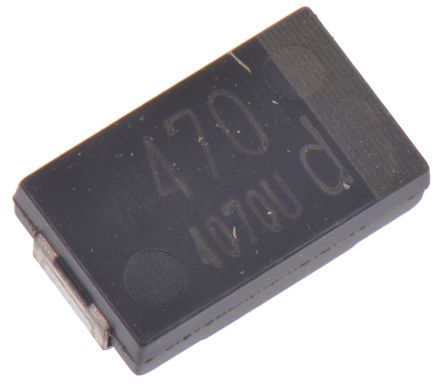
EEFSX0D471E4
2r5tpe470m9

I live in the US now (but forever Brazilian at heart!!) so I wouldn't be much help as far as that goes. Happy to talk and try to figure stuff out otherwise.@RIP-Felix @squeept here are my findings so far: I found a short circuit on 12v line F6302 was dead, removed it but the short is still there, measuring resistance on NEC Tokins give me 2.1ohm on RSX and 3.1ohm on CELL. +1.5V_RSX_VDDIO is shorted as well. I don't wanna give up on this board, but I'm starting to think that this is the best option. Any thoughts? @marciolsf since we're both Brazilian and this console seems to be out of my league, are you up to the challenge?
both points on F6302 are shorted to ground even after removing the faulty fuse, and +3.3V_EVER is outputting 5V.
Okay, so it's the same console with the HDMI encoder issue...I didn't want to assume. Yeah, that encoder is suspicious. Any capacitors that are shorting (compared to a working board to verify they are supposed to have a higher resistance) need to be replaced. Fuses should be in short, that means they haven't blown. Voltages off MOSFETs and VRM can be read 0v if the console is experincing a YLOD. On page 76 @LSL noted this...(BTW, this is why reading the thread is important)...It gave me only those errors I've stated before (A0202120 and A213013) but +1.2 V_MC2_VDDIO is OK, I can measure 1.2v on the service connector before it YLODs and no capacitors are shorted on that line. However, I have no 1.5v on +1.5V_RSX_VDDIO, the caps are shorted (compared with a known good COK-002), both points on F6302 are shorted to ground even after removing the faulty fuse, and +3.3V_EVER is outputting 5V. I'm thinking about removing the HDMI encoder and check what happens after that (won't turn on the console before the replacent arrives, will just try to check for shorts)
That voltage may be a 0v simply because the console if failing in the PWR up Sequence before the RSX is fully powered up. All of that is governed by the PWM controllers, which may not attempt a full power up if an HDMI encoder is dead. Just be patient. Sure it's a good idea to check the fuses and caps, replace as needed. Make note of those voltages, but don't worry about those chips yet. Replace that encoder, check the syscon, go from there. It may be fine.Hello everybody!
Its my first post! Im brazilian (sorry my bad english) and I've a small console collection. The PS3 fat (4 USB) is the most beauty model, mainly CECHB model(my opinion).
I've 9 PS3 (4 USB): 5x CECHA, 2x CECHB, 2x CECHE. 8 defective units.
I saw about tantalum capacitor solution about June 2019 in brazilian sites. I bought 50 units (330uf x 2.5v) on AliEXpress in August 2019, but only now (February 2020) that I used in some units.
Before remove the Nec Tokins I analyze the various voltages on board. If OK I analyze the IC6201(RSX) and IC6103(CELL/BE), both IC's are a NCP5318. The pin 7 its a indicator of power failure. If a PS3 has a short YLOD its probably that pin 7 is in low level.
My first PS3 with capacitor changed was a CECHA01, it had a 2.5 sec YLOD, all important voltages are OK, I added 2 tantalums on NEC TOKIN (RSX), PS3 still in YLOD. So I changed 2 NEC TOKIN (RSX) with 8 tantalums capacitors (330uf), still in YLOD, I changed 2 NEC TOKIN (CELL) wit 8 tantalums capacitors, also. After 16 tamtaluns this PS3 come back and work without problems. I still not tested with GT6 or The Last of US because the OFW is in 3.41.
The second PS3 (CECHB) had a short YLOD, I analyzed all the voltages and 1.7V_MISC was down after F6303. I changed C6355(was in short circuit) and F6303. After changes the PS3 still in YLOD, sometimes short, sometimes long (3.5 sec), all voltages are OK. I decided added 2 tantalums on RSX capacitors and no success, still in long YLOD, I remove 1 NEC TOKIN (RSX), still in long YLOD, remove the second NEC TOKIN (RSX) and the PS3 goes to short YLOD.
For testing purposes I soldered 2 tantalums and the CECHB turned on and still working, the RSX line have 2 NEC TOKIN and 2 tantalums, sometimes it have a YLOD. I will solder more tantalums on RSX line. I bought this CECHB01 3 years ago, it was sealed, the NEC TOKINS appear in good situation (I will upload photos).
I don't remember if was the first(CECHA01) or the second(CECHB01) PS3 where IC6201 pin 7 was down and I used a power suplly adjustable to simulate 3.2v (power good) and the PS3 had a YLOD after more than 3.5 secs, the CELL gets hot and the RSX gets warm.
Now I'm analyzing the third PS3(CECHE11). It have a short YLOD, all voltages are OK but IC6201 pin 7 is down. I tested simulating a 3.2v voltage(pin 7) and still with short YLOD, CELL gets warm and RSX still cold. I'm in doubt if change NEC TOKIN for tantalums will be a solution for this case.
I use a scope to analyze voltages and waveform.
I use an power suplly adjustable to test voltage lines in down or to discover short components
Hey thanks for replying as usual. I'll try to be patient, but the fuse I talked about had no continuity. I removed it and tested, no beep at all. If I measure the pads to ground, they're both shorted and if I measure between the pads as if the fuse was there, I get around 1400ohmOkay, so it's the same console with the HDMI encoder issue...I didn't want to assume. Yeah, that encoder is suspicious. Any capacitors that are shorting (compared to a working board to verify they are supposed to have a higher resistance) need to be replaced. Fuses should be in short, that means they haven't blown. Voltages off MOSFETs and VRM can be read 0v if the console is experincing a YLOD. On page 76 @LSL noted this...(BTW, this is why reading the thread is important)...
That voltage may be a 0v simply because the console if failing in the PWR up Sequence before the RSX is fully powered up. All of that is governed by the PWM controllers, which may not attempt a full power up if an HDMI encoder is dead. Just be patient. Sure it's a good idea to check the fuses and caps, replace as needed. Make note of those voltages, but don't worry about those chips yet. Replace that encoder, check the syscon, go from there. It may be fine.
Tantalum has better ESR performance into the higher frequencies. So IMO Tantalum is the better choice of the two. BUT, the TOKINs are better for A-Q models because that's what they were designed for. We don not know if a properly designed Tantalum array will even last longer that a tokin replacement. Wouldn't you like to know that before doing it? If you are in this to fix your console and move on with your life, then replace with new/old stock tokins. If you like to tinker and investigate and are willing to waste more money experimenting, then by all means replace with tantalum.I'm confused, what is the best tantalum or aluminum capacitor?
Can anyone answer that? on ps3 slim and super slim they have aluminum capacitors.
There are no reports of problems with capacitors in these models that have aluminum capacitors.
EEFSX0D471E4
2r5tpe470m9